Lemonvolt
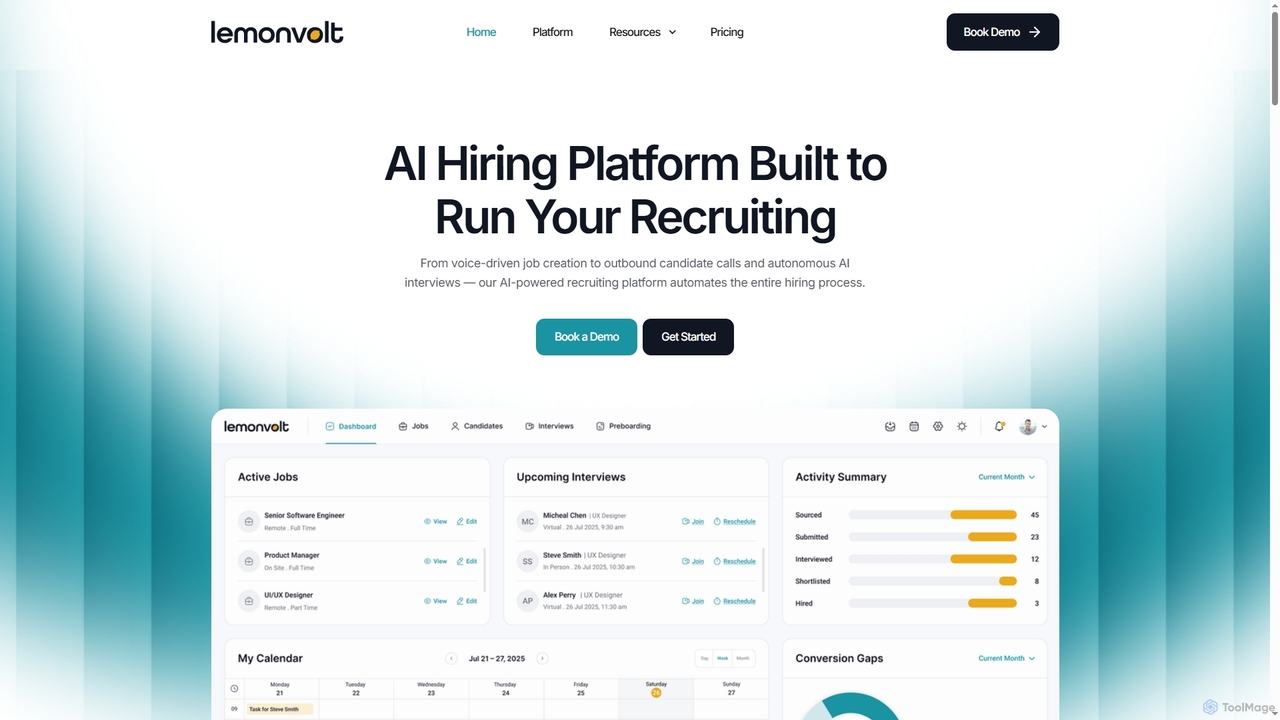
Lemonvolt is an AI hiring platform that utilizes autonomous agents to automate the entire recruitment process. From voice-driven …
Lemonvolt is an AI hiring platform that utilizes autonomous agents to automate the entire recruitment process. From voice-driven job creation with hiring managers to outbound candidate calls and AI-led interviews, it streamlines workflows, increases recruiter output by 10x, and ensures a constantly moving pipeline, all while maintaining complete human oversight.
CrewAI
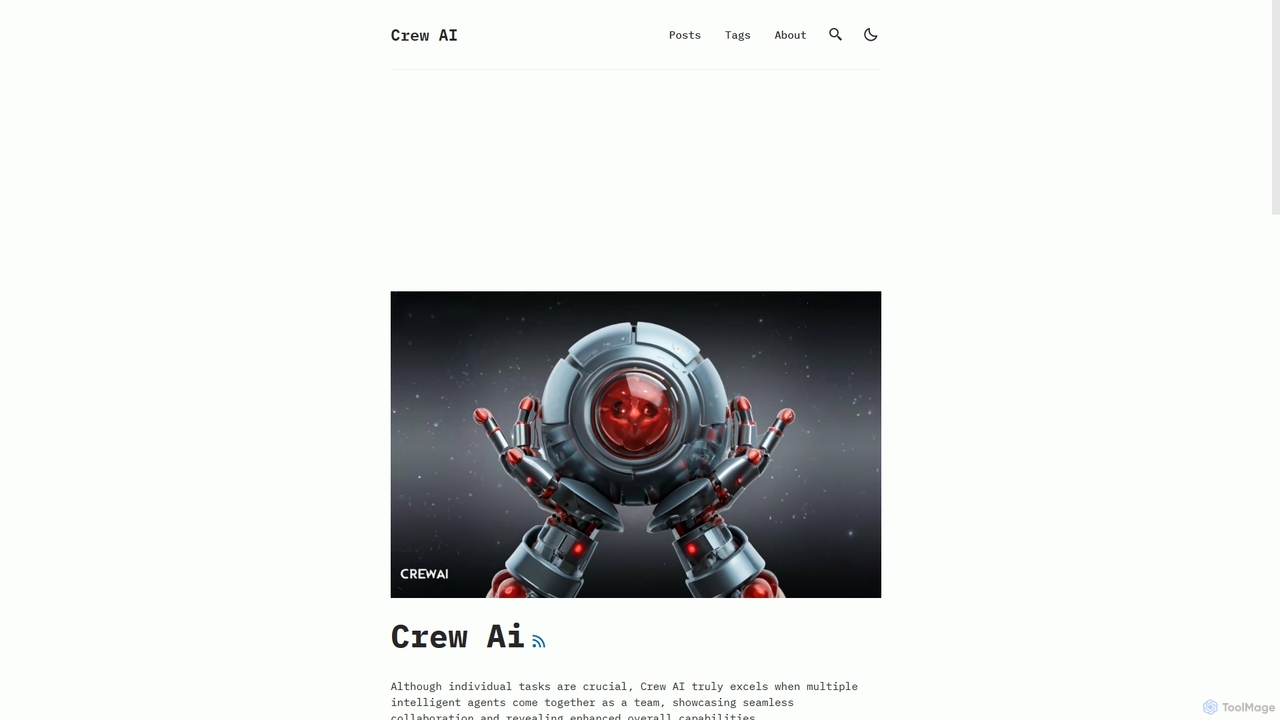
CrewAI is an advanced open-source framework for orchestrating role-playing, autonomous AI agents. By fostering collaborative intelligence, it enables …
CrewAI is an advanced open-source framework for orchestrating role-playing, autonomous AI agents. By fostering collaborative intelligence, it enables agents with distinct roles and tools to work together seamlessly to solve complex tasks. This multi-agent system simplifies the development of sophisticated applications, from automated content creation to complex data analysis, by managing agent interactions, task delegation, and workflow processes.
About Agent
AI Agents are a class of artificial intelligence tools designed to operate autonomously to achieve specific goals. They function by perceiving their digital environment, making decisions, and executing multi-step actions using various software tools. Unlike simple automation scripts, AI Agents can independently plan, reason, and adapt their strategies to complete complex tasks like market research, software development, or personalized outreach. This capability allows them to handle dynamic workflows that traditionally require significant human intervention and cognitive effort.
Core Features
- Autonomous Operation: Executes tasks independently from start to finish with minimal human oversight.
- Goal-Oriented Planning: Decomposes a high-level objective into a sequence of concrete, executable steps.
- Environment Interaction: Interacts with web browsers, APIs, file systems, and other applications to gather information and perform actions.
- Multi-Tool Integration: Utilizes a variety of digital tools (e.g., code interpreters, search engines, calculators) to solve problems.
- Adaptive Reasoning: Adjusts its plan and actions based on new information or unexpected outcomes encountered during execution.
Use Cases
AI Agents are valuable for developers, business analysts, marketers, and researchers. They excel in scenarios requiring complex information synthesis and task execution, such as automatically generating market analysis reports, writing and debugging code, managing lead generation campaigns, or planning intricate travel itineraries based on user preferences.
How to Choose
When selecting an AI Agent, consider the complexity of the tasks you need to automate. Evaluate its integration capabilities with essential platforms like APIs, CRMs, or code repositories. Assess the level of autonomy and control it offers, ensuring it aligns with your operational security policies. Finally, consider the user interface and the technical expertise required to define and manage the agent's goals effectively.
AgentUse Cases
Automated Market Research and Reporting
A business analyst tasks an AI Agent with a high-level goal: 'Provide a weekly competitive analysis report for the e-commerce sector.' The agent autonomously plans and executes a series of steps. It browses competitor websites to track new product launches, monitors social media for sentiment analysis, checks pricing data via APIs, and synthesizes all findings into a structured report. This process, which would typically take a human analyst hours, is completed automatically, delivering consistent and timely insights for strategic decision-making.
Autonomous Software Development Tasks
A developer uses an AI Agent to accelerate their workflow. They instruct the agent: 'Refactor the user authentication module to use OAuth 2.0 and write corresponding unit tests.' The agent accesses the codebase, analyzes the existing module, writes the new code following best practices, generates comprehensive unit tests to ensure functionality, and submits a pull request for review. It can handle debugging by analyzing error logs and attempting fixes, significantly reducing the time spent on repetitive coding and testing tasks.
Personalized Customer Outreach Campaigns
A marketing manager sets a goal for an AI Agent to generate 50 qualified leads. The agent integrates with the company's CRM, identifies potential leads based on predefined criteria, and then performs web research on each lead's company and role. It uses this information to draft highly personalized outreach emails, referencing recent company news or the contact's professional background. The agent can then schedule these emails to be sent, track open rates, and even handle initial follow-ups, automating the entire top-of-funnel process.
Complex Travel Itinerary Planning
A user provides a high-level request to an AI Agent: 'Plan a 10-day cultural trip to Italy for two in May, with a budget of $4,000, focusing on history and food.' The agent breaks this down into sub-tasks: researching affordable flights, finding well-rated hotels in Rome, Florence, and Venice, identifying historical sites and top-rated restaurants, and creating a logical day-by-day schedule. It presents a complete, bookable itinerary with links and cost breakdowns, saving the user hours of manual research and coordination across multiple websites.
Proactive System Monitoring and Troubleshooting
An IT administrator deploys an AI Agent to ensure system uptime. The agent is tasked to 'monitor server performance and resolve common issues proactively.' It continuously scans server logs, network traffic, and application performance metrics. When it detects an anomaly, like a memory leak, it cross-references the symptoms with a knowledge base, identifies the likely cause, and executes a predefined remediation script, such as restarting a specific service. It then notifies the admin of the action taken, often resolving issues before they impact users.
Scientific Research Data Collection and Analysis
A researcher tasks an AI Agent with finding and summarizing recent studies on a specific protein. The agent connects to academic databases like PubMed and Google Scholar, uses advanced search queries to find relevant papers published in the last year, and downloads the PDFs. It then parses these documents to extract key findings, methodologies, and conclusions, presenting a concise summary with citations. This automates the literature review process, allowing the researcher to focus on analysis and experimentation rather than manual data gathering.