Cacoon
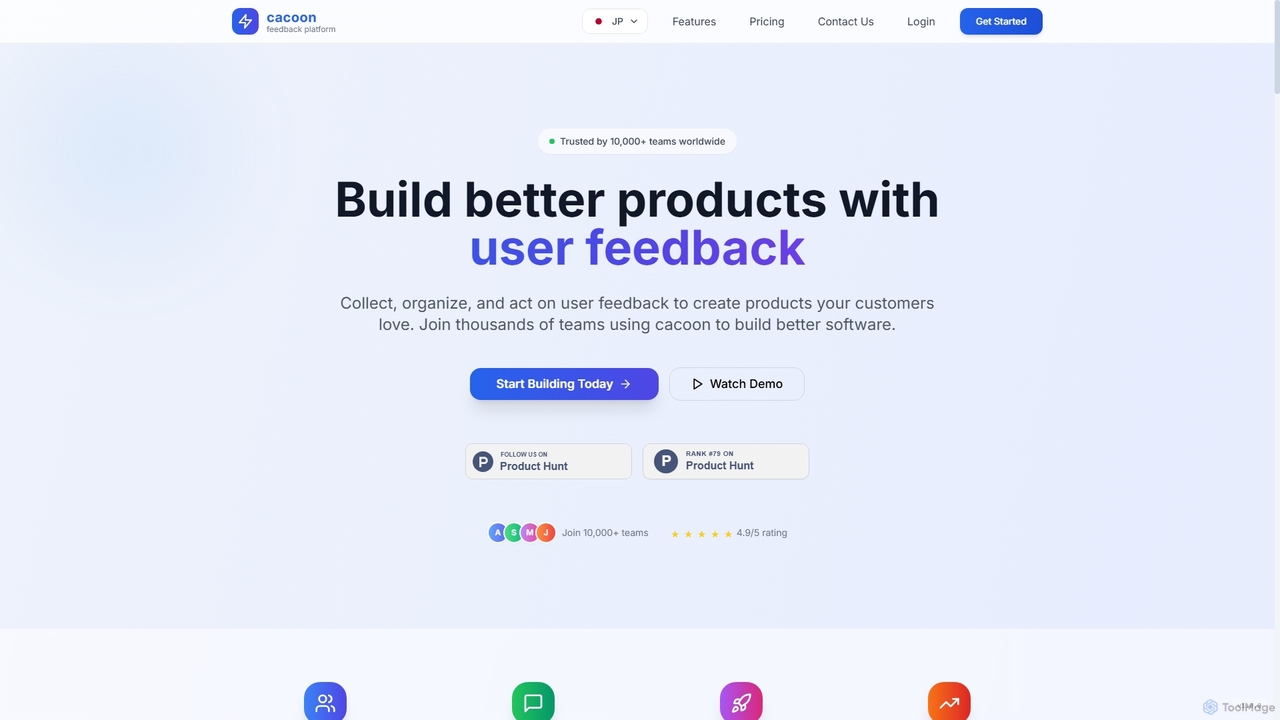
Cacoon is an AI-powered product management platform designed to help teams collect, organize, and act on user feedback …
Cacoon is an AI-powered product management platform designed to help teams collect, organize, and act on user feedback efficiently. It transforms raw feedback into actionable insights and strategic roadmaps, fostering better product development and customer satisfaction.
About Analytics
AI Analytics tools are specialized platforms that leverage artificial intelligence and machine learning to process, interpret, and derive actionable insights from complex datasets. These tools go beyond traditional data analysis by automating pattern recognition, predicting future trends, and offering prescriptive recommendations. They empower businesses to make data-driven decisions faster, optimize operations, and uncover hidden opportunities across various domains.
Core Features
- Automated Data Processing: Automatically ingests, cleans, and transforms raw data from diverse sources, reducing manual effort.
- Predictive Modeling: Utilizes machine learning algorithms to forecast future outcomes, such as sales trends, customer churn, or market shifts.
- Prescriptive Insights: Provides actionable recommendations and optimal strategies based on data analysis, guiding decision-making.
- Anomaly Detection: Identifies unusual patterns or outliers in data that may indicate fraud, system failures, or emerging issues.
- Natural Language Generation (NLG): Translates complex data insights into easily understandable narratives and reports.
Use Cases
AI Analytics tools are crucial for organizations seeking to maximize the value of their data. They are used by data scientists to build sophisticated predictive models, by marketing teams to personalize campaigns based on customer behavior, and by operations managers to optimize supply chains through demand forecasting. Businesses leverage these tools to gain a competitive edge by transforming raw data into strategic intelligence.
How to Choose
When selecting an AI Analytics tool, consider its data integration capabilities with your existing systems, the specific types of predictive or prescriptive models it supports, and its scalability to handle growing data volumes. Evaluate the user interface for ease of use, the level of customization offered for models and reports, and the vendor's support for data privacy and security compliance. Pricing models and the availability of industry-specific templates are also important factors.
AnalyticsUse Cases
Predicting Customer Churn
Marketing and customer success teams use AI analytics to identify customers at high risk of churning. By analyzing historical interaction data, purchase patterns, and support tickets, the AI predicts potential churners, allowing proactive engagement with personalized offers or support to retain them.
Optimizing Supply Chain Logistics
Operations managers leverage AI analytics to forecast demand fluctuations, optimize inventory levels, and streamline logistics routes. The AI processes real-time data on sales, weather, and global events to predict potential disruptions and recommend optimal stock distribution, minimizing costs and improving delivery times.
Personalizing Marketing Campaigns
Digital marketers employ AI analytics to understand individual customer preferences and behaviors at scale. The tools analyze browsing history, past purchases, and demographic data to segment audiences and generate highly personalized content and product recommendations, significantly increasing conversion rates.
Detecting Financial Fraud
Financial institutions utilize AI analytics for real-time anomaly detection in transaction data. The AI learns normal spending patterns and flags suspicious activities, such as unusual transaction amounts or locations, enabling rapid investigation and prevention of fraudulent financial activities.
Enhancing Healthcare Diagnostics
Healthcare providers use AI analytics to process vast amounts of patient data, including medical images, lab results, and electronic health records. The AI assists in identifying subtle patterns indicative of diseases, predicting patient outcomes, and personalizing treatment plans, thereby improving diagnostic accuracy and patient care.
Forecasting Sales and Revenue
Sales and business development teams apply AI analytics to predict future sales performance and revenue. By integrating historical sales data, market trends, and external economic indicators, the AI generates accurate forecasts, helping businesses set realistic targets, allocate resources effectively, and plan for growth.