
ToolMage
Sign in

Best 153 Artificial Intelligence AI tools

Popular Artificial Intelligence AI tools include Google Skills, getcruise, Devin, Jules, Figure, Geekflare AI, Mermaid Online, Odyssey, SeatCompare, and Aicofounder, helping you work more efficiently.

Reindeer

Reindeer

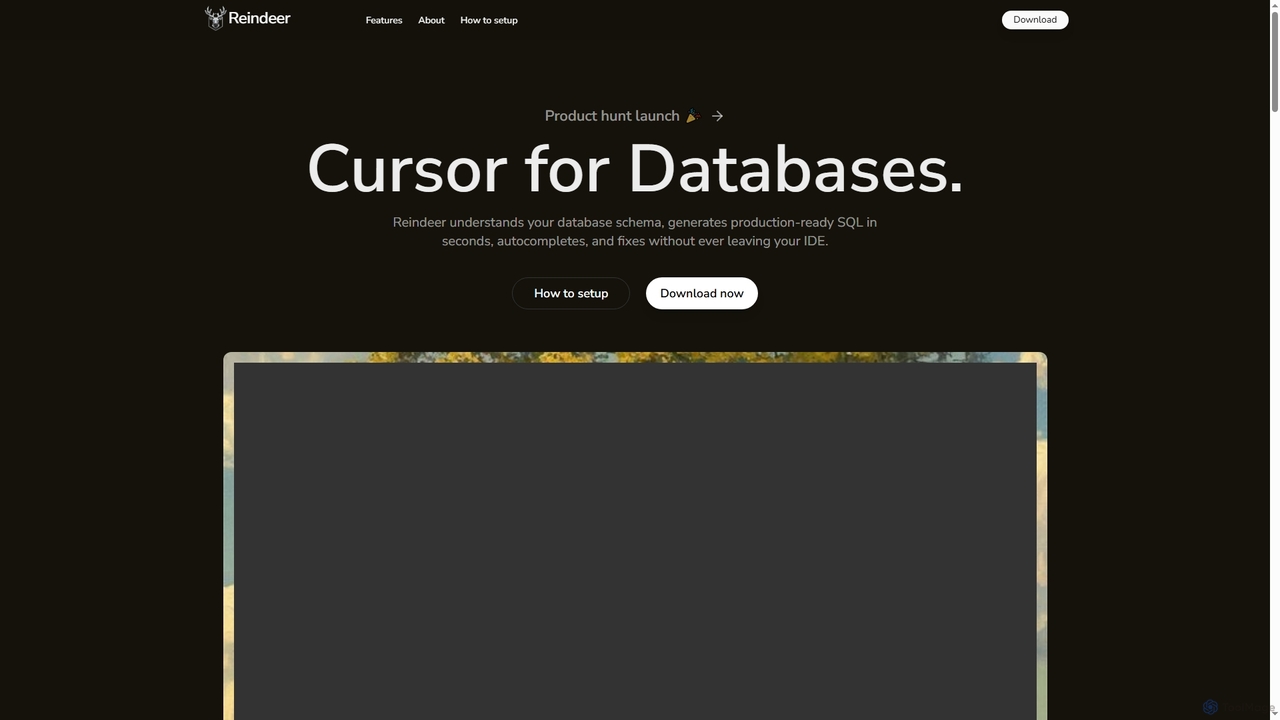
Reindeer is an AI-powered cursor for databases that integrates directly into your IDE. It understands your database schema, generates production-ready SQL, provides real-time autocomplete, and automatically fixes errors, significantly enhancing developer productivity.

Code Generation
Visits 4.4KFavorites 160Likes 152

About Artificial Intelligence

Artificial Intelligence (AI) refers to the simulation of human intelligence in machines that are programmed to think like humans and mimic their actions. These tools leverage advanced algorithms, machine learning, and deep learning models to process vast amounts of data, recognize patterns, and make informed decisions or predictions. AI's primary value lies in automating complex tasks, enhancing decision-making, and enabling innovative solutions across virtually every industry, driving efficiency and unlocking new capabilities.

Core Features

  • Machine Learning: Enables systems to learn from data, identify patterns, and make predictions or decisions without explicit programming.
  • Natural Language Processing (NLP): Allows computers to understand, interpret, and generate human language, facilitating communication and text analysis.
  • Computer Vision: Equips machines with the ability to "see" and interpret visual information from images and videos.
  • Predictive Analytics: Uses statistical algorithms and machine learning techniques to forecast future outcomes based on historical data.
  • Automation & Robotics: Integrates AI to perform tasks autonomously, from repetitive processes to complex physical operations.

Application Areas

Artificial Intelligence is transforming sectors such as healthcare for diagnostics and drug discovery, finance for fraud detection and algorithmic trading, and manufacturing for quality control and predictive maintenance. It also powers personalized experiences in e-commerce, enhances customer service through intelligent chatbots, and optimizes logistics in supply chains, demonstrating its pervasive impact across diverse operational landscapes.

How to Choose AI Solutions

Selecting the right AI solution involves defining the specific problem to solve, assessing the availability and quality of data, and evaluating the required level of accuracy and scalability. Consider the integration capabilities with existing systems, the total cost of ownership including development and maintenance, and the ethical implications and regulatory compliance relevant to your industry. Prioritize solutions that offer clear ROI and align with long-term strategic goals.

Featured tool rankings

Artificial Intelligence use cases

1

Automating Customer Service Inquiries

For businesses, AI-powered chatbots and virtual assistants handle routine customer questions, provide instant support, and guide users through processes 24/7. This frees human agents to focus on complex issues, significantly reducing response times and improving overall customer satisfaction by offering immediate, consistent, and personalized interactions.

2

Predictive Maintenance in Manufacturing

Manufacturers use AI to analyze sensor data from machinery, predicting potential equipment failures before they occur. By identifying subtle anomalies and patterns, AI enables proactive maintenance scheduling, minimizing costly downtime, extending asset lifespan, and optimizing operational efficiency, thereby preventing unexpected production halts and reducing repair costs.

3

Personalized Content and Product Recommendations

E-commerce platforms and media streaming services deploy AI to analyze user behavior, preferences, and historical interactions. This allows them to deliver highly personalized product suggestions, movie recommendations, or news feeds, enhancing user engagement, driving sales, and improving the overall user experience by presenting relevant and appealing options.

4

Financial Fraud Detection and Prevention

Financial institutions leverage AI algorithms to monitor vast volumes of transactions in real-time, identifying unusual patterns or anomalies indicative of fraudulent activity. AI can quickly flag suspicious transactions, reducing financial losses and protecting customers, far more effectively than manual review, by adapting to new fraud tactics as they emerge.

5

Medical Diagnostics and Drug Discovery

In healthcare, AI assists medical professionals by analyzing complex medical images (X-rays, MRIs) for early disease detection and by sifting through vast genomic and clinical data for drug discovery. This accelerates research, improves diagnostic accuracy, and helps identify potential treatments more efficiently, ultimately leading to better patient outcomes and faster therapeutic development.

6

Optimizing Supply Chain Logistics

Businesses utilize AI to forecast demand, optimize inventory levels, and streamline logistics operations. By analyzing market trends, weather patterns, and historical sales data, AI can predict future needs, recommend optimal shipping routes, and manage warehouse operations, leading to reduced costs, improved delivery times, and enhanced supply chain resilience.

Artificial Intelligence FAQ

What is Artificial Intelligence (AI)?

Artificial Intelligence (AI) is a broad field of computer science focused on creating machines that can perform tasks typically requiring human intelligence. This includes learning, problem-solving, perception, and language understanding. AI systems are designed to analyze data, identify patterns, and make decisions or predictions, often mimicking cognitive functions like reasoning and learning.

What are the main benefits of using AI?

The main benefits of AI include enhanced automation of repetitive or complex tasks, leading to significant efficiency gains and cost reductions. AI also improves decision-making through data-driven insights and predictive analytics, enables personalized experiences, and fosters innovation by solving problems in novel ways. It allows businesses to scale operations and deliver consistent quality.

How does Artificial Intelligence learn and make decisions?

AI learns primarily through machine learning, where algorithms are trained on large datasets to recognize patterns and relationships. For decision-making, AI uses these learned patterns to process new data and generate outputs or predictions. Deep learning, a subset of machine learning, uses neural networks to process complex data like images and speech, enabling more sophisticated learning and decision-making capabilities.

What are the key challenges and ethical considerations in AI?

Key challenges in AI include data privacy and security, the potential for algorithmic bias leading to unfair outcomes, and the "black box" problem where AI decisions are difficult to interpret. Ethical considerations also involve job displacement, accountability for AI errors, and the responsible development and deployment of autonomous systems. Addressing these requires careful design, regulation, and transparency.

How is AI impacting various industries today?

AI is profoundly impacting industries by transforming operations and creating new opportunities. In healthcare, it aids diagnostics and drug discovery; in finance, it enhances fraud detection and risk management; in retail, it personalizes customer experiences and optimizes supply chains. Manufacturing benefits from predictive maintenance, while transportation sees advancements in autonomous vehicles. AI is a catalyst for innovation across the board.