Bsub
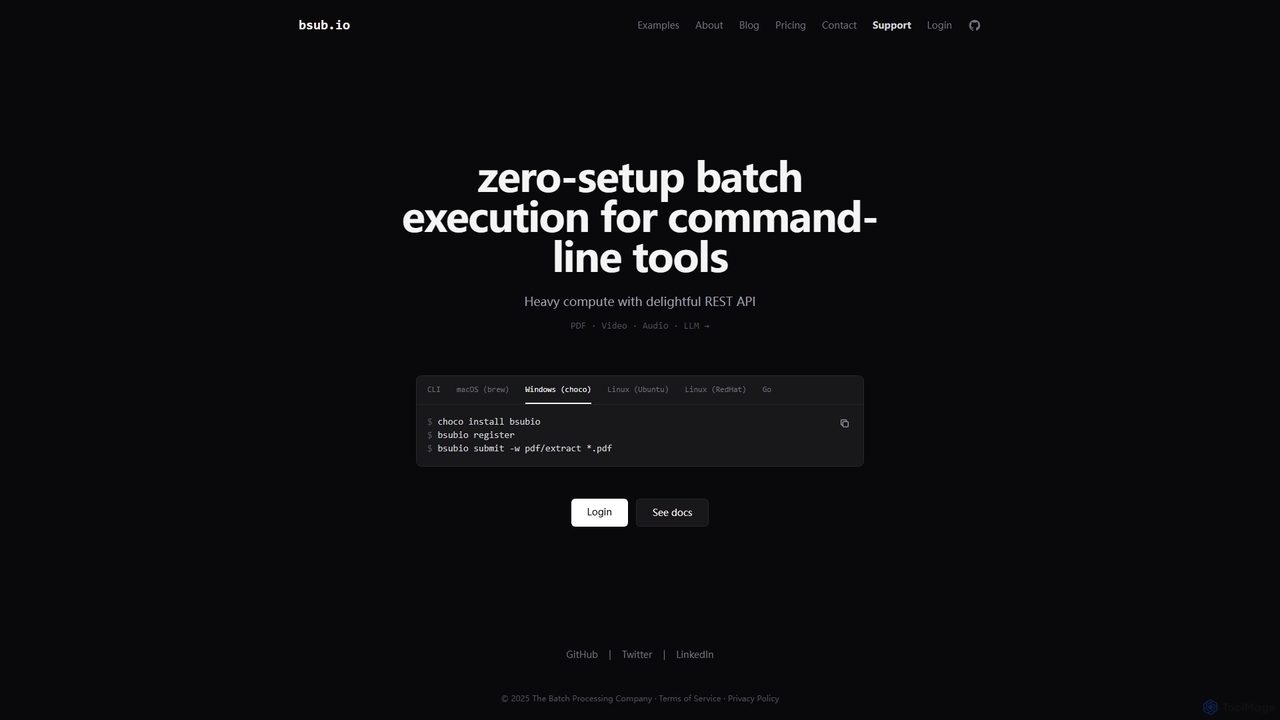
Bsub is a zero-setup batch processing platform designed for developers to execute command-line tools at scale. It simplifies …
Bsub is a zero-setup batch processing platform designed for developers to execute command-line tools at scale. It simplifies heavy computational tasks like PDF extraction, video transcoding, audio transcription, and large language model (LLM) batch inference through a simple REST API, eliminating infrastructure management and scaling concerns.
TranslateMom
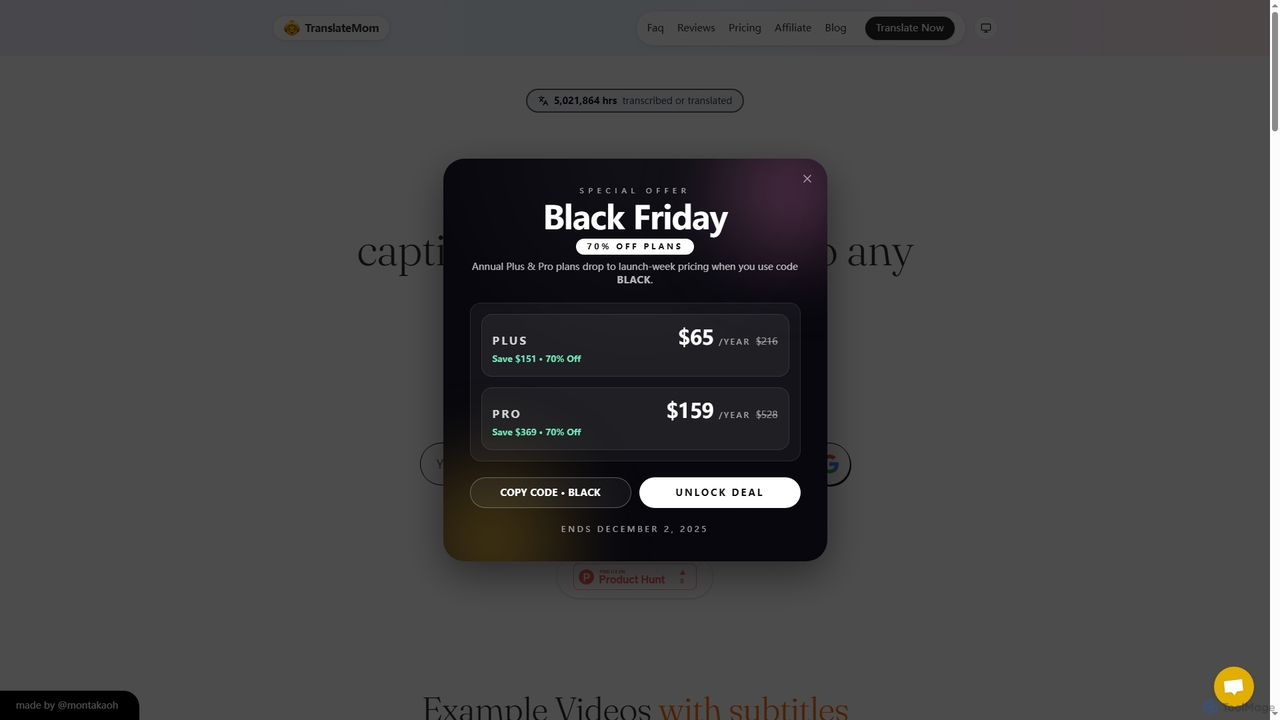
TranslateMom is an AI-powered video translation, dubbing, and captioning tool designed to help content creators, marketers, and educators …
TranslateMom is an AI-powered video translation, dubbing, and captioning tool designed to help content creators, marketers, and educators reach a global audience. It supports over 100 languages for subtitles and translation, and 29 languages for AI dubbing, making video localization fast and efficient.
About Transcription
AI Transcription tools are a specialized category within Audio Processing that convert spoken language from audio or video files into written text. These tools leverage advanced speech-to-text (STT) algorithms and natural language processing to accurately capture dialogue. They provide a crucial bridge between auditory and textual information, enabling easier search, analysis, and accessibility of spoken content, focusing specifically on text extraction rather than sound manipulation.
Core Features
- High Accuracy: Utilizes advanced AI models to achieve high accuracy, even with varying accents and audio quality.
- Speaker Diarization: Automatically identifies and labels different speakers in a conversation, distinguishing who said what.
- Timestamping: Associates transcribed text with specific time markers in the original audio or video, aiding navigation.
- Multilingual Support: Offers transcription services for a wide range of languages, catering to global content.
- Custom Vocabulary: Allows users to add specific terms, names, or jargon to improve accuracy for niche content.
Use Cases
Journalists and researchers use transcription tools to quickly convert interviews and field recordings into searchable text, streamlining data analysis and report writing. Content creators employ them for generating accurate subtitles and captions for videos, enhancing accessibility and SEO.
How to Choose
Evaluate accuracy rates for your specific audio types (e.g., clear speech vs. noisy environments). Consider supported languages, speaker diarization capabilities, and the ease of editing. Check integration options with existing workflows and pricing models based on usage volume or subscription.
TranscriptionUse Cases
Transcribing Interviews for Journalism and Podcasting
Journalists and podcasters frequently conduct interviews that need to be converted into text for articles, show notes, or research. AI transcription tools allow them to upload audio recordings and quickly receive accurate text, saving hours of manual typing. This enables faster content production and easier extraction of key quotes and information, significantly accelerating the editorial process.
Converting Interviews for Journalism
Journalists and reporters utilize transcription tools to quickly convert recorded interviews into text. This enables efficient content analysis, precise quote extraction, and streamlined article writing, eliminating the need for manual playback and note-taking. It significantly reduces the time spent on post-interview processing, allowing more focus on storytelling.
Transcribing Interviews for Research
Researchers and journalists utilize AI transcription tools to convert recorded interviews, focus group discussions, and field notes into accurate, searchable text. This allows for quick keyword searches, thematic analysis, and precise quoting for academic papers, articles, or investigative reports, significantly reducing the manual effort and time spent on data preparation.
Converting Lectures and Meetings into Searchable Notes
Students, professionals, and corporate teams can use transcription tools to convert recorded lectures, seminars, or internal meetings into comprehensive text notes. This ensures no critical information is missed, facilitates easy searching for specific topics or keywords, and provides a shareable, accessible record for all participants, enhancing learning and collaboration efficiency.
Generating Subtitles and Captions for Videos
Video creators and content producers use transcription tools to automatically generate accurate subtitles and captions for their video content. This not only improves accessibility for viewers with hearing impairments but also enhances SEO on platforms like YouTube, making videos more discoverable and engaging for a wider audience.
Generating Subtitles and Captions for Videos
Video content creators, educators, and broadcasters use AI transcription to automatically generate accurate subtitles and closed captions for their video content. This not only improves accessibility for hearing-impaired audiences but also enhances video SEO, making content more discoverable on platforms like YouTube and increasing engagement.
Generating Subtitles and Captions for Video Content
Video content creators, educators, and marketers utilize transcription tools to automatically generate accurate subtitles and captions for their videos. This significantly improves accessibility for hearing-impaired audiences, enhances SEO by making video content searchable, and allows viewers to consume content in sound-off environments, thereby broadening reach and engagement across platforms.
Documenting Meetings and Webinars
Businesses and teams transcribe virtual meetings, webinars, and conference calls to create searchable records. This ensures that key decisions, action items, and discussions are accurately documented, facilitating easy sharing of summaries and preventing any crucial information from being missed, improving overall team communication and accountability.
Automating Meeting Minutes and Summaries
Businesses and teams leverage AI transcription tools to automatically convert recorded meetings, webinars, and conference calls into searchable text. This streamlines the creation of meeting minutes, action item tracking, and knowledge sharing, ensuring that all participants have access to a precise record of discussions without the need for manual note-taking during the session.
Analyzing Qualitative Research Data Efficiently
Researchers in fields like social sciences or market research often collect qualitative data through focus groups, in-depth interviews, or ethnographic studies. Transcribing these audio recordings with AI tools provides a textual dataset that can be easily coded, analyzed for themes, and searched for specific keywords, significantly accelerating the research process and improving data interpretation.
Academic Research and Lecture Notes
Students and researchers leverage transcription tools to convert recorded lectures, focus group discussions, or qualitative research interviews into easily analyzable text. This transforms spoken data into searchable notes, facilitating efficient study, accurate data analysis for reports, and improved accessibility for reviewing complex academic content.
Legal and Medical Documentation
Legal professionals use transcription tools for converting depositions, court hearings, and client consultations into written records, ensuring compliance and accurate documentation. Similarly, medical practitioners utilize them to transcribe dictations, patient notes, and clinical summaries, improving efficiency in record-keeping and reducing the risk of errors in critical information.
Documenting Legal Proceedings and Depositions
Legal professionals require highly accurate and verifiable records of court hearings, depositions, and client consultations. AI transcription tools, especially those with high accuracy and speaker identification, can provide initial drafts of these documents. This speeds up legal documentation, allowing human transcribers to focus on review and certification, ensuring compliance and precision in critical legal contexts.
Legal Proceedings and Depositions
Legal professionals utilize transcription services to accurately convert court hearings, depositions, client consultations, and other legal audio into written transcripts. These precise records are crucial for evidence, case preparation, and maintaining official documentation, ensuring compliance and facilitating thorough legal analysis.
Indexing and Archiving Podcast Content
Podcasters and audio content producers use AI transcription to create full-text searchable archives of their episodes. By converting spoken content into text, they make it easier for listeners to find specific topics or segments within long episodes, improve content discoverability through search engines, and provide valuable data for content analysis and repurposing.
Repurposing Spoken Content for Marketing and SEO
Marketers and content strategists can repurpose spoken content from webinars, podcasts, or live streams into various text formats. By transcribing these audio-visual assets, they can easily extract blog posts, social media updates, email newsletters, or whitepapers. This maximizes the value of their content, improves SEO through keyword-rich text, and reaches wider audiences who prefer reading over listening or watching.
Podcast and Audio Content Repurposing
Podcasters and audio content creators transcribe their episodes to generate blog posts, show notes, social media snippets, and e-books. This strategy expands their content reach, improves SEO by providing text-based content for search engines, and offers alternative consumption formats for their audience, maximizing the value of their audio productions.
Training Data for Voice Assistants and Chatbots
Developers and AI engineers leverage transcribed speech data to train and improve the natural language understanding (NLU) capabilities of AI voice assistants, chatbots, and other conversational AI systems. High-quality transcriptions provide the essential ground truth for machine learning models, enabling them to better process user queries and generate more accurate responses.