GULF-EL
GULF-EL is an innovative AI-driven e-hailing platform revolutionizing passenger transport by integrating electric vehicles, blockchain technology, and cryptocurrency. …
GULF-EL is an innovative AI-driven e-hailing platform revolutionizing passenger transport by integrating electric vehicles, blockchain technology, and cryptocurrency. It aims to create a transparent, secure, and rewarding Web3 ridesharing ecosystem for riders, drivers, and partners.
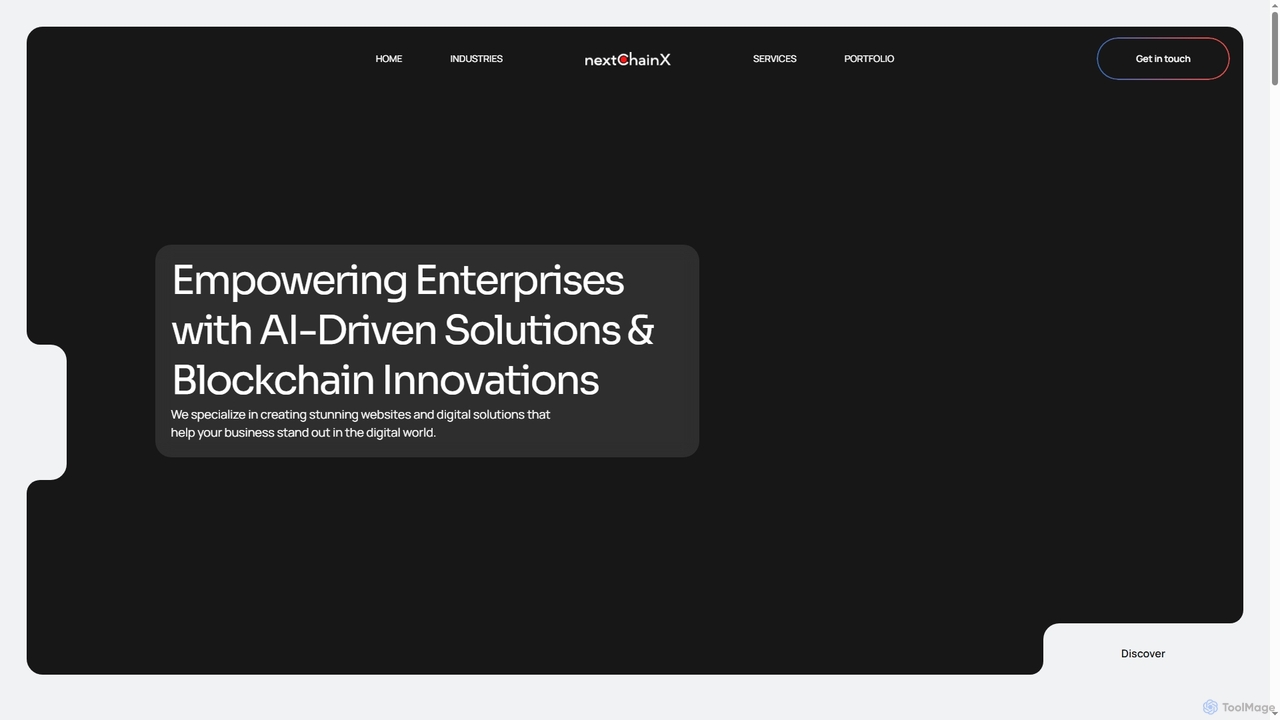
NextChainX
NextChainX specializes in empowering enterprises with advanced AI-driven solutions and blockchain innovations. They offer custom AI assistants, LLM …
NextChainX specializes in empowering enterprises with advanced AI-driven solutions and blockchain innovations. They offer custom AI assistants, LLM integration, automation tools, and high-performance Solana development for DeFi, NFTs, and dApps, enhancing business intelligence, efficiency, and customer engagement across various industries.
About Decentralized Applications
Decentralized Applications (DApps) are software programs that operate on a peer-to-peer blockchain network instead of a single central server. They leverage smart contracts to execute code, ensuring that operations are transparent, immutable, and not controlled by any single entity. This architecture provides users with direct control over their data and assets, fostering a trustless environment for interaction. DApps are foundational to Web3, enabling new models for finance, gaming, and social media.
Core Features
- Censorship Resistance: Operations and content cannot be arbitrarily removed or altered by a central authority.
- Data Integrity: All transactions and data are recorded on an immutable blockchain, ensuring they are verifiable and tamper-proof.
- User-Controlled Identity: Users interact with DApps using their crypto wallets, maintaining ownership and control over their digital identity and assets.
- Transparent Operations: The underlying code (smart contracts) is often open-source and verifiable, allowing anyone to audit its logic and execution.
- No Single Point of Failure: Running on a distributed network of nodes makes DApps highly resilient to server outages and attacks.
Use Cases
DApps are utilized across various sectors. In Decentralized Finance (DeFi), they facilitate lending, borrowing, and trading without traditional financial intermediaries. The art and collectibles space uses DApps for minting and trading Non-Fungible Tokens (NFTs). They also power decentralized social networks, play-to-earn (P2E) games, and transparent supply chain management systems.
How to Choose
When selecting a Decentralized Application, consider the underlying blockchain protocol for its security, speed, and transaction costs (e.g., Ethereum, Solana). Evaluate the project's credibility by checking for smart contract security audits from reputable firms. Assess the strength and engagement of its community and the clarity of its governance model. Finally, consider the user interface (UI) and overall user experience (UX), as usability can vary significantly.
Decentralized ApplicationsUse Cases
Participating in DeFi Lending and Borrowing
A crypto investor wants to earn passive income on their digital assets without selling them. Using a DeFi lending DApp, they can deposit their assets (like ETH or stablecoins) into a liquidity pool. The DApp's smart contracts automatically manage these funds, lending them to borrowers and distributing interest back to the liquidity providers. The investor can track their earnings in real-time and withdraw their funds at any time, all without needing a bank or financial advisor, ensuring full custody over their assets.
Minting and Trading Digital Art as NFTs
A digital artist wants to sell their work directly to a global audience and ensure they receive royalties from secondary sales. They use an NFT marketplace DApp to 'mint' their artwork into a Non-Fungible Token (NFT) on a blockchain. This process creates a verifiable, unique digital certificate of ownership. Collectors can then purchase the NFT using cryptocurrency. The DApp's smart contract automatically enforces royalty payments, sending a percentage of every future sale back to the original artist's wallet, a process that is difficult to manage in the traditional art world.
Voting in a Decentralized Autonomous Organization (DAO)
A member of a project community holds the project's governance tokens. They want to have a say in the future direction of the project, such as approving a new feature or changing the fee structure. They connect their wallet to the project's DAO DApp, which displays current governance proposals. Using their tokens as voting power, they can vote 'for' or 'against' each proposal. The entire process is transparent on the blockchain, and the outcome is automatically executed by smart contracts once voting concludes, ensuring a community-driven and democratic decision-making process.
Playing a Play-to-Earn (P2E) Blockchain Game
A gamer enjoys playing video games and wants to earn real-world value from their time and skill. They play a P2E game built as a DApp. In this game, in-game items like characters, skins, or land are represented as NFTs that the player truly owns in their crypto wallet. By completing quests, winning battles, or contributing to the game's ecosystem, they earn the game's native cryptocurrency. They can then trade these NFT items and tokens on decentralized exchanges for other cryptocurrencies or fiat money, turning their gaming hobby into a potential source of income.
Using a Decentralized Social Media Platform
A content creator is concerned about censorship and data privacy on traditional social media platforms. They join a decentralized social network DApp. On this platform, they connect using their crypto wallet, which acts as their identity without revealing personal information. Their posts and social graph are stored on a decentralized storage network or blockchain, not on company servers. This means they own their content and follower relationships, and their account cannot be suspended or deleted by a central authority. They may also earn cryptocurrency rewards based on the engagement their content receives.
Verifying Product Authenticity via Supply Chain DApp
A consumer purchasing a luxury good, like a high-end watch, wants to ensure it is authentic. The manufacturer uses a supply chain DApp to track the product's journey. At each stage, from creation to shipment to the retailer, a transaction is recorded on the blockchain, creating an immutable and transparent history. The consumer can scan a QR code on the product using their smartphone, which opens the DApp and displays the entire provenance of the item. This provides verifiable proof of authenticity and ownership history, combating counterfeiting and increasing consumer trust.