
Waldium
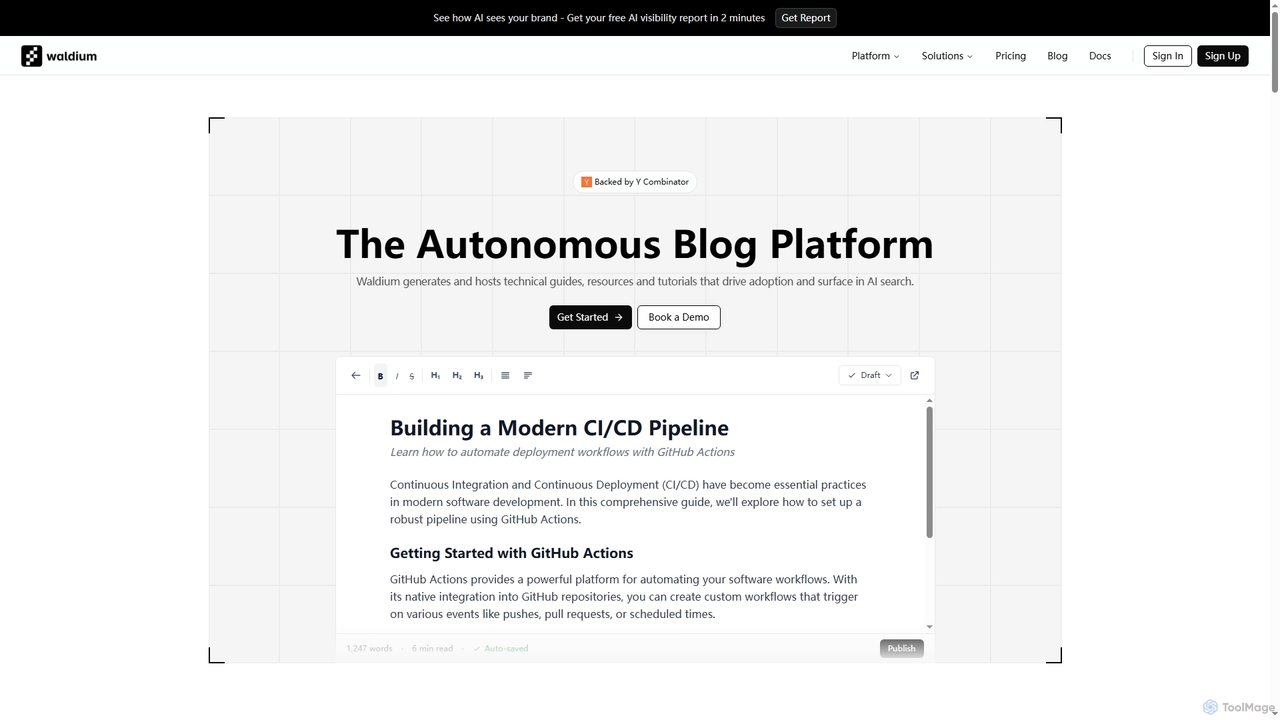
Waldium is an autonomous blog platform designed for developer tools, leveraging AI to generate and host technical guides, …
Waldium is an autonomous blog platform designed for developer tools, leveraging AI to generate and host technical guides, tutorials, and resources. It optimizes content for AI search engines like ChatGPT and Claude, ensuring developer products are discoverable and drive adoption.
About Content Management
AI Content Management tools are designed to automate and optimize the entire content lifecycle, from creation and organization to distribution and analysis. Leveraging machine learning and natural language processing, these tools enhance efficiency by intelligently categorizing, personalizing, and recommending content. They empower content creators and marketers to manage large volumes of blog posts and articles more effectively, ensuring better discoverability and engagement within the broader blogging ecosystem.
Core Features
- Automated Tagging & Categorization: AI automatically analyzes content to assign relevant tags and categories, improving organization and searchability.
- Content Personalization: Delivers tailored content recommendations to individual users based on their behavior and preferences, boosting engagement.
- Performance Prediction: Analyzes historical data to forecast content performance, helping optimize topics and formats for better reach.
- Smart Content Scheduling: Recommends optimal publishing times across various platforms to maximize audience engagement.
- Duplicate Content Detection: Identifies and flags similar or duplicate content to maintain SEO integrity and content originality.
Use Cases
Content teams use AI content management to streamline the workflow of publishing daily blog posts, ensuring consistent quality and brand voice across multiple authors. Marketing departments leverage these tools to personalize content delivery for different audience segments, improving conversion rates and reader satisfaction.
How to Choose
Consider the scope of automation needed, from basic tagging to advanced personalization. Evaluate integration capabilities with existing CMS or marketing platforms. Assess the accuracy of AI models for your specific content type and language. Finally, compare pricing models and scalability options to match your team's size and budget effectively.
Content ManagementUse Cases
Automating Blog Post Categorization and Tagging
A large media company with thousands of daily news articles and blog posts uses AI content management to automatically categorize and tag each piece of content. This ensures readers can easily find relevant information through topic-based navigation and internal search, reducing manual effort by 70% and significantly improving content discoverability across their extensive archives.
Personalized Content Recommendation for Readers
An online learning platform employs AI content management to recommend specific blog articles and tutorials to users based on their learning history and expressed interests. This intelligent personalization increases user engagement by 30% and keeps them on the platform longer, fostering a more tailored and effective learning experience.
Optimizing Content for SEO and Readability
A digital marketing agency utilizes AI tools to analyze blog drafts for SEO keywords, readability scores, and potential content gaps before publishing. This ensures content is highly optimized for search engines and user experience, leading to higher organic traffic and better search rankings for their clients' blogging efforts.
Managing Multi-Language Content Versions Efficiently
A global e-commerce brand uses AI content management to efficiently organize and track different language versions of product descriptions and blog content across various regional websites. The AI helps maintain consistency across translations, ensures all localized content is up-to-date, and streamlines the publishing workflow for international markets, reducing errors and saving significant time.
Predicting Content Performance and Engagement
A content strategist for a lifestyle blog uses AI to predict which topics, formats, and publishing times are most likely to generate high engagement and social shares. This data-driven approach helps them prioritize content creation efforts, optimize their editorial calendar, and achieve higher audience reach and impact for their blogging strategy.
Streamlining Content Audit and Archiving
A university's communications department uses AI to regularly audit their extensive archive of research papers and blog articles. The AI identifies outdated content, suggests updates, and helps in archiving less relevant material, keeping the website fresh, authoritative, and compliant with information retention policies, significantly reducing manual review time.