ToolMage
Sign in

Best 4 Books AI tools

Popular Books AI tools include befreed, 15minutes.ai, Summarist.ai, and GPT Book Club, helping you work more efficiently.

15minutes.ai
Paid

15minutes.ai

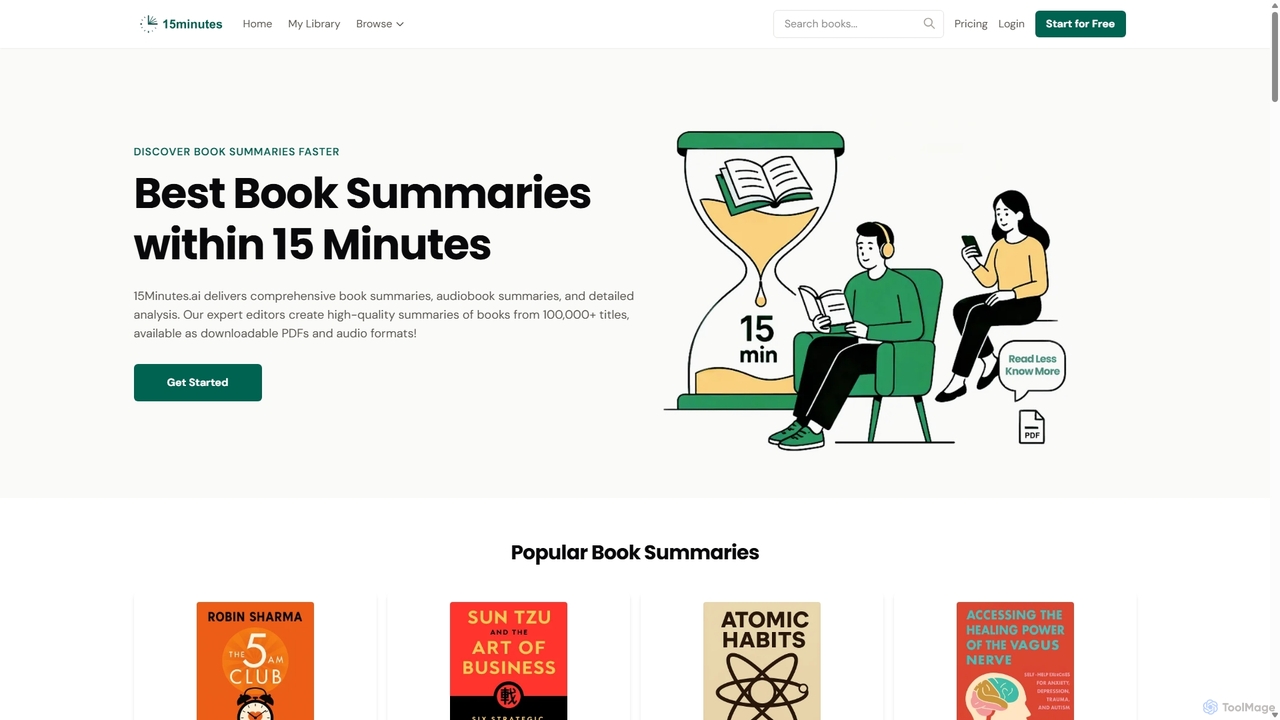
An AI-powered service providing concise text and audio summaries of over 10,000 books. Absorb key insights from bestsellers in business, psychology, self-help, and more in just 15 minutes. Download summaries in PDF/EPUB or listen on the go. Ideal for busy professionals, students, and lifelong learners.

Reading
Visits 12.2KFavorites 114Likes 104
Summarist.ai
Free

Summarist.ai

Summarist.ai is a free AI-powered platform that provides concise summaries of millions of books across a vast range of categories. It helps users quickly grasp key ideas from non-fiction and fiction titles, making it an ideal resource for students, professionals, and lifelong learners. Discover new books, save time, and expand your knowledge effortlessly.

Reading
Visits 9KFavorites 111Likes 137
GPT Book Club
Freemium

GPT Book Club

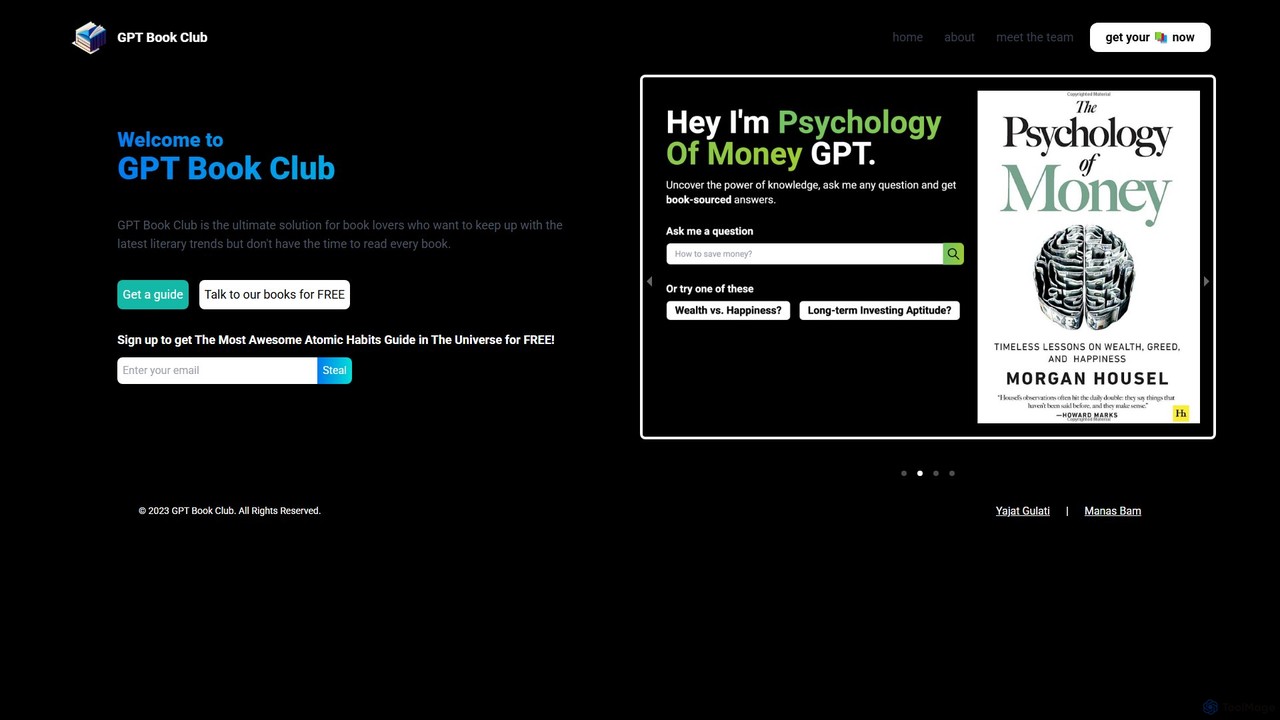
GPT Book Club is an AI-powered platform that provides key insights, summaries, and interactive Q&A sessions for popular books. It's designed for busy individuals who want to absorb knowledge from bestsellers without the time commitment of reading them cover to cover.

Reading
Visits 3.3KFavorites 103Likes 115
befreed
Freemium

befreed

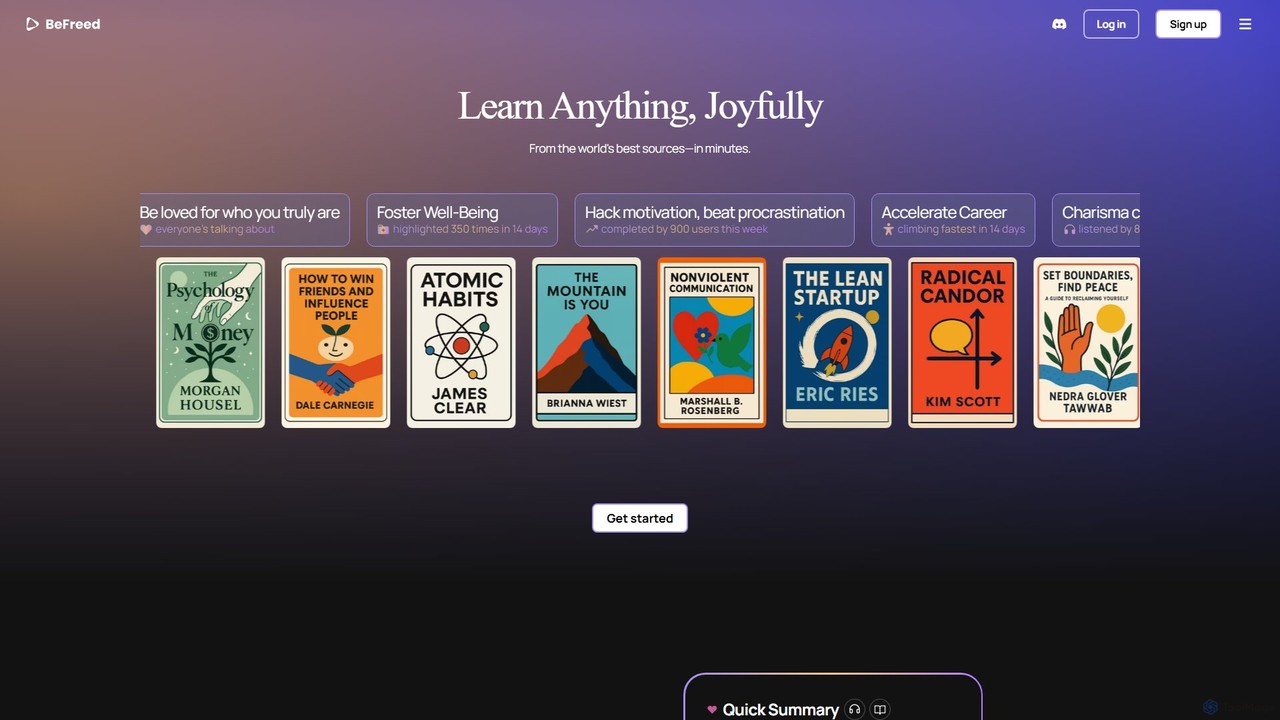
befreed is an AI-powered micro-learning app that transforms knowledge from the world's best books and sources into personalized, bite-sized content. Learn anything joyfully through engaging formats like audio podcasts, flashcards, and quick summaries, tailored to your unique learning style and pace.

Summaries
Visits 257.6KFavorites 112Likes 103

About Books

AI Books are curated knowledge resources designed to help users understand, learn, and apply artificial intelligence concepts. Unlike static texts, these often feature interactive elements, dynamically updated content, and practical, ready-to-use examples like prompt collections. They serve as structured guides for mastering specific AI domains, from foundational theory to advanced prompt engineering. These resources bridge the gap between complex AI research and practical application for a wide range of users.

Core Features

  • Structured Learning Paths: Content is organized logically, like traditional chapters, guiding users from basic to advanced topics.
  • Interactive Content: May include embedded quizzes, code simulators, or AI-powered exercises to reinforce learning.
  • Curated Prompt Libraries: Provide collections of tested and effective prompts for various AI models and tasks.
  • Regular Content Updates: The information is frequently refreshed to keep pace with the rapid evolution of AI technology.

Use Cases

AI Books are valuable for students, developers, marketers, writers, and business leaders. For instance, a marketing professional can use a prompt book to generate effective campaign ideas, while a developer can use an interactive guide to learn a new machine learning framework. They are ideal for self-paced learning and professional development.

How to Choose

When selecting an AI Book, consider your current knowledge level—choose resources tailored for beginners, intermediates, or experts. Evaluate the topic focus to ensure it aligns with your goals (e.g., prompt engineering, AI ethics, machine learning). Also, check the format (interactive e-book, PDF, prompt library) and the frequency of updates to ensure the content is current.

Featured tool rankings

Books use cases

1

Mastering Prompt Engineering for Marketing

A digital marketer needs to create diverse and engaging ad copy for multiple campaigns. Instead of starting from scratch, they use an AI prompt book focused on marketing. They browse chapters on different tones and formats, selecting prompts for generating headlines, social media posts, and email subject lines. By adapting these pre-built prompts, they can generate hundreds of creative variations in minutes, significantly reducing brainstorming time and improving A/B testing outcomes.

2

Learning AI Concepts for Academic Studies

A computer science student is studying machine learning algorithms. They use an interactive AI e-book that goes beyond static text. The book includes embedded Python code snippets they can run directly in the browser to see algorithms in action. Integrated quizzes at the end of each chapter test their understanding, providing immediate feedback. This hands-on approach helps solidify theoretical knowledge and prepares them for practical exams and projects.

3

Formulating a Business AI Strategy

A business manager is tasked with developing an AI integration plan for their company. They utilize an AI strategy book designed for leaders, which explains complex topics like LLMs, generative AI, and automation in clear business terms. The book provides case studies, frameworks for assessing ROI, and checklists for implementation. This structured knowledge empowers the manager to make informed decisions and present a coherent, data-backed AI strategy to stakeholders.

4

Discovering New AI Art Styles

A digital artist wants to explore new creative styles using AI image generators. They use an AI art "lookbook" which showcases a vast gallery of images, each paired with the exact prompt that created it. The artist can study how specific keywords influence style, composition, and lighting. They use these insights to craft their own unique prompts, blending techniques from the book to develop a signature AI-assisted artistic style for their portfolio.

5

Onboarding Developers to AI Best Practices

A tech lead needs to train new developers on the company's standards for using large language models. They provide the team with a digital handbook covering API usage guidelines, token optimization techniques, and ethical considerations. The book includes practical examples and code templates for common tasks. This standardized resource ensures all developers adhere to best practices, improving code quality, reducing costs, and maintaining consistency across projects.

6

Staying Current with AI Research

An AI researcher needs to keep up with the latest academic papers and industry breakthroughs. They subscribe to a dynamically updated digital book that curates and summarizes key findings from the AI community. Each week, new chapters or sections are added covering significant advancements in models, algorithms, and applications. This saves the researcher hours of manual searching and allows them to focus on the most impactful developments in their field.

Books FAQ

What are AI Books?

AI Books are specialized knowledge resources, such as e-books, prompt guides, or interactive tutorials, focused on teaching artificial intelligence concepts and applications. Unlike traditional books, they are often interactive and regularly updated to reflect the fast-paced changes in the AI field. They serve as structured learning tools for anyone looking to gain practical AI skills, from writing effective prompts to understanding machine learning algorithms.

How do AI Books differ from traditional textbooks?

The main difference lies in interactivity and currency. Traditional textbooks are static, printed materials, while AI Books are often digital and feature dynamic content. Key distinctions include:

  • Interactivity: AI Books may contain runnable code examples, embedded quizzes, and direct links to AI tools.
  • Updates: They can be updated frequently to include the latest AI models and techniques, whereas a textbook becomes outdated quickly.
  • Practicality: Many AI Books focus on immediate application, such as providing copy-pasteable prompts, rather than just theory.

Who is the target audience for AI Books?

AI Books cater to a broad audience. This includes students and educators needing structured learning materials, developers and engineers looking to master new AI frameworks, and marketers or content creators seeking to leverage AI tools through effective prompt engineering. Business leaders and managers also use them to understand AI's strategic implications. Essentially, anyone interested in learning or applying AI, regardless of their technical background, can find a relevant AI Book.

How do I choose the right AI Book?

To choose the right AI Book, first identify your learning goal (e.g., learn Python for ML, master Midjourney prompts). Next, assess your current skill level—look for books labeled for beginners, intermediate users, or experts. Consider the format that best suits your learning style, whether it's a text-heavy e-book, a practical prompt library, or an interactive course. Finally, check the publication or last update date to ensure the information is relevant and not outdated.

Are AI Books useful for non-technical users?

Yes, many AI Books are specifically designed for non-technical audiences. These resources focus on practical applications and strategic thinking rather than complex coding or mathematics. For example, there are numerous books dedicated to prompt engineering for writers, marketers, and artists, as well as guides for business leaders on how to implement AI strategy. These books use plain language and focus on the "what" and "why" of AI, not just the "how."