Business Best in category 2 results Ai Governance AI Tool

Popular AI tools in the Ai Governance field of Business include Responsible AI Institute、Trusenta, etc., helping you quickly improve efficiency.

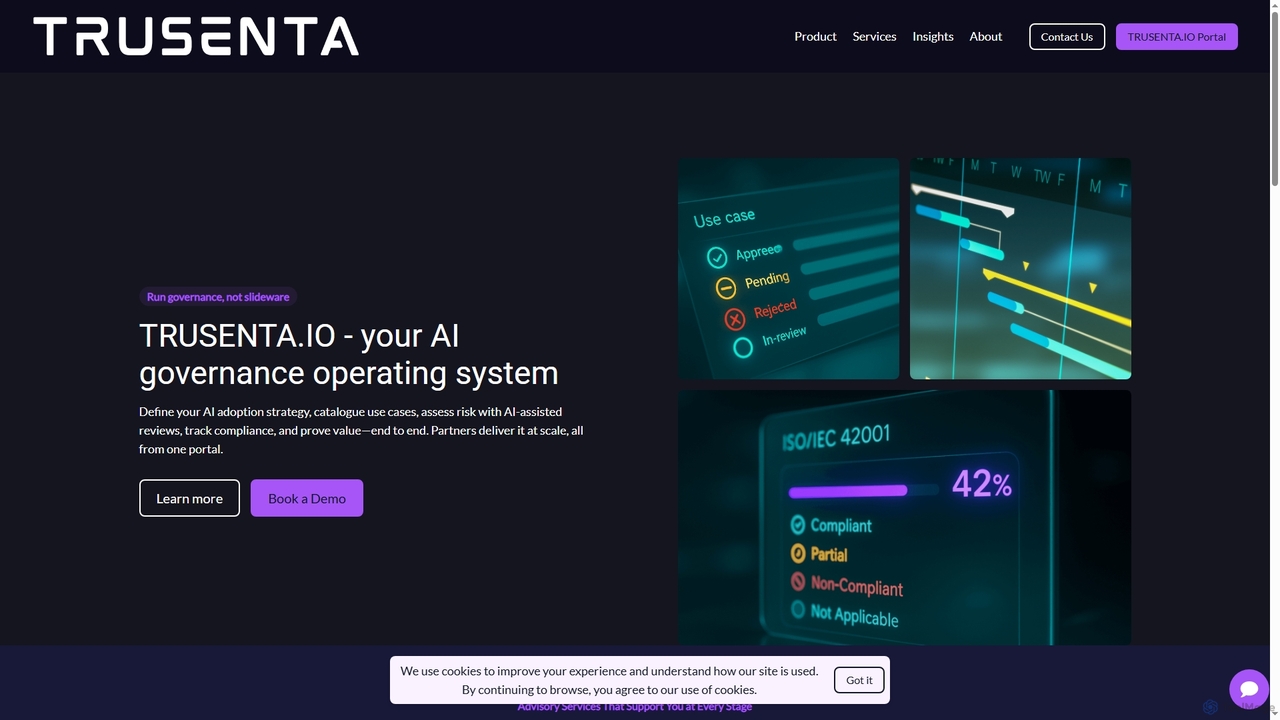
Trusenta

Trusenta

Trusenta provides an AI governance operating system (Trusenta.io) and expert consulting services to help organizations adopt AI strategically, …

4.8K
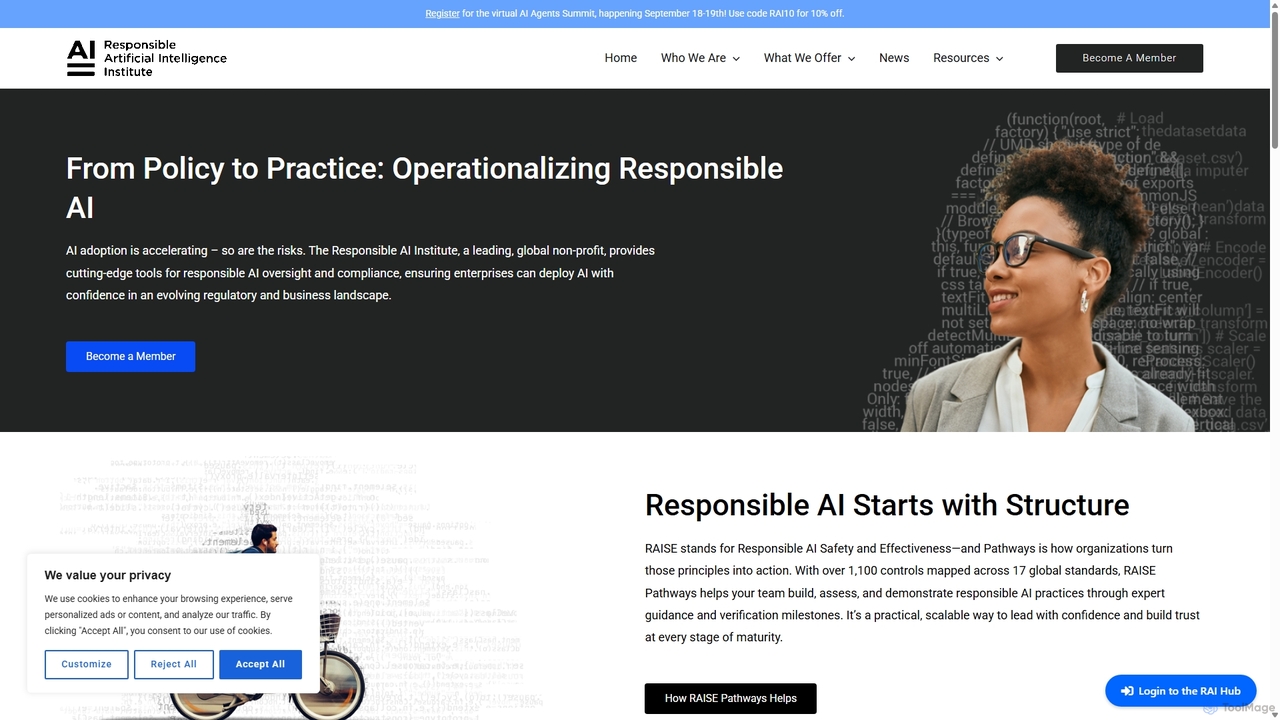
Responsible AI Institute

Responsible AI Institute

The Responsible AI Institute is a global non-profit providing tools, frameworks, and independent assessments for enterprises to build, …

26.2K

About Ai Governance

AI Governance platforms are specialized tools designed to manage, monitor, and ensure the responsible deployment of artificial intelligence systems. These platforms provide a centralized framework for enforcing ethical policies, tracking model performance, ensuring regulatory compliance, and managing AI-related risks. They are essential for organizations to build trust, maintain accountability, and scale AI initiatives safely and effectively within a business context. By automating oversight, these tools help bridge the gap between technical data science teams and non-technical risk and compliance stakeholders.

Core Features

  • Model Inventory & Cataloging: Centralizes and tracks all AI models across the organization, including their versions, metadata, and dependencies.
  • Risk & Compliance Management: Assesses models against regulations (like the EU AI Act, GDPR) and internal ethical policies, automating audit trails.
  • Performance & Bias Monitoring: Continuously monitors models in production for performance degradation, data drift, and fairness issues.
  • Explainability & Transparency (XAI): Generates human-readable explanations and reports to clarify how models make decisions.
  • Automated Workflows & Access Control: Defines roles and automates approval processes for model development, validation, and deployment.

Use Cases

AI Governance tools are critical in regulated industries such as finance, healthcare, and insurance, where model decisions have significant consequences. They are used by Chief Risk Officers, compliance teams, and MLOps engineers to establish a unified system of record for all AI assets. For example, a bank uses these platforms to ensure its loan approval models are fair and non-discriminatory, while a hospital validates that its diagnostic AI tools comply with patient privacy regulations.

How to Choose

When selecting an AI Governance platform, consider its integration capabilities with your existing MLOps pipeline and data sources. Evaluate the breadth of its regulatory templates and its ability to customize policies. Assess the sophistication of its monitoring and explainability features. Finally, consider the user interface's accessibility for both technical and non-technical users to ensure organization-wide adoption and collaboration on AI risk management.

Ai GovernanceUse Cases

1

Ensure Fair Lending Compliance in Banking

A financial institution's compliance team uses an AI Governance platform to monitor its automated credit scoring model. The platform continuously analyzes lending decisions for potential biases related to gender, race, or location, flagging any statistical disparities. It generates automated reports that provide evidence of fairness testing and model validation, which are crucial for audits and regulatory submissions. This proactive monitoring helps the bank avoid discriminatory practices, reduce legal risk, and maintain customer trust.

2

Validate AI Diagnostic Tools in Healthcare

A hospital's clinical innovation team needs to deploy a new AI tool for analyzing medical images. They use an AI Governance platform to create a comprehensive validation file. The platform logs the model's performance metrics, documents the data lineage of the training set, and checks for compliance with regulations like HIPAA. It also provides explainability reports, allowing clinicians to understand the factors driving a specific diagnosis. This ensures the tool is safe, effective, and fully auditable before being used in patient care.

3

Centralize AI Model Inventory for Enterprise

A large technology company with multiple data science teams struggles to track all its AI models. An MLOps leader implements an AI Governance platform to create a central model catalog. Now, every model, from development to production, is registered with its metadata, owner, and risk level. This inventory provides a single source of truth, preventing redundant work, facilitating collaboration, and giving leadership a clear overview of the company's AI assets and associated risks. It also simplifies the process of retiring underperforming or non-compliant models.

4

Automate Risk Assessment for New AI Projects

Before a new AI project begins, a risk manager uses an AI Governance platform to conduct a standardized risk assessment. The project lead answers a series of questions about the data source, intended use, and potential impact. The platform automatically calculates a risk score and identifies potential issues related to privacy, fairness, or security. Based on the score, it triggers an automated workflow, requiring review from legal or compliance teams for high-risk projects. This streamlines the approval process and ensures that governance is embedded from the very start of the AI lifecycle.

5

Mitigate Bias in AI-Powered Hiring Tools

An HR department uses an AI tool to screen resumes. To ensure fairness, they connect it to an AI Governance platform. The platform analyzes historical hiring data and the model's screening decisions to detect biases against candidates based on their name, university, or gender-coded language. It provides a dashboard visualizing these biases and suggests mitigation strategies, such as re-weighting certain criteria. This helps the company build a more diverse workforce and comply with equal opportunity employment laws.

6

Provide Transparency for Algorithmic Decisions

A customer service team at an insurance company receives inquiries about why certain claims were denied by an automated system. Using an AI Governance platform, a support agent can look up the specific transaction and generate a human-readable explanation. The report shows which factors most influenced the model's decision (e.g., 'claim amount exceeded policy limit'). This allows the agent to provide a clear, evidence-based answer to the customer, improving transparency and satisfaction, while also creating an auditable record of the decision-making process.

Ai GovernanceFrequently Asked Questions