Sid
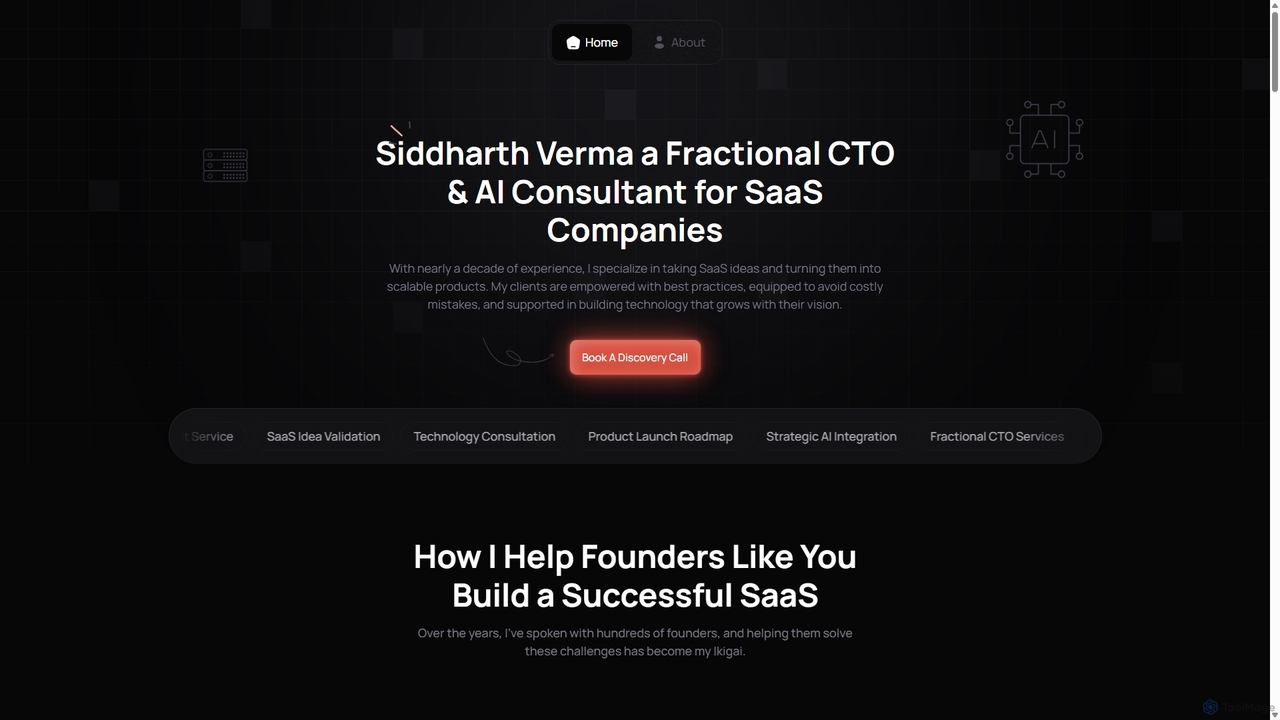
Sid (Siddharth Verma) is a Fractional CTO and AI Consultant specializing in helping SaaS companies transform ideas into …
Sid (Siddharth Verma) is a Fractional CTO and AI Consultant specializing in helping SaaS companies transform ideas into scalable products. With nearly a decade of experience, he offers services like SaaS idea validation, strategic AI integration, product roadmap development, and technical leadership. Sid empowers founders to avoid costly mistakes, build robust technology, and accelerate their growth with expert guidance and firsthand entrepreneurial experience.
IdealHireAI
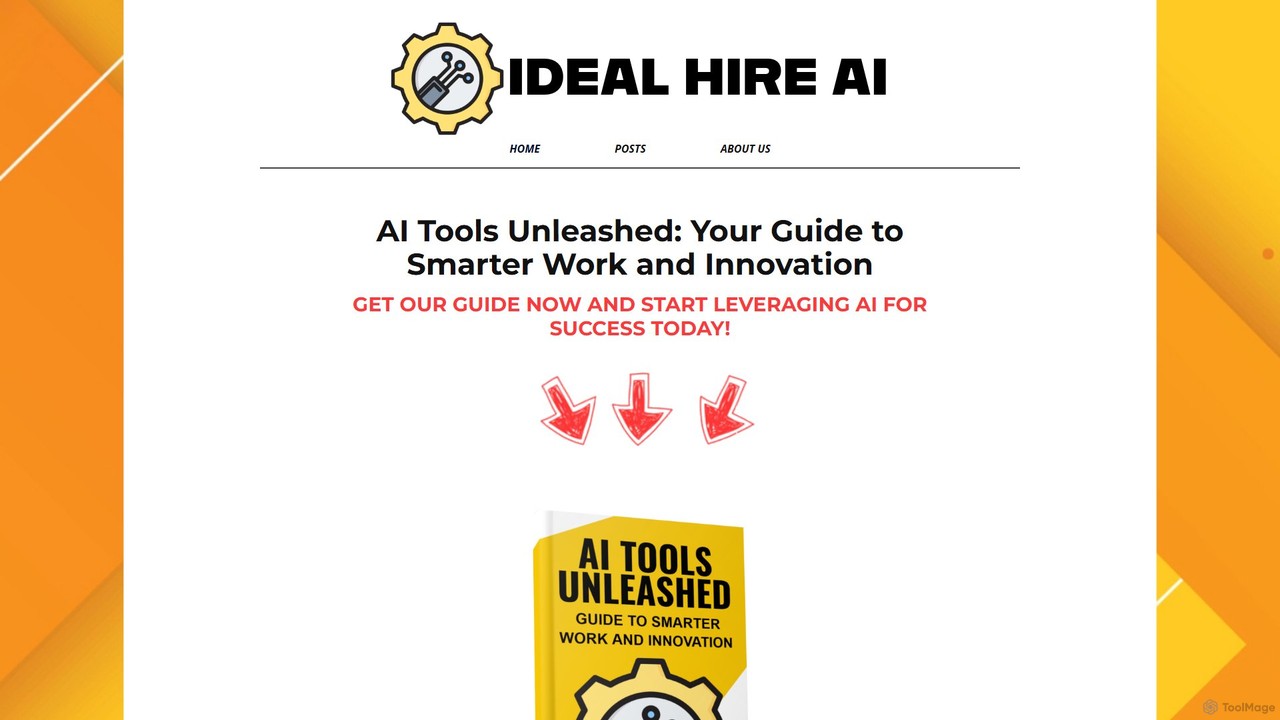
IdealHireAI is a comprehensive online resource hub and blog dedicated to exploring the world of artificial intelligence. It …
IdealHireAI is a comprehensive online resource hub and blog dedicated to exploring the world of artificial intelligence. It provides in-depth articles, guides, and reviews on AI tools and strategies, with a strong focus on applications in cryptocurrency trading, business intelligence, and talent recruitment, empowering users to leverage AI for smarter work and innovation.
About Artificial Intelligence
Artificial Intelligence (AI) refers to the development of computer systems capable of performing tasks that typically require human intelligence. These tools leverage advanced algorithms, machine learning, and deep learning to enable capabilities like problem-solving, decision-making, natural language understanding, and visual perception. In a business context, AI tools are designed to automate complex processes, extract insights from vast datasets, enhance customer experiences, and drive innovation across various industries.
Core Features
- Machine Learning: Enables systems to learn from data, identify patterns, and make predictions without explicit programming.
- Natural Language Processing (NLP): Allows computers to understand, interpret, and generate human language, facilitating interactions like chatbots and sentiment analysis.
- Computer Vision: Equips AI with the ability to interpret and understand visual information from images and videos.
- Predictive Analytics: Uses historical data to forecast future trends and outcomes, supporting strategic business decisions.
- Automation & Robotics: Integrates AI into physical or digital processes to perform repetitive or complex tasks autonomously.
Applicable Scenarios
AI is transforming business operations across the board. Financial institutions use AI for fraud detection and risk assessment, while retail companies deploy it for personalized recommendations and inventory optimization. Healthcare providers utilize AI for diagnostics and drug discovery, and manufacturing firms apply it for predictive maintenance and quality control. Essentially, any business dealing with large datasets, repetitive tasks, or complex decision-making can benefit from AI.
How to Choose
Selecting the right AI solution involves evaluating several factors. Consider the specific business problem you aim to solve and the availability of relevant data for training AI models. Assess the integration capabilities with existing systems, the scalability of the solution to meet future demands, and the vendor's expertise and support. Finally, evaluate the total cost of ownership, including implementation, maintenance, and potential ethical implications.

Artificial IntelligenceUse Cases
Automate Customer Service with AI Chatbots
Customer service departments can deploy AI-powered chatbots to handle routine inquiries, provide instant support, and guide users through common issues 24/7. This frees up human agents to focus on more complex problems, significantly reducing response times and improving customer satisfaction. For example, an e-commerce business uses an AI chatbot to answer questions about order status, product details, and return policies, leading to a 30% reduction in support tickets.
Enhance Marketing Personalization and Predictive Sales
Marketing teams leverage AI to analyze vast amounts of customer data, predict purchasing behaviors, and deliver highly personalized content and product recommendations. This enables more effective targeting and increased conversion rates. A retail marketer, for instance, uses AI to segment customers based on their browsing history and past purchases, then automatically sends tailored email campaigns, resulting in a 25% uplift in sales from personalized offers.
Optimize Supply Chain and Logistics with AI
Businesses in manufacturing and logistics utilize AI to optimize their supply chains. AI algorithms can analyze historical data, weather patterns, and market trends to accurately forecast demand, manage inventory levels, and optimize delivery routes. A logistics manager, for example, implements an AI system that predicts potential delays in shipping due to weather, allowing for proactive rerouting and ensuring on-time delivery, reducing operational costs by 15%.
Detect Fraud and Manage Risk in Finance
Financial institutions employ AI to enhance security and mitigate risks. AI systems can analyze vast transaction data in real-time to identify unusual patterns indicative of fraudulent activities, credit risks, or money laundering. A bank's fraud analyst uses an AI-powered tool that flags suspicious transactions instantly, reducing false positives by 20% and preventing millions in potential losses annually by detecting anomalies that human eyes might miss.
Streamline Data Analysis and Business Intelligence
Data analysts and business leaders utilize AI to process and interpret complex datasets far more efficiently than traditional methods. AI tools can identify hidden correlations, generate predictive models, and present insights through intuitive dashboards, enabling data-driven decision-making. A business intelligence specialist uses an AI platform to analyze sales data from multiple regions, uncovering unexpected market trends and recommending optimal pricing strategies, leading to a 10% increase in revenue.
Automate Repetitive Tasks and Workflow Optimization
Businesses can deploy AI to automate mundane, repetitive tasks across various departments, from data entry and report generation to email sorting and scheduling. This significantly boosts operational efficiency and allows employees to focus on higher-value, strategic work. An HR department, for example, uses AI to automate the initial screening of job applications, parsing resumes for keywords and ranking candidates, reducing the time spent on recruitment by 40%.