Draftnrun
Draftnrun is an open-source AI agent platform that empowers developers, product teams, and agencies to design, deploy, and …
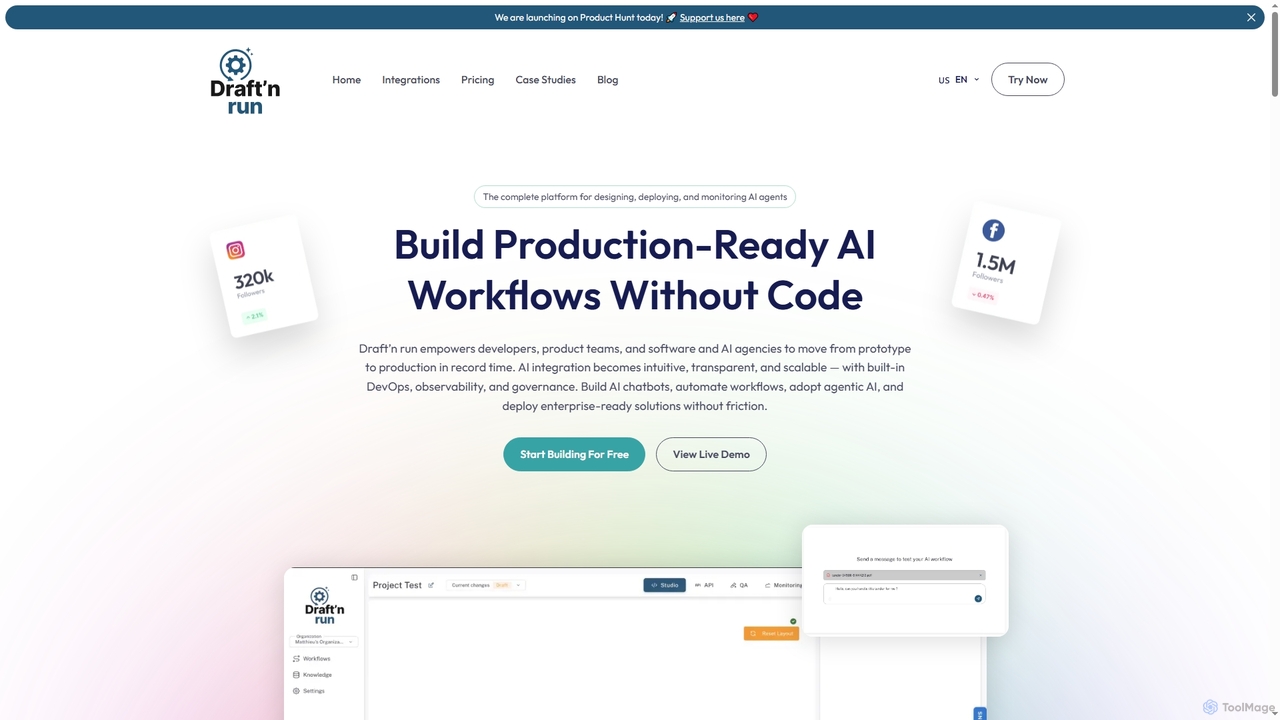
Draftnrun is an open-source AI agent platform that empowers developers, product teams, and agencies to design, deploy, and monitor production-ready AI workflows without code. It offers a visual builder, comprehensive observability, and flexible deployment options, accelerating AI integration and ensuring full control.
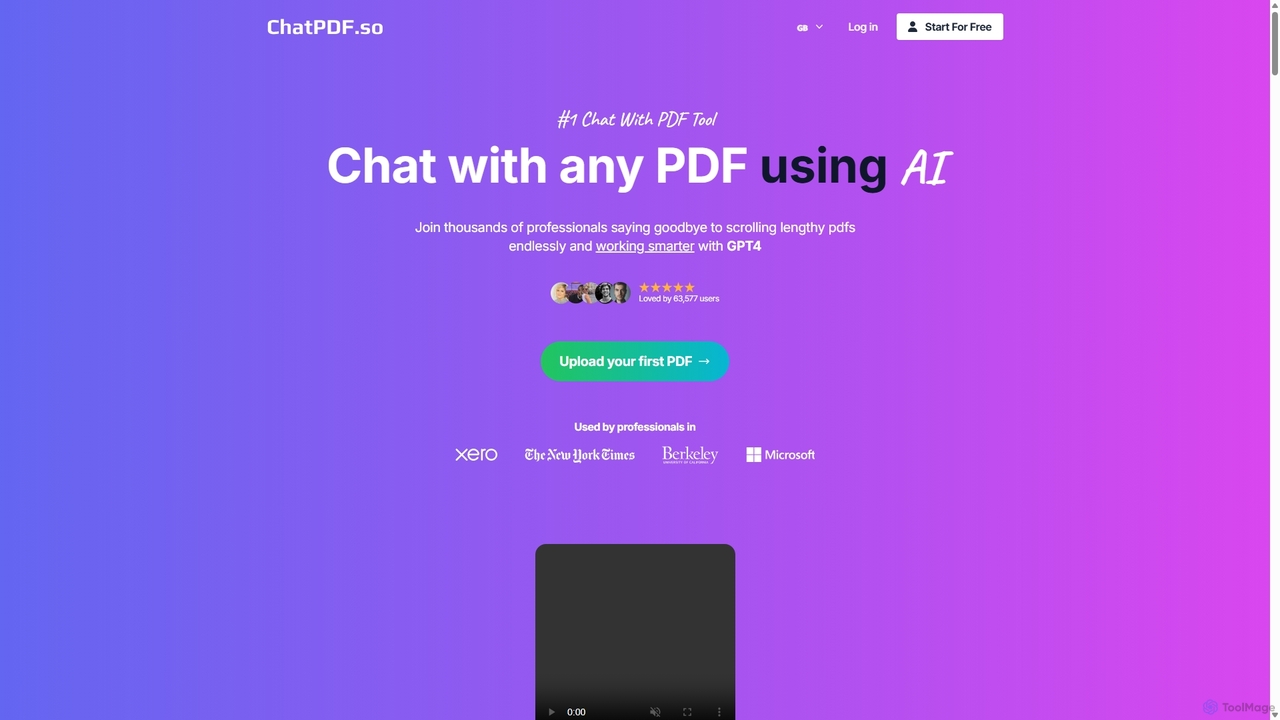
ChatPDF.so
ChatPDF.so is an AI-powered tool that allows you to chat with any PDF document. Instantly get answers, summaries, …
ChatPDF.so is an AI-powered tool that allows you to chat with any PDF document. Instantly get answers, summaries, and insights from textbooks, research papers, legal contracts, and more. Supports bulk uploads, multi-document conversations, and chatbot creation.
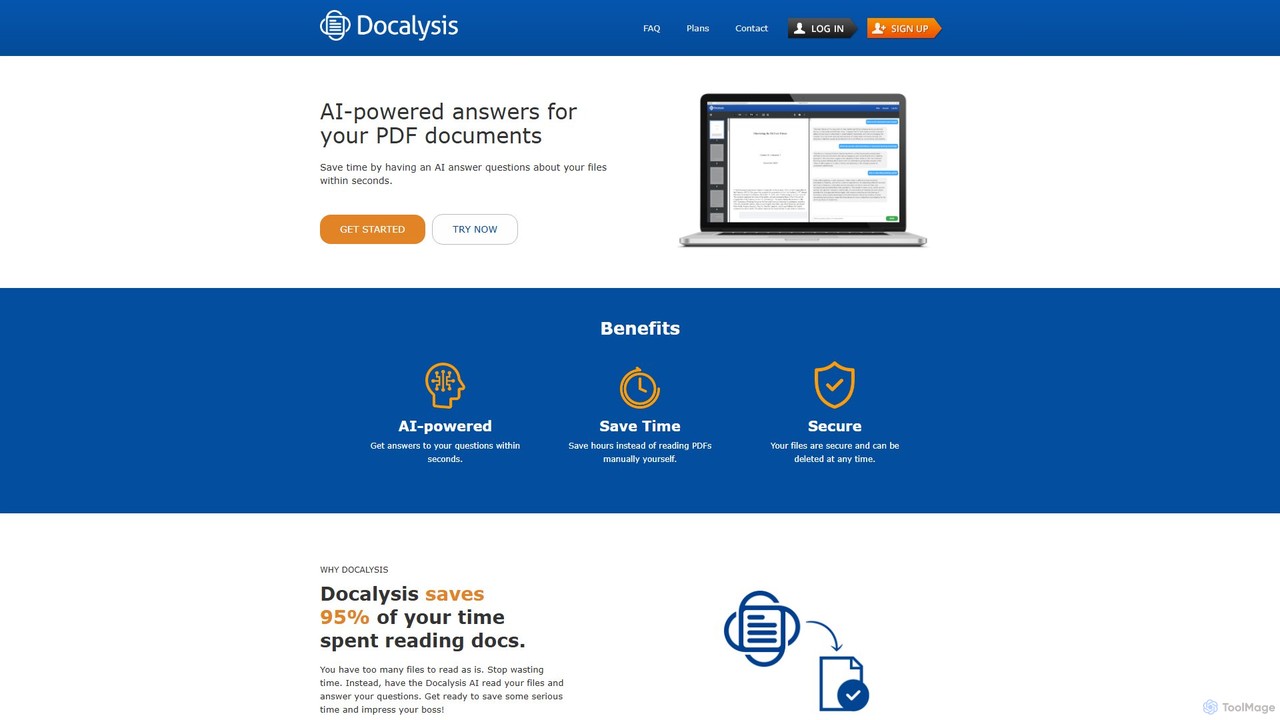
Docalysis
Docalysis is an AI-powered platform that allows you to chat with your PDF documents. Get instant answers, extract …
Docalysis is an AI-powered platform that allows you to chat with your PDF documents. Get instant answers, extract key information, and analyze multiple files at once, saving up to 95% of your reading time. It's designed for researchers, legal professionals, and businesses to enhance productivity and unlock insights from documents securely and efficiently.
Claude
Claude is a next-generation AI assistant from Anthropic, designed to be helpful, harmless, and honest. It excels at …
Claude is a next-generation AI assistant from Anthropic, designed to be helpful, harmless, and honest. It excels at a wide range of conversational and text-processing tasks, featuring a large context window for analyzing long documents, advanced vision capabilities, and a strong focus on safety and accuracy.
About Chatbot
Chatbot are AI-powered tools designed to simulate human conversation through text or voice interfaces. As a vital component in business operations, these conversational AI agents leverage natural language processing (NLP) to understand user queries, provide instant responses, and automate various interactions. They significantly enhance customer service, streamline internal processes, and offer personalized user experiences across multiple digital channels.
Core Features
- Natural Language Processing (NLP): Interprets and understands human language, intent, and context.
- Intent Recognition: Identifies the user's goal or purpose behind their query to route them to the correct information or action.
- Personalized Responses: Delivers tailored information or recommendations based on user data and interaction history.
- Multi-channel Deployment: Operates seamlessly across websites, messaging apps, social media, and voice assistants.
- Integration Capabilities: Connects with CRM, ERP, and other business systems for data retrieval and task execution.
Applicable Scenarios
Chatbots are widely adopted in customer service to handle FAQs, resolve common issues, and guide users 24/7. In sales and marketing, they qualify leads, provide product information, and assist with purchases. Human resources departments utilize chatbots for employee onboarding, policy inquiries, and IT support, improving operational efficiency across the board.
How to Choose
When selecting a chatbot, consider its NLP accuracy and ability to understand complex queries. Evaluate its integration capabilities with your existing business systems (CRM, helpdesk). Assess the ease of customization for specific use cases and branding, along with scalability to handle varying user volumes. Finally, review its multi-language support and deployment options across different channels.
ChatbotUse Cases
Automating 24/7 Customer Support Inquiries
Customer service departments can deploy chatbots on their websites or messaging apps to handle routine customer queries around the clock. The chatbot can instantly answer FAQs, provide order status updates, or guide users through troubleshooting steps, freeing up human agents to focus on more complex issues. This leads to faster resolution times and improved customer satisfaction, potentially reducing support costs by up to 30%.
Generating and Qualifying Sales Leads
Sales teams can use chatbots on landing pages or product sites to engage visitors, answer initial questions about products or services, and collect contact information. The chatbot can ask qualifying questions (e.g., budget, needs, timeline) to determine lead quality, then seamlessly hand off high-quality leads to a sales representative. This process streamlines the sales funnel, ensuring sales teams focus on the most promising prospects and increasing conversion rates by 15-20%.
Providing Instant HR Support for Employees
HR departments can implement chatbots to serve as virtual assistants for employees. These chatbots can answer common HR-related questions about company policies, benefits, leave requests, or payroll. Employees can get immediate answers without waiting for an HR representative, improving employee satisfaction and reducing the workload on HR staff. This can lead to a 40% reduction in routine HR inquiries, allowing HR to focus on strategic initiatives.
Personalizing E-commerce Shopping Experiences
E-commerce businesses can integrate chatbots into their online stores to offer personalized shopping assistance. A chatbot can greet customers, ask about their preferences, and recommend products based on their browsing history or previous purchases. It can also answer product-specific questions, check stock availability, and guide customers through the checkout process, leading to a more engaging shopping experience and potentially increasing average order value by 10-15%.
Facilitating Internal Knowledge Base Access
Organizations can use chatbots to provide quick and easy access to internal knowledge bases for employees. Instead of searching through extensive documentation, employees can simply ask the chatbot questions about company policies, IT solutions, or project guidelines. The chatbot retrieves relevant information instantly, improving productivity and reducing the time spent searching for answers. This can save employees several hours per week, enhancing overall operational efficiency.
Collecting Customer Feedback and Surveys
Businesses can deploy chatbots to collect customer feedback and conduct surveys in a more engaging way. After a service interaction or purchase, the chatbot can initiate a short, conversational survey to gather insights on customer satisfaction, product experience, or service quality. This method often yields higher response rates compared to traditional email surveys, providing valuable data for continuous improvement and helping businesses understand customer sentiment more effectively.