Business Best in category 1 results Corporate Services AI Tool

Popular AI tools in the Corporate Services field of Business include getnowadays, etc., helping you quickly improve efficiency.

getnowadays

getnowadays

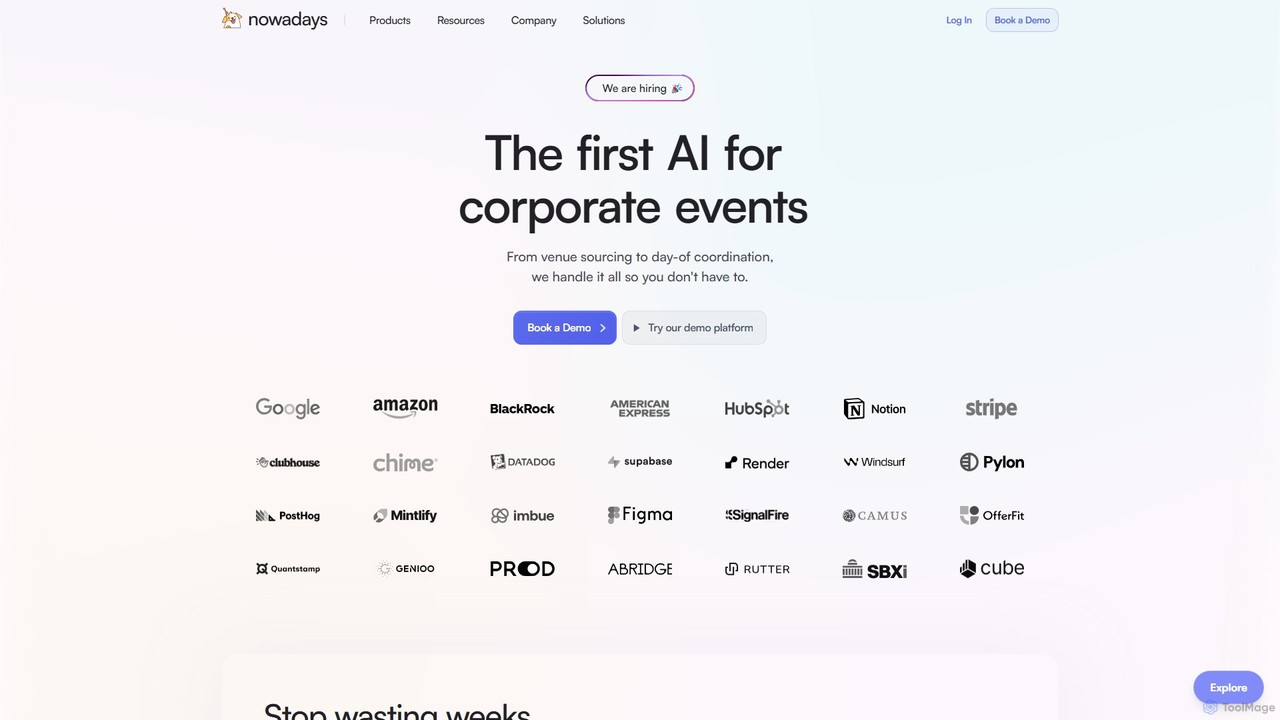
getnowadays is an AI-powered event planning platform for corporate teams. It automates and streamlines the entire event lifecycle, …

15.4K

About Corporate Services

AI Corporate Services tools are specialized platforms designed to automate and optimize core back-office and administrative functions within an organization. Leveraging technologies like natural language processing (NLP) and machine learning, these tools handle complex tasks in legal, finance, HR, and compliance. They help businesses enhance operational efficiency, reduce human error, and ensure regulatory adherence. By automating routine but critical processes, these services free up professionals to focus on strategic initiatives.

Core Features

  • Contract Analysis & Management: Automatically reviews legal documents, extracts key clauses, identifies risks, and manages contract lifecycles.
  • Compliance Monitoring: Continuously tracks regulatory changes and monitors internal communications and transactions to prevent violations.
  • Automated Financial Reporting: Generates financial statements, analyzes expense reports for policy adherence, and assists in budget forecasting.
  • HR Process Automation: Streamlines tasks such as resume screening, employee onboarding, and benefits administration.
  • Intellectual Property (IP) Management: Conducts patent searches, monitors for trademark infringements, and helps manage IP portfolios.

Use Cases

These tools are essential for legal departments, finance teams, human resources, and compliance officers in mid-to-large enterprises. For instance, a legal team can use AI to accelerate due diligence during mergers and acquisitions, while an HR department can automate the initial screening of thousands of job applicants, ensuring a more efficient and unbiased hiring process.

How to Choose

When selecting an AI Corporate Services tool, consider its specific function alignment with your needs (e.g., legal vs. HR). Evaluate its integration capabilities with your existing systems like ERP or CRM. Assess the security protocols for handling sensitive corporate data and review the pricing model—whether it's per-user, per-document, or a flat subscription. Finally, consider the user interface and the level of technical support provided.

Corporate ServicesUse Cases

1

Automating Legal Contract Review

A corporate legal team often spends hundreds of hours reviewing standard contracts like Non-Disclosure Agreements (NDAs) and sales agreements. By using an AI Corporate Services tool specializing in contract analysis, lawyers can upload documents in bulk. The AI scans each contract against pre-defined company policies and risk profiles, highlighting non-standard clauses, potential liabilities, and missing information in minutes. This process reduces manual review time by over 80%, minimizes the risk of human error, and allows the legal team to focus on high-stakes negotiations rather than routine paperwork.

2

Streamlining Employee Onboarding

An HR department in a rapidly growing company faces the challenge of onboarding dozens of new hires each month. An AI Corporate Services platform can automate this entire workflow. It sends out welcome packets, manages digital paperwork (like tax forms and employment contracts), enrolls new hires in benefits programs, and schedules initial training sessions. Furthermore, an integrated AI chatbot can answer common questions from new employees 24/7, reducing the administrative load on HR staff and providing a consistent, positive onboarding experience for everyone.

3

Real-time Financial Compliance Monitoring

For financial institutions, maintaining compliance with regulations like Anti-Money Laundering (AML) is critical and resource-intensive. An AI Corporate Services tool can monitor millions of transactions in real-time, flagging suspicious activities that deviate from normal patterns. It can also scan employee communications (emails, chats) for potential insider trading or market manipulation keywords. This automated surveillance system operates continuously, provides a clear audit trail, and significantly enhances a firm's ability to detect and report potential compliance breaches before they become major issues.

4

Intelligent Patent Search and Analysis

An R&D department needs to conduct thorough patent searches before investing in a new technology to avoid infringement. Manually searching through millions of patents is a daunting task. An AI tool for intellectual property management can understand the technical description of a new invention and search global patent databases for relevant prior art using semantic search, not just keywords. It can also visualize patent landscapes, identify key competitors, and monitor for new patents filed in a specific technology domain, providing crucial strategic intelligence.

5

Automating Due Diligence for M&A

During a merger or acquisition (M&A), the corporate development team must perform due diligence by reviewing thousands of the target company's documents, including contracts, financial records, and compliance reports. This is a time-sensitive and high-stakes process. An AI platform can create a secure virtual data room, automatically categorize all uploaded documents, and use NLP to extract critical information. It can flag risky contract clauses, identify financial discrepancies, and summarize compliance histories, enabling the M&A team to assess risks faster and more accurately, leading to better-informed investment decisions.

6

Optimizing Corporate Travel & Expense Management

A finance department struggles with manually auditing hundreds of employee expense reports each week, checking for policy violations and ensuring proper documentation. An AI-powered expense management tool automates this process. Employees can submit receipts by simply taking a photo, and the AI uses OCR to extract data. The system automatically checks each expense against corporate travel and spending policies, flagging out-of-policy items for review. It can also analyze spending patterns across the company to identify cost-saving opportunities, such as negotiating better rates with frequently used hotels or airlines.

Corporate ServicesFrequently Asked Questions