Essense
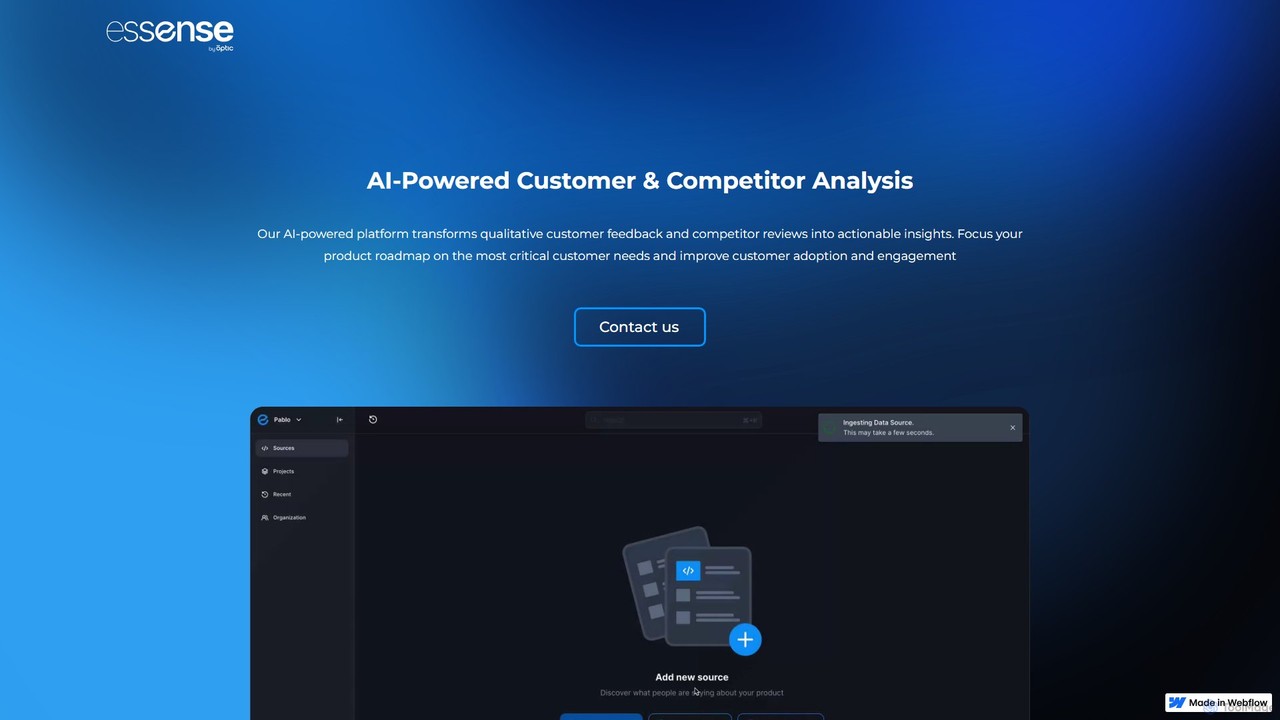
Essense is an AI-powered platform that analyzes customer feedback from multiple sources at scale. It helps businesses understand …
Essense is an AI-powered platform that analyzes customer feedback from multiple sources at scale. It helps businesses understand customer needs, track competitor performance, and gain actionable insights to inform product roadmaps, marketing strategies, and customer success initiatives. By automating qualitative data analysis, Essense empowers teams to make data-driven decisions quickly and efficiently.
Senty
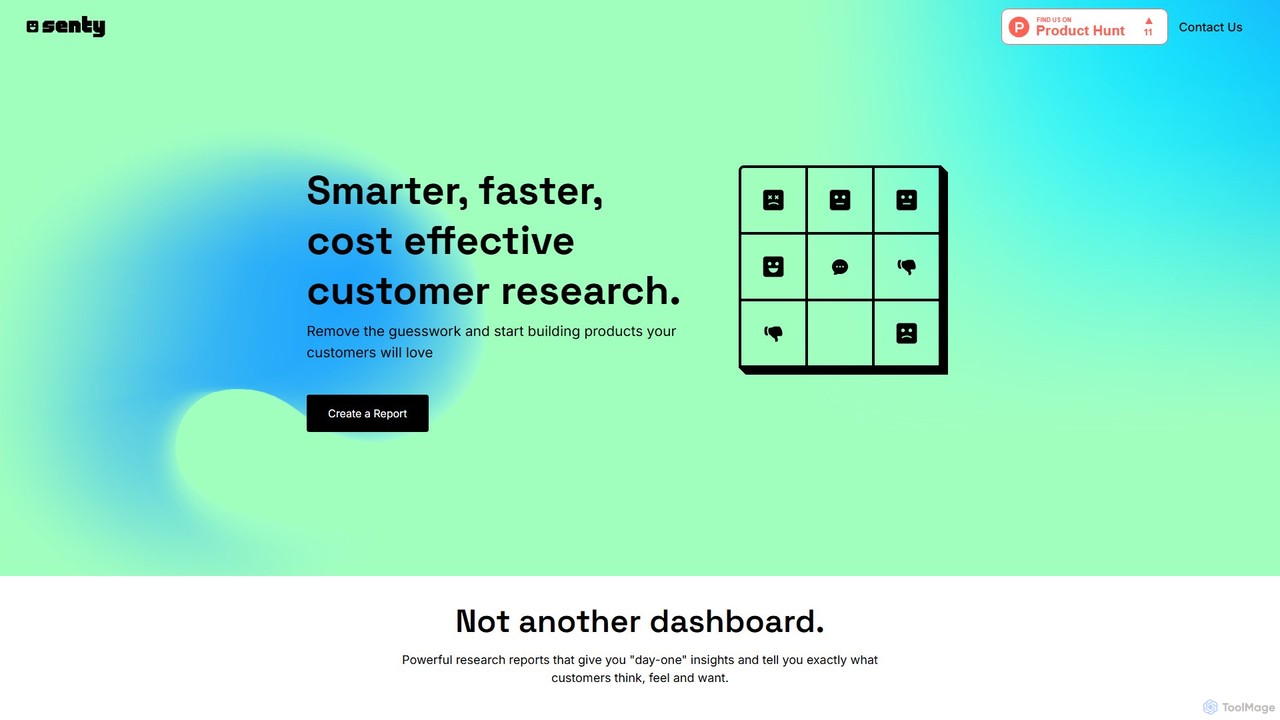
Senty is an AI-powered research tool that transforms App Store and Google Play Store reviews into actionable customer …
Senty is an AI-powered research tool that transforms App Store and Google Play Store reviews into actionable customer insights. By analyzing user feedback, it generates comprehensive research reports in under 24 hours, providing deep quantitative and qualitative data. This service helps product managers, developers, and marketers understand customer sentiment, identify pain points, and prioritize feature roadmaps with data-backed evidence, all at a fraction of the cost and time of traditional research methods.
About Customer Feedback Analysis
Customer Feedback Analysis tools are AI-powered solutions designed to automatically collect, process, and interpret customer opinions and sentiments from various sources. These tools leverage natural language processing (NLP) and machine learning to extract actionable insights from unstructured data like reviews, surveys, and social media comments. By understanding customer needs and pain points at scale, businesses can make data-driven decisions to improve products, services, and overall customer experience. This capability is crucial for maintaining competitive advantage in the modern business landscape.
Core Features
- Sentiment Analysis: Automatically detects and categorizes the emotional tone (positive, negative, neutral) of customer feedback.
- Topic Extraction: Identifies recurring themes and key subjects mentioned in large volumes of customer comments.
- Text Summarization: Generates concise summaries of lengthy feedback, highlighting critical points without manual reading.
- Emotion Detection: Beyond sentiment, identifies specific emotions like joy, anger, sadness, or surprise expressed by customers.
- Root Cause Analysis: Helps pinpoint underlying issues or drivers behind specific feedback patterns.
Applicable Scenarios
Customer Feedback Analysis tools are vital for product managers seeking to prioritize feature development based on user needs, marketing teams aiming to understand brand perception, and customer service departments looking to identify common issues and improve agent training. They are also used by market researchers to gauge public opinion on new products or campaigns.
How to Choose
When selecting a Customer Feedback Analysis tool, consider its data source integration capabilities (e.g., CRM, social media, survey platforms), the accuracy and granularity of its NLP models, scalability for handling large data volumes, and the clarity of its reporting and visualization features. Also, evaluate the ease of customization for industry-specific terminology.

Customer Feedback AnalysisUse Cases
Prioritizing Product Features
Product managers analyze thousands of user reviews and support tickets to identify the most requested features and common pain points, guiding their development roadmap. This data-driven approach ensures that product enhancements directly address customer needs, leading to higher user satisfaction and product adoption. By automating this analysis, teams save significant time compared to manual review.
Improving Customer Service Efficiency
Customer service managers use feedback analysis to pinpoint recurring issues that lead to high call volumes, enabling them to update FAQs, create self-service options, or train agents on specific topics. This proactive approach reduces resolution times and improves overall service quality, leading to a more efficient support operation and happier customers.
Monitoring Brand Reputation
Marketing teams track social media mentions and online reviews to detect shifts in public sentiment towards their brand or products, allowing for timely intervention in case of negative trends. This enables rapid response to crises, proactive engagement with positive mentions, and a deeper understanding of brand perception across various digital channels.
Enhancing Customer Experience Journeys
UX/UI designers analyze feedback from user testing and post-purchase surveys to identify friction points in the customer journey, leading to more intuitive and satisfying interactions. By pinpointing specific areas for improvement, businesses can optimize their digital interfaces and service touchpoints, resulting in a smoother and more enjoyable experience for users.
Benchmarking Against Competitors
Businesses compare sentiment and topic trends from their own customer feedback against that of competitors, identifying areas for differentiation and competitive advantage. This competitive intelligence helps in understanding market positioning, uncovering unmet customer needs that competitors might be missing, and refining marketing strategies to highlight unique strengths.
Personalizing Marketing Campaigns
Marketers analyze feedback to understand specific customer preferences and pain points, enabling them to tailor messaging and offers for more effective and personalized campaigns. By segmenting customers based on their expressed needs and sentiments, businesses can deliver highly relevant content, improving engagement rates and conversion outcomes across various marketing channels.