
haveignition
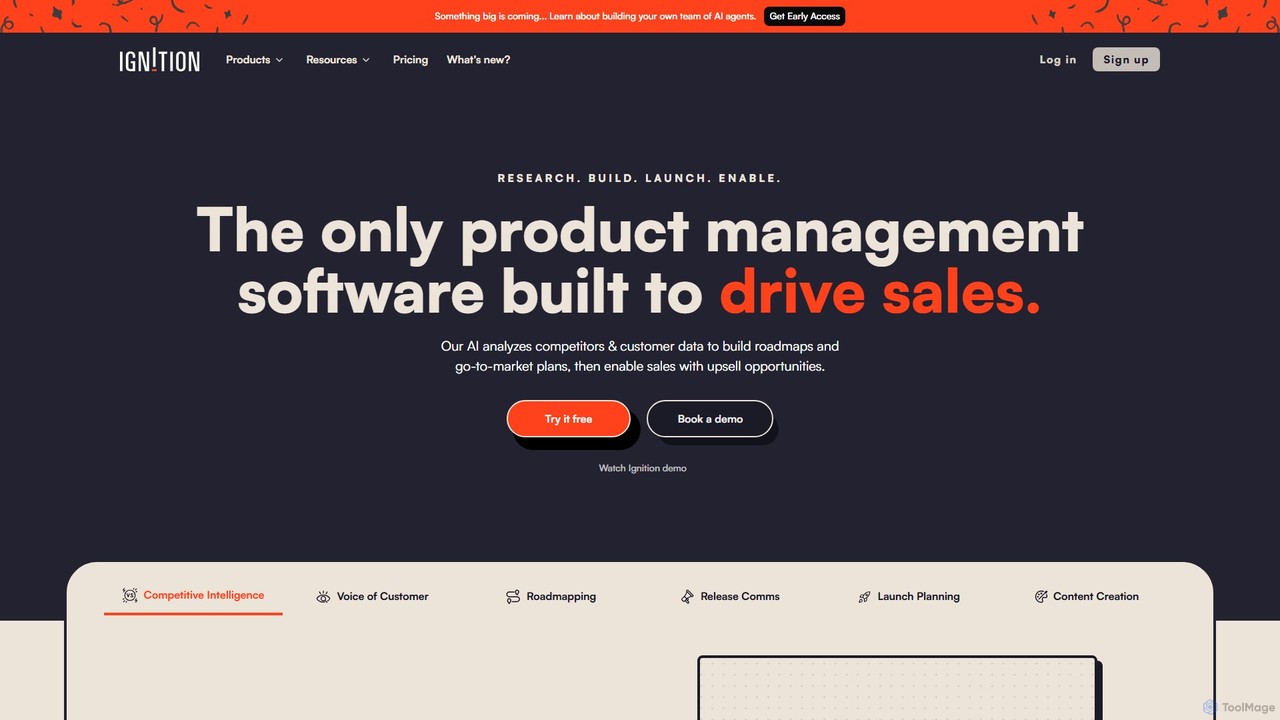
haveignition is an AI-powered platform designed for product management and product marketing teams. It unifies the entire go-to-market …
haveignition is an AI-powered platform designed for product management and product marketing teams. It unifies the entire go-to-market (GTM) process, from competitive intelligence and roadmapping to launch campaigns and performance measurement. By providing tools for research, planning, AI copywriting, and collaboration, haveignition helps teams align their strategies, accelerate product launches, and drive business growth. It offers a suite of modular products and free tools to streamline workflows.
About Go To Market
AI Go To Market (GTM) tools are a specialized suite of applications designed to strategically plan, execute, and optimize the launch of new products or services. These tools leverage data analysis and predictive modeling to identify ideal customer profiles, analyze competitive landscapes, and formulate effective market entry strategies. They help businesses reduce launch risks, accelerate market penetration, and align sales and marketing efforts for maximum impact. As a key component of the Business category, GTM tools focus specifically on the critical transition from product development to market success.
Core Features
- Ideal Customer Profile (ICP) Generation: Analyzes market and customer data to define the most profitable and receptive audience segments.
- Competitive Landscape Analysis: Automatically tracks and assesses competitors' strategies, market positioning, pricing, and messaging.
- Launch Strategy Planning: Generates data-driven launch roadmaps, including channel selection, messaging frameworks, and timelines.
- Sales & Marketing Alignment: Creates unified messaging, collateral, and battle cards to ensure consistency across teams.
- Performance Forecasting: Uses predictive models to estimate potential launch outcomes, such as lead generation, conversion rates, and initial revenue.
Use Cases
These tools are primarily used by product marketing managers, startup founders, and business strategists. For instance, a SaaS company can use a GTM tool to identify the best early adopter segment for a new feature. A consumer goods company can analyze retail channels and competitor placement before launching a new product line.
How to Choose
When selecting an AI Go To Market tool, consider its data integration capabilities with your existing CRM and analytics platforms. Evaluate the scope of its analysis—does it cover the full GTM lifecycle from research to sales enablement? Assess the level of customization available for your specific industry and the actionability of its recommendations. Finally, ensure the tool provides clear, strategic guidance rather than just high-level data dashboards.
Go To MarketUse Cases
Planning a SaaS Product Launch
A product marketing manager at a tech company is tasked with launching a new software feature. They use an AI GTM tool to analyze market data and social media trends. The AI identifies a niche segment of power users as the ideal early adopters, suggests unique value propositions against three key competitors, and generates a target persona. This persona details user pain points and preferred communication channels, directly informing the entire launch campaign, from ad copy to landing page content, ensuring a highly targeted and effective market entry.
Validating a New Product Idea
Before committing development resources, a product manager uses a GTM tool to assess the viability of a new app concept. The tool analyzes market trends, search volume data, and social media conversations to gauge potential demand. It identifies an underserved audience and quantifies the market size, providing a data-driven validation report. This report helps the team prioritize the product roadmap and secure internal funding by demonstrating a clear market opportunity, avoiding the risk of building a product with no audience.
Preparing an Investor Pitch Deck
A startup founder needs to create a compelling Go To Market slide for their investor pitch deck. They use an AI GTM tool to generate a data-backed market entry strategy. The tool provides a Total Addressable Market (TAM) analysis, identifies a niche beachhead market for initial focus, and outlines a phased rollout plan with key milestones. This output provides credible, third-party validated data that demonstrates a deep understanding of the market and a clear, actionable path to revenue, significantly strengthening their case for investment.
Optimizing Sales Enablement Content
A sales leader wants to ensure their team is fully prepared for a new product launch. Using a GTM tool, they align sales materials with the overarching strategy. The AI generates competitive battle cards highlighting key differentiators, creates tailored email templates for different customer segments identified in the ICP, and provides data-backed talking points. This ensures the entire sales team uses consistent, effective messaging from day one, shortening the sales cycle and improving win rates for the new product.
Planning International Market Expansion
An e-commerce brand aims to expand into Southeast Asia. The marketing director uses an AI GTM tool to analyze local consumer behavior, competitor pricing, and logistical challenges in several target countries. The tool recommends Vietnam as the initial entry point due to high mobile commerce adoption and a favorable competitive landscape. It also suggests culturally adapted marketing messages and identifies the most effective local sales channels, significantly reducing the risks and costs associated with a poorly planned international expansion.
Developing a Channel Partner Strategy
A hardware company is launching a new smart home device and needs to identify the best distribution partners. A business development manager uses a GTM tool to analyze potential channel partners, including retailers and value-added resellers. The AI scores partners based on their customer base alignment with the product's ICP, geographic reach, and past sales performance with similar products. The tool recommends a tiered partnership strategy, enabling the manager to focus their efforts on high-potential partners and create tailored proposals backed by data.