Go Legal AI
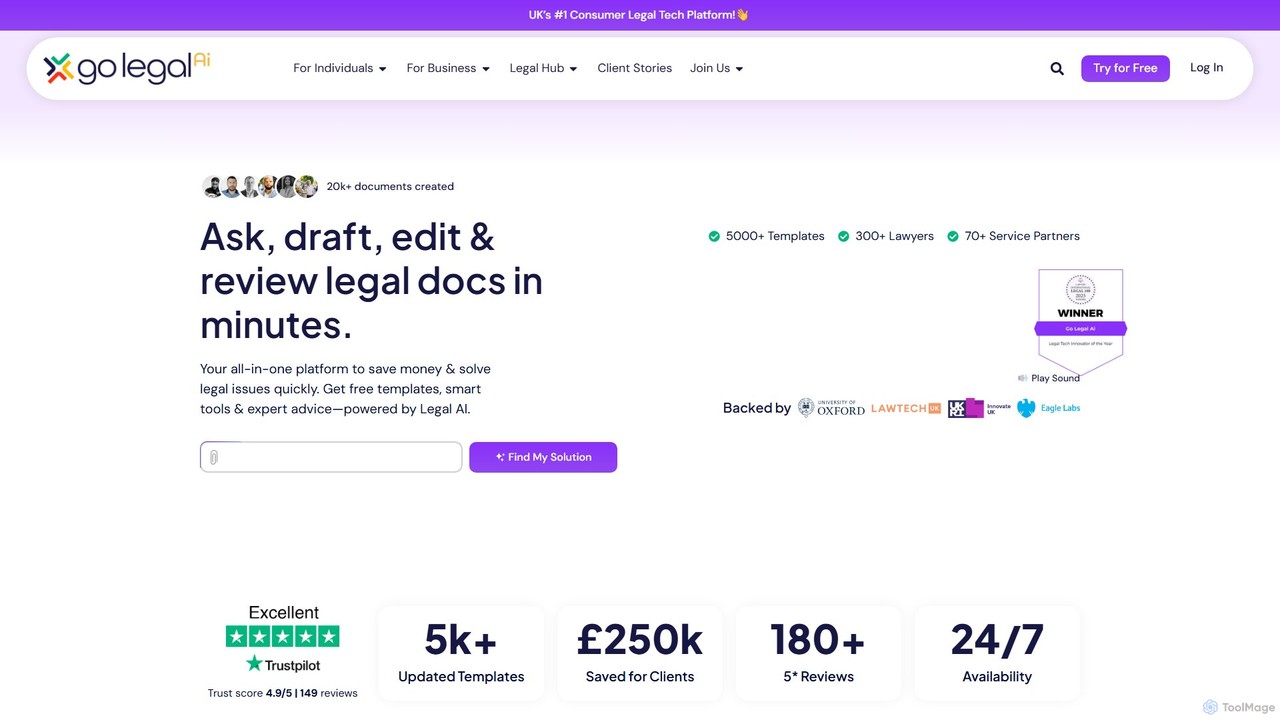
Go Legal AI is a hybrid legal tech platform offering over 5,000 AI-powered legal templates and direct access …
Go Legal AI is a hybrid legal tech platform offering over 5,000 AI-powered legal templates and direct access to expert lawyers. It provides affordable, fast, and reliable legal solutions for startups, small businesses, and individuals, covering everything from contract generation to dispute resolution and immigration.
vLex
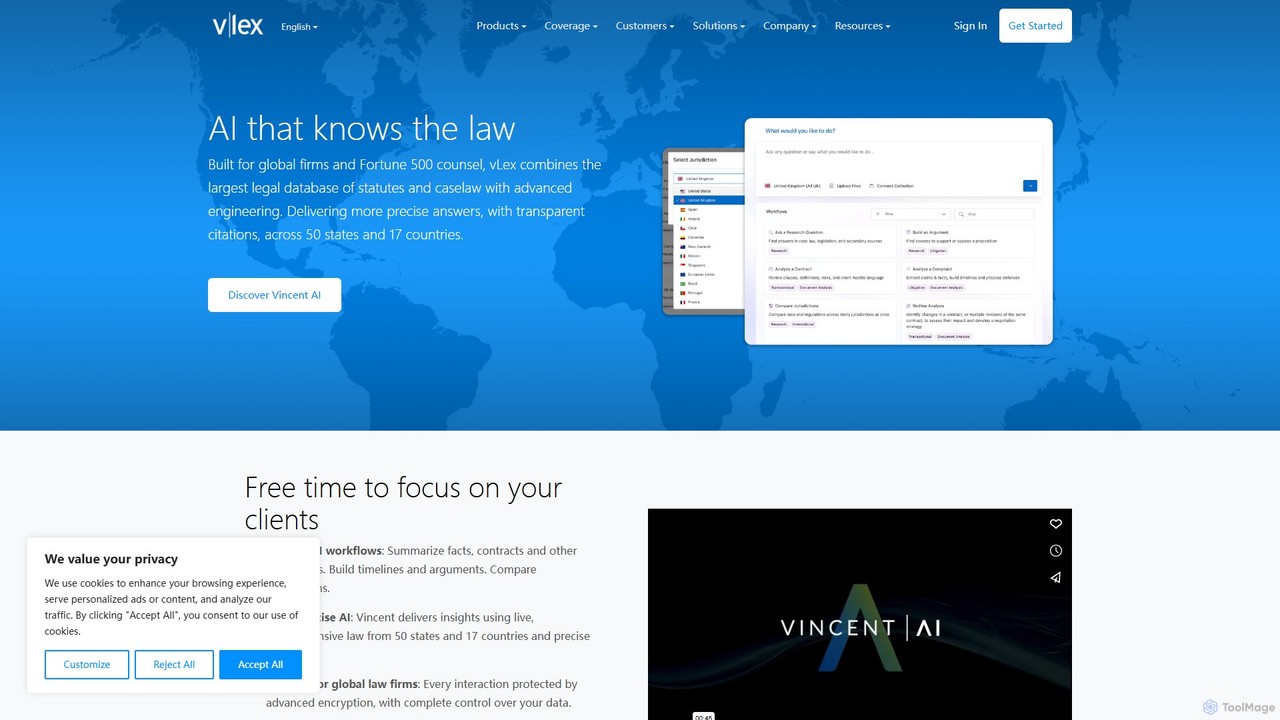
vLex is an AI-powered legal intelligence platform providing access to the world's largest collection of law and legislation. …
vLex is an AI-powered legal intelligence platform providing access to the world's largest collection of law and legislation. It combines a massive legal library with an advanced AI assistant, Vincent, to streamline legal research, document analysis, and case preparation for legal professionals worldwide.
The Precedent
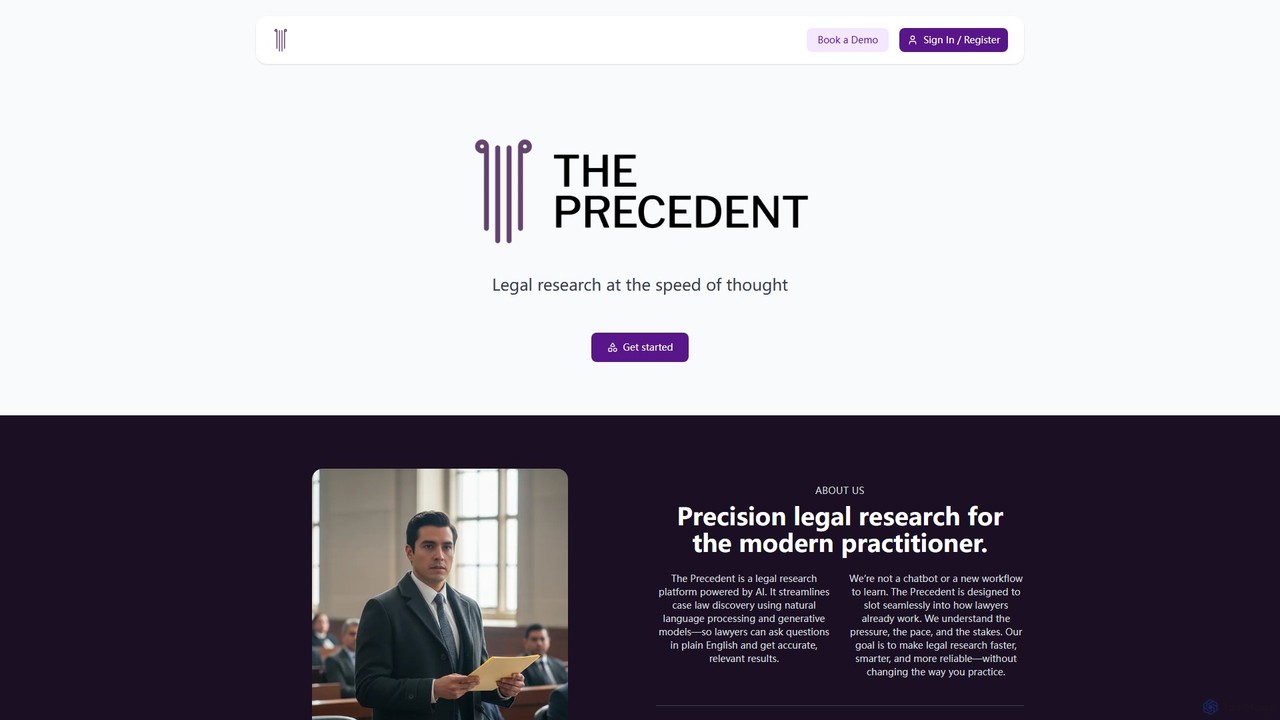
The Precedent is an AI-powered legal research platform designed for modern legal practitioners. It leverages natural language processing …
The Precedent is an AI-powered legal research platform designed for modern legal practitioners. It leverages natural language processing and generative AI to streamline case law discovery. Lawyers can ask complex legal questions in plain English and receive highly accurate, relevant results in seconds, significantly reducing research time and costs. It's built to seamlessly integrate into existing legal workflows without a steep learning curve.
About Legal Services
AI Legal Services tools are a class of software that leverages artificial intelligence to automate and enhance legal workflows. These tools utilize technologies like Natural Language Processing (NLP) and machine learning to analyze vast amounts of legal text, from contracts to case law. They empower law firms and corporate legal departments to accelerate research, identify risks in documents, and manage cases more efficiently. By handling repetitive, data-intensive tasks, these AI solutions allow legal professionals to focus on high-value strategic counsel.
Core Features
- Contract Analysis: Automatically reviews legal agreements to identify key clauses, risks, and deviations from standard templates.
- Legal Research Automation: Uses semantic search to quickly find relevant case law, statutes, and legal precedents from vast databases.
- eDiscovery Processing: Analyzes and categorizes large volumes of electronic documents for litigation, investigation, or regulatory requests.
- Case Management & Analytics: Organizes case information, tracks deadlines, and provides data-driven insights into case strategy and potential outcomes.
- Compliance Automation: Monitors regulatory changes and helps ensure organizational policies and contracts adhere to current laws.
Applicable Scenarios
These tools are primarily used by legal professionals, including lawyers, paralegals, and corporate counsel in law firms and in-house legal departments. They are also valuable for compliance officers in industries like finance and healthcare. Common applications include due diligence for mergers and acquisitions, managing large litigation discovery processes, and ensuring regulatory compliance across thousands of contracts.
Selection Criteria
When selecting an AI legal tool, consider its specialization; some focus on contract review while others excel at research. Evaluate its data security protocols and compliance with privacy regulations like GDPR. Assess its integration capabilities with your existing document management or case management systems. Finally, inquire about the AI model's training data and accuracy validation methods to ensure reliability.
Legal ServicesUse Cases
Automated Contract Review for Due Diligence
During a merger or acquisition, corporate lawyers must review thousands of contracts from the target company. Using an AI Legal Services tool, a legal team can upload all contracts in bulk. The AI automatically extracts key terms, identifies non-standard clauses, flags potential risks like change-of-control provisions, and categorizes agreements by type. This reduces the manual review time from weeks to days, minimizes human error, and allows lawyers to focus their attention on the highest-risk documents, ensuring a more thorough and efficient due diligence process.
Accelerated Legal Research for Litigation
A junior associate at a law firm is tasked with finding supporting case law for a complex motion. Instead of spending hours with keyword searches in traditional databases, they use an AI-powered research tool. They can input a natural language query or even upload a paragraph from their brief. The AI understands the legal concepts and retrieves the most relevant precedents, including cases that traditional search methods might miss. It can also summarize judgments and identify how courts have treated specific arguments, significantly speeding up brief-writing and case strategy development.
Efficient eDiscovery Document Triage
In a large-scale litigation, a legal team receives millions of emails and documents from the opposing party. A litigation support specialist uses an AI eDiscovery tool to process this data. The platform automatically identifies and tags privileged information (attorney-client communication), flags relevant documents based on conceptual similarity to key case issues, and groups conversations into threads. This allows for a rapid first-pass review, drastically cutting down on the cost and time associated with hiring contract attorneys for manual document-by-document inspection.
Proactive Compliance Monitoring
A compliance officer at a global financial institution is responsible for ensuring all client agreements adhere to evolving anti-money laundering (AML) regulations. They use an AI compliance tool that continuously scans the company's contract repository. The tool is trained to recognize clauses related to AML and flags any agreements that are outdated or non-compliant with new regulations. This proactive system replaces manual spot-checks, provides a comprehensive compliance dashboard, and generates reports for auditors, reducing regulatory risk for the institution.
Intellectual Property (IP) Infringement Detection
An in-house IP counsel for a technology company needs to protect its portfolio of patents and trademarks. They employ an AI tool that monitors global patent filings, online marketplaces, and websites for potential infringements. The AI can analyze images and text to identify unauthorized use of the company's trademarks or technology described in its patents. It then generates alerts with evidence, allowing the legal team to quickly issue cease-and-desist letters or take further legal action, protecting the company's valuable intellectual assets.
Predictive Case Outcome Analysis
A senior partner at a law firm is deciding whether to take a major case to trial or advise the client to settle. They use a legal analytics tool that has analyzed thousands of similar past cases. By inputting key variables of the current case—such as jurisdiction, judge, case type, and key legal arguments—the AI provides a statistical analysis of likely outcomes, potential damages, and the average duration of similar trials. This data-driven insight helps the partner provide more accurate advice to the client and formulate a more effective litigation strategy.