ToolMage
Sign in

Best 1 Office Management AI tools for Business

Popular Office Management AI tools in Business include Autonomous, helping you work more efficiently.

Autonomous
Paid

Autonomous

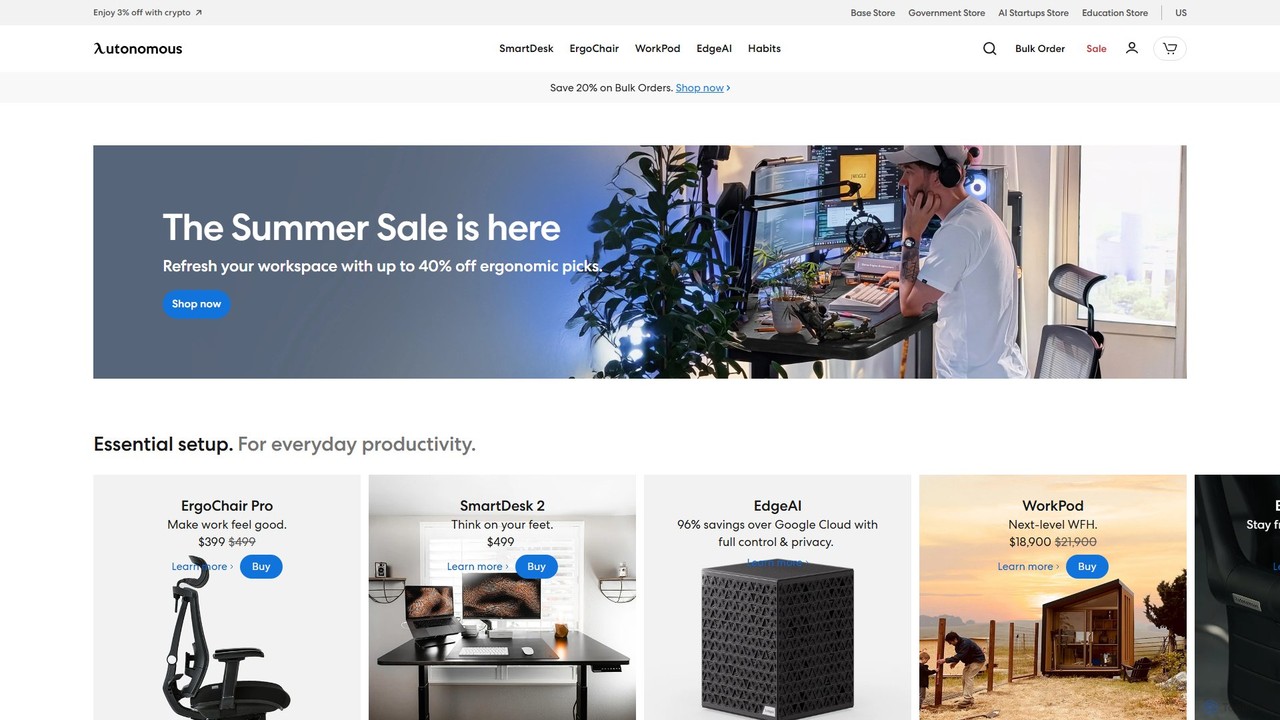
Autonomous provides an integrated ecosystem of AI-powered smart office furniture and software solutions designed to enhance productivity and well-being. It combines ergonomic hardware like standing desks (SmartDesk) and chairs (ErgoChair) with intelligent software and the EdgeAI platform to create optimized, healthy, and efficient work environments for individuals and businesses.

Office Management
Visits 291.3KFavorites 152Likes 118

About Office Management

AI Office Management tools are a category of artificial intelligence-powered solutions designed to automate, optimize, and streamline administrative and operational tasks within an office environment. Leveraging technologies like natural language processing, machine learning, and robotic process automation, these tools enhance efficiency, reduce manual workload, and improve decision-making across various business functions. They transform routine office processes into intelligent, automated workflows, allowing teams to focus on strategic initiatives rather than repetitive tasks.

Core Features

  • Automated Scheduling & Meeting Management: Intelligently coordinates calendars, finds optimal meeting times, and sends reminders.
  • Intelligent Document Processing & Management: Automates data extraction, classification, and archiving of various office documents.
  • AI-Powered Virtual Assistants: Handles routine inquiries, manages tasks, and provides instant support for employees.
  • Task Automation & Workflow Optimization: Streamlines repetitive administrative tasks and optimizes operational workflows.
  • Data Analysis for Office Efficiency: Analyzes operational data to identify bottlenecks and suggest improvements for productivity.

Applicable Scenarios

These tools are invaluable for businesses of all sizes, from startups to large enterprises, seeking to enhance operational efficiency. They are particularly beneficial for administrative staff, HR departments, project managers, and finance teams looking to automate routine tasks, manage resources effectively, and improve internal communication. Remote and hybrid work environments also heavily rely on these solutions for seamless collaboration and management.

How to Choose

When selecting an AI Office Management tool, consider its integration capabilities with existing software (e.g., CRM, ERP), the scope of tasks it can automate, and its scalability to grow with your business. Evaluate security features for data protection, user-friendliness for quick adoption, and the level of customization offered to fit specific organizational needs. A clear understanding of your most pressing administrative challenges will guide your choice.

Office Management use cases

1

Automated Meeting Scheduling & Coordination

For busy executives and team leads, AI tools can automatically analyze team members' calendars, suggest optimal meeting slots, send invitations, and manage conflicts. This eliminates the time-consuming back-and-forth emails, ensuring that critical discussions are scheduled efficiently and all participants are promptly informed, significantly reducing administrative overhead.

2

Intelligent Document Classification & Archiving

HR and legal departments often deal with vast amounts of documents. AI office management tools can automatically classify incoming documents (e.g., contracts, invoices, resumes), extract key information, and file them into appropriate digital archives. This ensures compliance, speeds up information retrieval, and reduces manual data entry errors, making document management effortless.

3

AI-Powered Email Triage & Response Drafting

Administrative assistants and customer support teams can leverage AI to automatically categorize incoming emails, prioritize urgent messages, and even draft preliminary responses based on common queries. This significantly reduces response times, ensures consistent communication, and frees up staff to handle more complex or sensitive interactions, improving overall communication efficiency.

4

Automated Expense Report Processing

Finance departments and employees can use AI tools to streamline the entire expense reporting process. Users simply upload receipts, and the AI automatically extracts relevant data, categorizes expenses, and populates expense reports. This minimizes manual data entry, reduces errors, accelerates reimbursement cycles, and ensures adherence to company policies.

5

Optimizing Office Resource Allocation

Facility managers and project coordinators can utilize AI to analyze usage patterns of meeting rooms, equipment, and other shared resources. The AI can then suggest optimal allocation strategies, predict peak usage times, and even automate booking adjustments. This maximizes resource utilization, prevents conflicts, and enhances overall operational efficiency within the office space.

6

Virtual Assistant for Internal IT/HR Support

Employees often have routine questions about IT issues, HR policies, or company procedures. An AI-powered virtual assistant can provide instant, 24/7 answers to these common queries, guiding employees to relevant resources or initiating support tickets. This reduces the workload on IT and HR staff, improves employee satisfaction, and ensures quick access to information.

Office Management FAQ

What are AI Office Management tools?

AI Office Management tools are software solutions that use artificial intelligence to automate and enhance various administrative and operational tasks within an office. They leverage machine learning, natural language processing, and automation to streamline workflows, manage documents, assist with scheduling, and improve overall workplace efficiency by reducing manual effort.

How do AI Office Management tools differ from traditional office software?

Traditional office software typically requires manual input and rule-based operations. AI Office Management tools, however, can learn from data, adapt to patterns, and perform tasks autonomously, often with predictive capabilities. For example, an AI scheduler can intelligently find optimal times, whereas a traditional calendar only records entries. AI offers proactive automation and intelligent decision support.

What are the main benefits of using AI in office management?

The primary benefits include significant time savings by automating repetitive tasks, increased accuracy by reducing human error in data entry and processing, and improved productivity across teams. AI tools also offer better resource utilization, enhanced data-driven insights for operational improvements, and a more efficient allocation of human capital to strategic work.

Who benefits most from implementing AI Office Management tools?

Virtually anyone in an office environment can benefit, but administrative staff, HR professionals, project managers, and finance teams often see the most immediate impact. These roles typically handle a high volume of repetitive tasks, document processing, and scheduling, which are prime candidates for AI automation, freeing them to focus on more complex, value-added activities.

What are key considerations when implementing AI Office Management tools?

Key considerations include data privacy and security, as these tools often handle sensitive information. Integration with existing IT infrastructure and software is crucial for seamless operation. User adoption strategies, training, and a clear understanding of the specific problems you aim to solve are also vital for successful implementation and maximizing ROI.