Composite
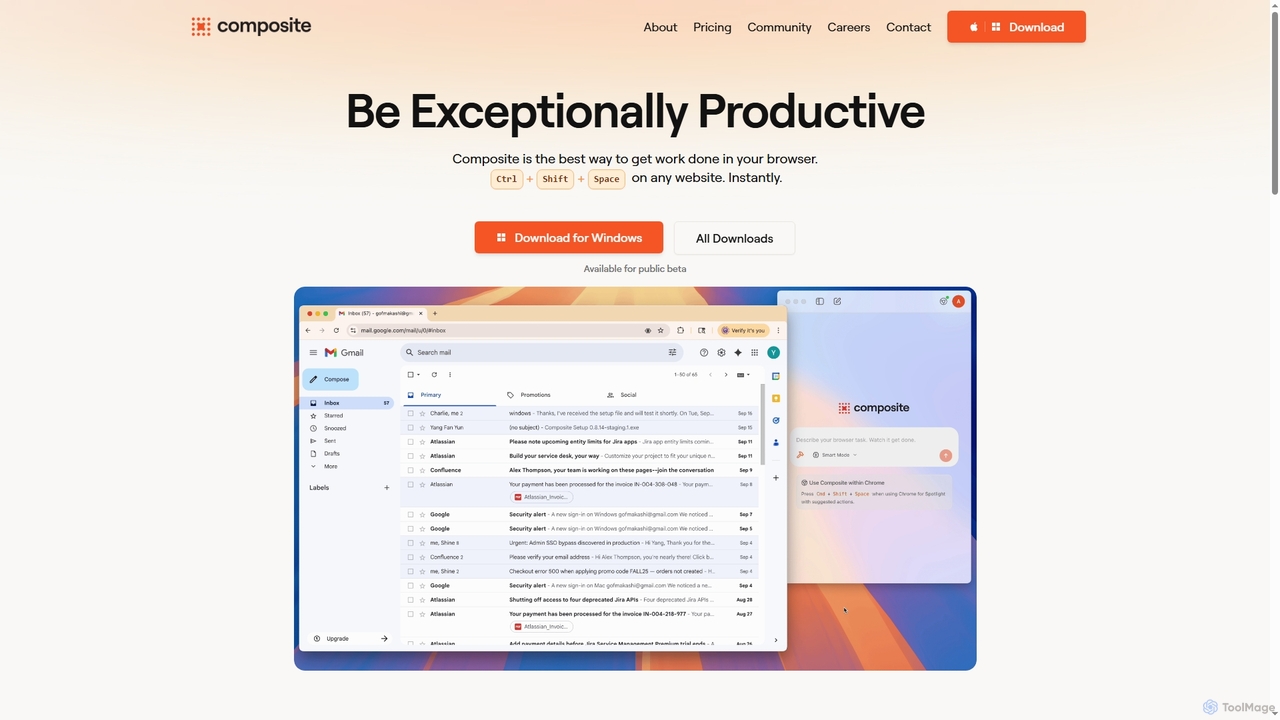
Composite is an AI browser autopilot designed to significantly boost productivity by automating repetitive tasks directly within your …
Composite is an AI browser autopilot designed to significantly boost productivity by automating repetitive tasks directly within your existing browser. It learns from your actions, predicts what needs to be done, and executes tasks like clicking, typing, and navigating on your behalf, all without complex setup or migration.
Genie
Genie is an AI-powered inventory management platform designed specifically for Shopify brands. It replaces cumbersome spreadsheets with an …
Genie is an AI-powered inventory management platform designed specifically for Shopify brands. It replaces cumbersome spreadsheets with an intuitive dashboard, providing real-time insights into stock levels, sales trends, and capital allocation. Genie automates inventory analysis, recommends replenishment orders, and simplifies purchase order and supplier management, helping e-commerce businesses save time, reduce stockouts, and optimize working capital.
About Operations
AI Operations tools are a class of software designed to automate, optimize, and streamline internal business processes. These tools leverage machine learning, process mining, and automation to analyze workflows, predict outcomes, and manage resources with high efficiency. Their primary value lies in reducing operational costs, minimizing human error, and enhancing productivity across core functions like supply chain, logistics, and production. By transforming data into actionable insights, they enable businesses to become more agile and resilient.
Core Features
- Process Automation: Automates repetitive tasks such as data entry, scheduling, compliance checks, and report generation.
- Predictive Analytics: Forecasts demand, identifies potential supply chain disruptions, and predicts equipment maintenance needs.
- Resource Optimization: Intelligently allocates personnel, equipment, and inventory based on real-time data and demand forecasts.
- Supply Chain Management: Enhances visibility and control over logistics, inventory levels, and supplier performance.
- Automated Quality Control: Utilizes computer vision and sensor data analysis to detect defects in products or services automatically.
Applicable Scenarios
These tools are widely used in industries like manufacturing, logistics, retail, and healthcare. Operations managers, supply chain analysts, and plant supervisors use them to monitor production lines, optimize delivery routes, and manage inventory. For example, a retail company can use AI to automate stock replenishment, while a factory can implement predictive maintenance to prevent machinery downtime.
Selection Criteria
When choosing an AI Operations tool, consider its integration capabilities with your existing ERP or SCM systems. Evaluate its scalability to support business growth and its industry-specific modules. Also, assess the level of data security, the user interface's ease of use for non-technical staff, and the vendor's customer support quality.
OperationsUse Cases
Automated Inventory Management for E-commerce
An e-commerce operations manager is tasked with maintaining optimal stock levels to prevent both stockouts and overstocking. Using an AI Operations tool, they can analyze historical sales data, seasonality, and current market trends to generate accurate demand forecasts. The system automatically triggers reorder alerts or even places purchase orders with suppliers when inventory drops below a predefined threshold, ensuring product availability while minimizing carrying costs.
Predictive Maintenance Scheduling in Manufacturing
A plant manager in a manufacturing facility needs to minimize costly, unplanned downtime of critical machinery. An AI Operations tool connects to sensors on the equipment, continuously analyzing data like temperature, vibration, and performance metrics. The AI model predicts potential failures before they occur and automatically schedules maintenance during planned downtimes, ordering necessary parts in advance. This shifts the maintenance strategy from reactive to proactive, increasing overall equipment effectiveness (OEE).
Optimizing Logistics and Delivery Routes
A logistics coordinator for a delivery service company aims to reduce fuel costs and improve delivery times. By inputting all daily delivery addresses into an AI Operations tool, the system calculates the most efficient routes for each driver. It considers real-time traffic data, weather conditions, vehicle capacity, and delivery time windows. The result is a dynamic routing plan that minimizes travel distance and time, leading to significant fuel savings and higher customer satisfaction.
Automated Employee Shift Scheduling
A manager at a 24/7 call center or a large retail store faces the complex task of creating weekly staff schedules. An AI Operations tool automates this process by considering multiple variables: employee availability, skill sets, labor regulations, union rules, and forecasted customer traffic. The system generates fair and optimized schedules in minutes, reducing administrative work for managers and ensuring adequate staffing levels at all times, which improves both employee morale and customer service.
AI-Powered Quality Control in Production
In a fast-paced production line, a quality assurance team needs to inspect thousands of items for defects. An AI Operations tool using computer vision can automate this. High-resolution cameras capture images of each product, and the AI model, trained on thousands of images of good and defective items, instantly identifies flaws like cracks, scratches, or misalignments. Defective products are automatically flagged or removed from the line, ensuring higher product quality and consistency than manual inspection allows.
Streamlining Project Resource Allocation
A project manager at a consulting firm needs to assign the right consultants to new projects based on skills, availability, and budget. An AI Operations tool can analyze the requirements of a new project and match them against a database of all consultants' profiles, including their expertise, current workload, and hourly rates. The system suggests optimal team compositions, helping the manager build effective teams quickly, balance workloads across the firm, and maximize project profitability.