
Business Best in category 1 results Portfolio Management AI Tool

Popular AI tools in the Portfolio Management field of Business include DealForge AI, etc., helping you quickly improve efficiency.

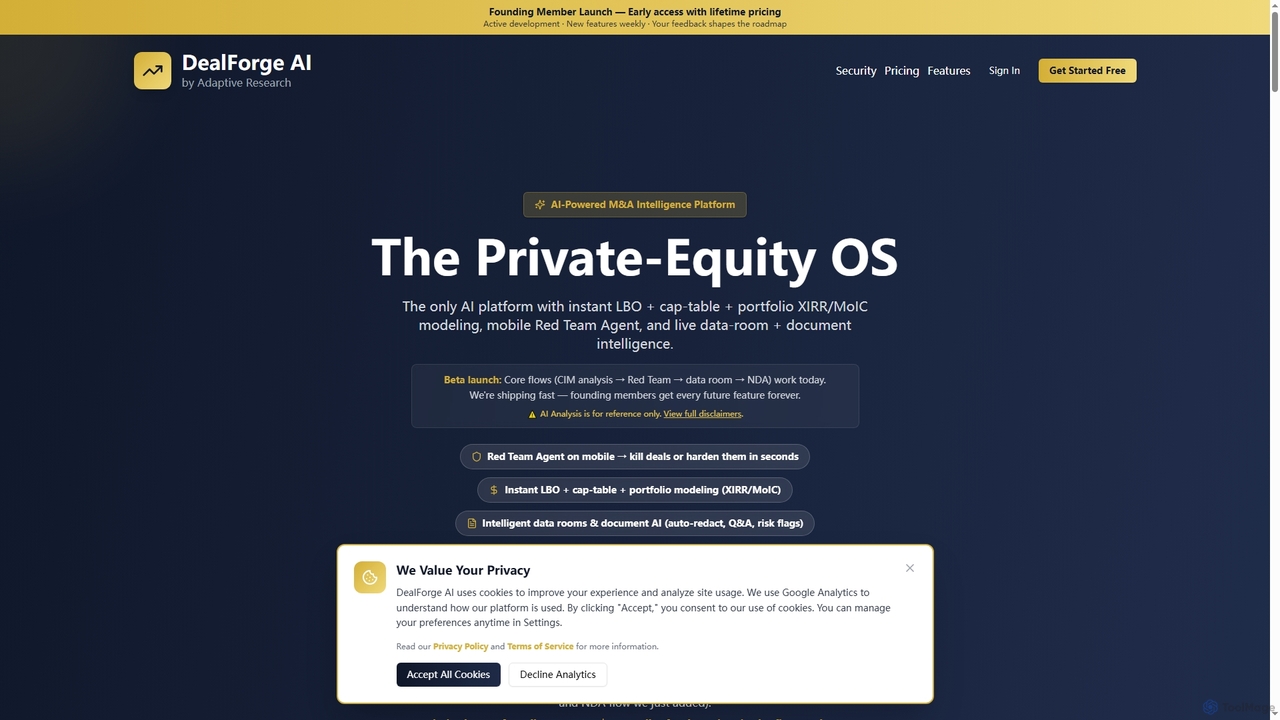
DealForge AI

DealForge AI

An AI-powered M&A intelligence platform designed for private equity, search funds, and dealmakers. It automates due diligence, provides …

3.3K

About Portfolio Management

Portfolio Management AI tools are sophisticated platforms that leverage artificial intelligence to optimize investment decisions, track asset performance, and manage risk. These tools utilize advanced algorithms, machine learning, and predictive analytics to process vast amounts of financial data, providing real-time insights and automating complex investment strategies. They empower investors and financial professionals to make data-driven choices, enhance returns, and maintain desired risk profiles within their investment portfolios.

Core Features

  • Data Aggregation & Analysis: Consolidate financial data from various sources and perform deep analytical assessments.
  • Risk Assessment & Management: Identify, quantify, and mitigate portfolio risks through predictive modeling and scenario analysis.
  • Performance Tracking & Reporting: Monitor investment performance against benchmarks and generate comprehensive reports.
  • Asset Allocation Optimization: Recommend optimal asset distribution based on financial goals, risk tolerance, and market conditions.
  • Predictive Analytics: Forecast market trends and asset movements to inform proactive investment adjustments.

Applicable Scenarios

These tools are vital for individual investors seeking to manage their personal wealth effectively, financial advisors aiming to optimize client portfolios, and institutional investors needing to oversee large, complex funds. They are particularly useful in dynamic market environments where rapid data processing and informed decision-making are crucial.

How to Choose

When selecting an AI portfolio management tool, consider its integration capabilities with existing brokerage accounts and market data providers, the level of customization for different asset classes and investment strategies, the accuracy and real-time nature of its analytics, and its security and regulatory compliance features. User interface and support for diverse investment instruments are also key.

Portfolio ManagementUse Cases

1

Optimizing Personal Investment Strategy

An individual investor uses an AI portfolio management tool to analyze their current holdings, risk tolerance, and financial goals. The AI suggests rebalancing strategies, identifies underperforming assets, and recommends diversification opportunities, helping them proactively adjust their portfolio to align with market shifts and personal objectives.

2

Automating Client Portfolio Rebalancing

A financial advisor leverages AI to monitor multiple client portfolios simultaneously. The tool automatically detects deviations from target asset allocations or risk profiles and can execute rebalancing trades or alert the advisor for approval, ensuring clients' portfolios remain optimized without constant manual oversight.

3

Real-time Risk Monitoring for Institutional Funds

A hedge fund manager employs AI to continuously scan global markets for potential risks and opportunities affecting their large investment fund. The AI provides instant alerts on significant market events, liquidity issues, or changes in asset correlations, enabling rapid response to protect capital and seize emerging trends.

4

Strategic Asset Allocation for Corporate Endowments

A corporate endowment fund manager utilizes AI to model long-term asset allocation strategies. The AI simulates various economic scenarios, projects returns, and assesses risk-adjusted performance across different asset classes, aiding in the development of robust investment policies that meet long-term financial obligations.

5

Performance Attribution Analysis for Investment Analysts

An investment analyst uses AI to decompose a portfolio's returns into its underlying drivers, such as asset allocation, sector selection, and individual security performance. This detailed attribution helps the analyst understand what factors contributed most to gains or losses, informing future investment decisions and strategy adjustments.

6

Integrating ESG Factors into Investment Decisions

A portfolio manager focused on sustainable investing uses AI to screen companies based on environmental, social, and governance (ESG) scores and data. The AI helps identify companies that align with specific sustainability criteria, allowing the manager to construct portfolios that meet both financial and ethical objectives.

Portfolio ManagementFrequently Asked Questions