ToolMage
Sign in

Best 9 Mergers & Acquisitions AI tools for Finance

Popular Mergers & Acquisitions AI tools in Finance include dealstream.com, Inven, tupelosmb, OffDeal, Kumo, eilla, DealForge AI, Maasai, and Acuration, helping you work more efficiently.

DealForge AI
Freemium

DealForge AI

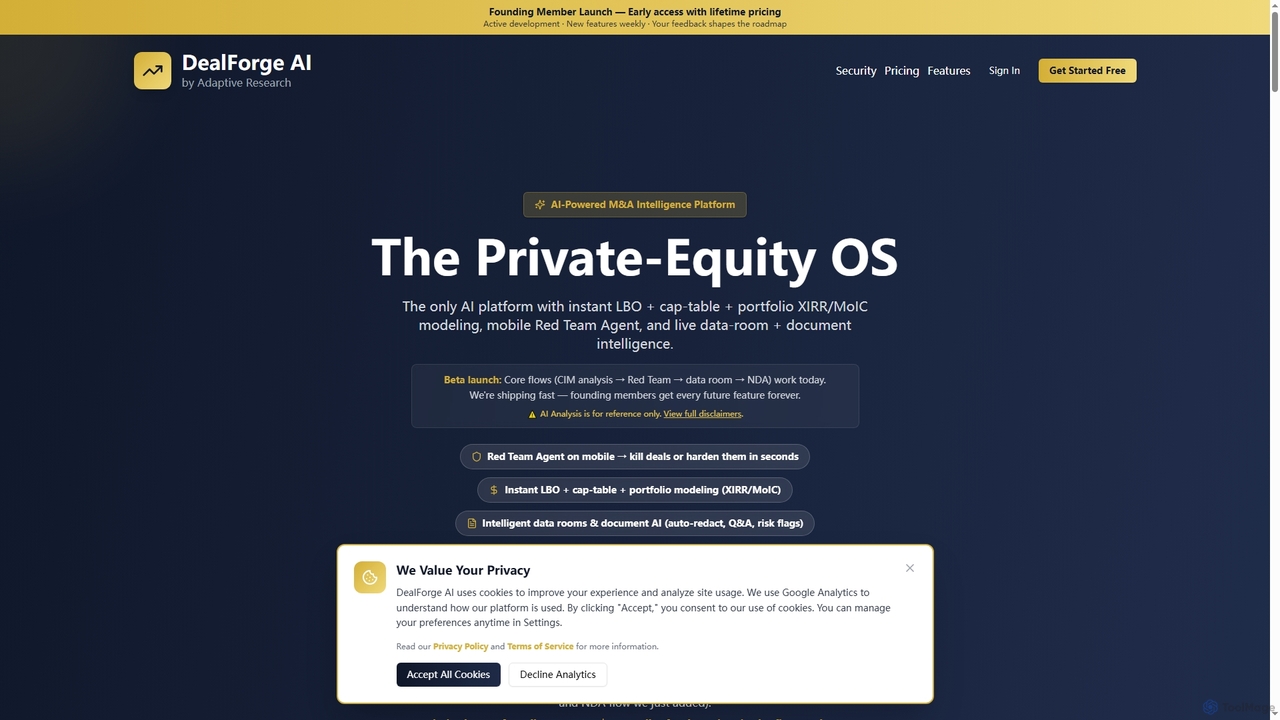
An AI-powered M&A intelligence platform designed for private equity, search funds, and dealmakers. It automates due diligence, provides instant LBO and cap table modeling, and offers tools like a Red Team Agent and intelligent data rooms to accelerate the entire deal lifecycle from sourcing to closing.

Portfolio Management
Visits 5.6KFavorites 115Likes 104
Maasai
Freemium

Maasai

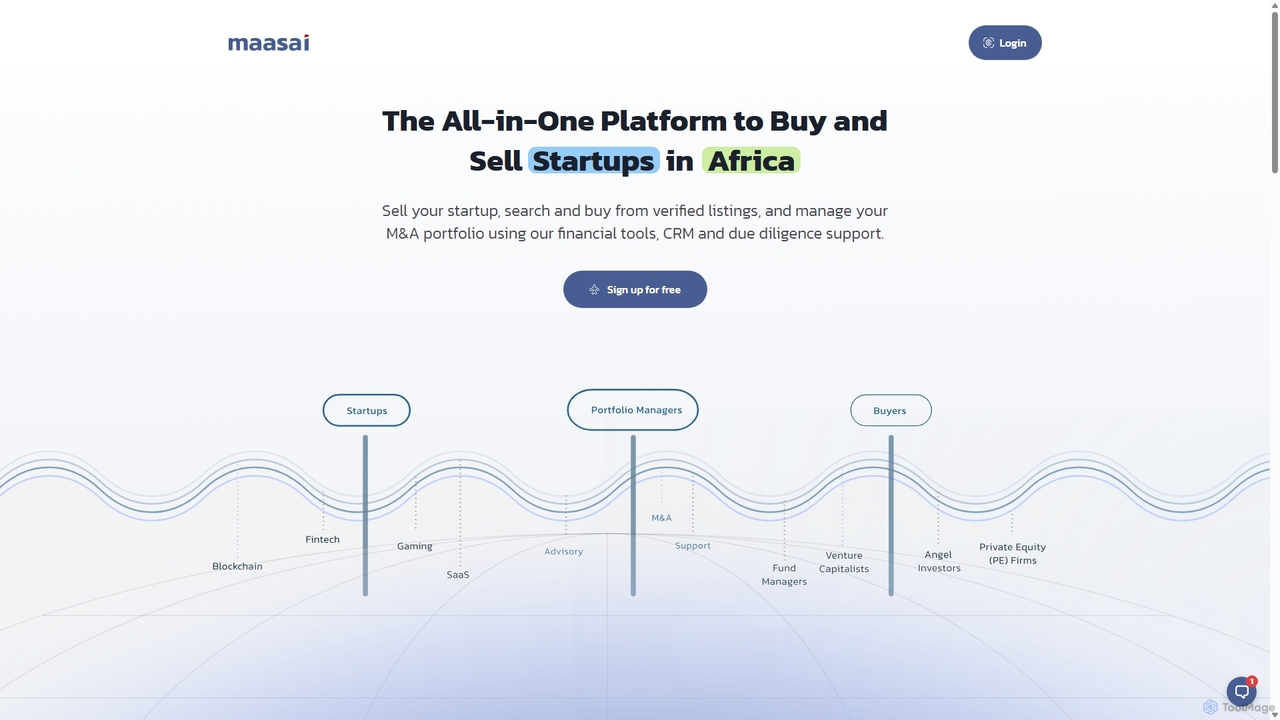
Maasai is an AI-powered, all-in-one platform dedicated to buying and selling startups in Africa. It connects founders with verified buyers, streamlining the entire M&A process from listing and discovery to due diligence and closing. The platform offers integrated financial tools, a dedicated CRM, and expert support to make transactions fast, discreet, and efficient for startups, investors, and portfolio managers.

Startup Tools
Visits 5.5KFavorites 114Likes 123
Kumo
Paid

Kumo

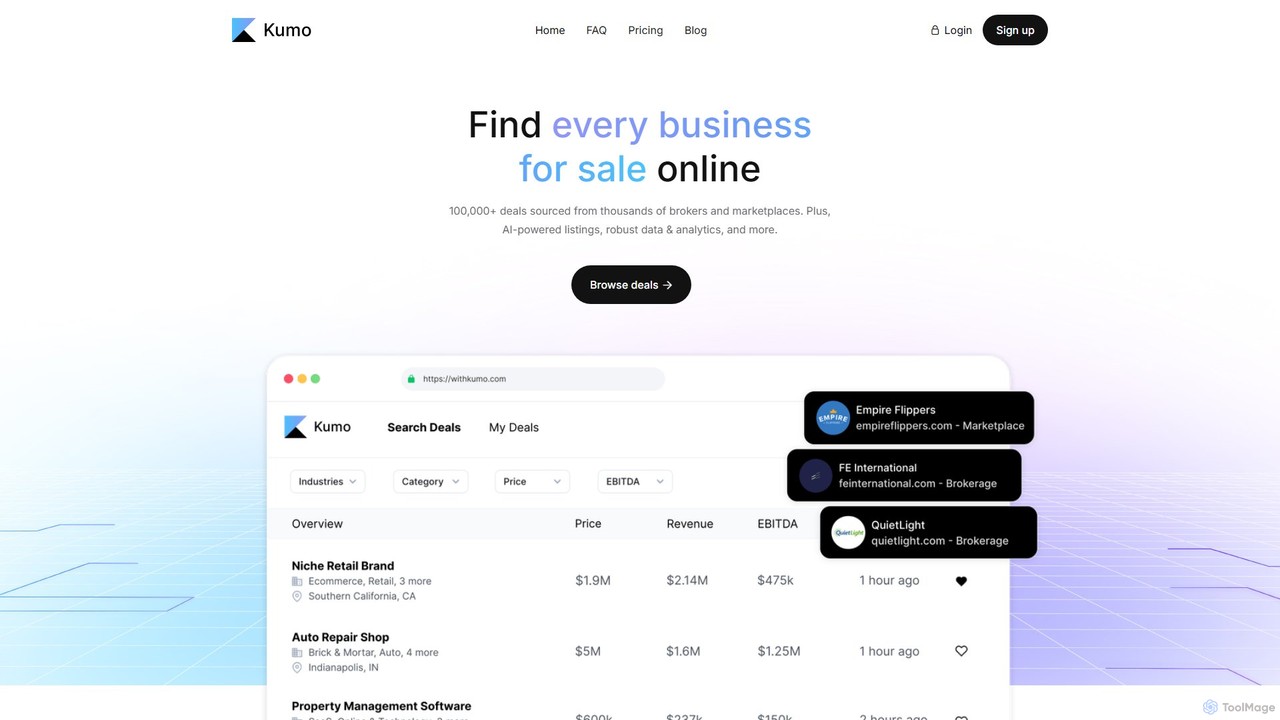
Kumo is an AI-powered deal sourcing platform that aggregates business-for-sale listings from thousands of global sources. It uses AI to clean, deduplicate, and summarize listings into concise bullet points, helping investors, M&A professionals, and entrepreneurs quickly find and evaluate acquisition opportunities. With advanced search, robust analytics, and personalized deal tracking, Kumo streamlines the entire deal sourcing process.

Lead Generation
Visits 22.5KFavorites 106Likes 98
Acuration
Paid

Acuration

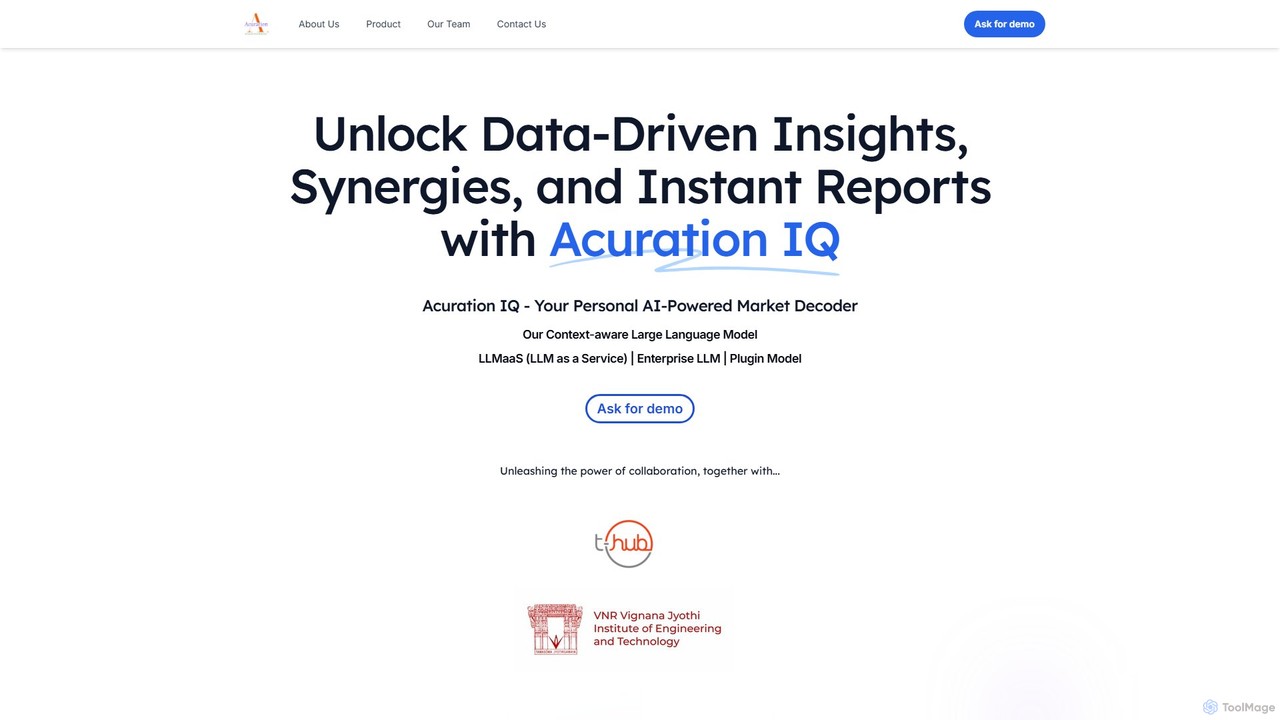
Acuration is an AI-powered platform featuring Acuration IQ, a context-aware LLM designed for business intelligence. It specializes in market research, data analysis, and partner discovery to facilitate mergers, acquisitions, and strategic collaborations. The tool transforms complex data into actionable insights and automates report and proposal generation, empowering enterprises to make informed decisions and accelerate growth.

Market Research
Visits 5.5KFavorites 110Likes 116
OffDeal
Paid

OffDeal

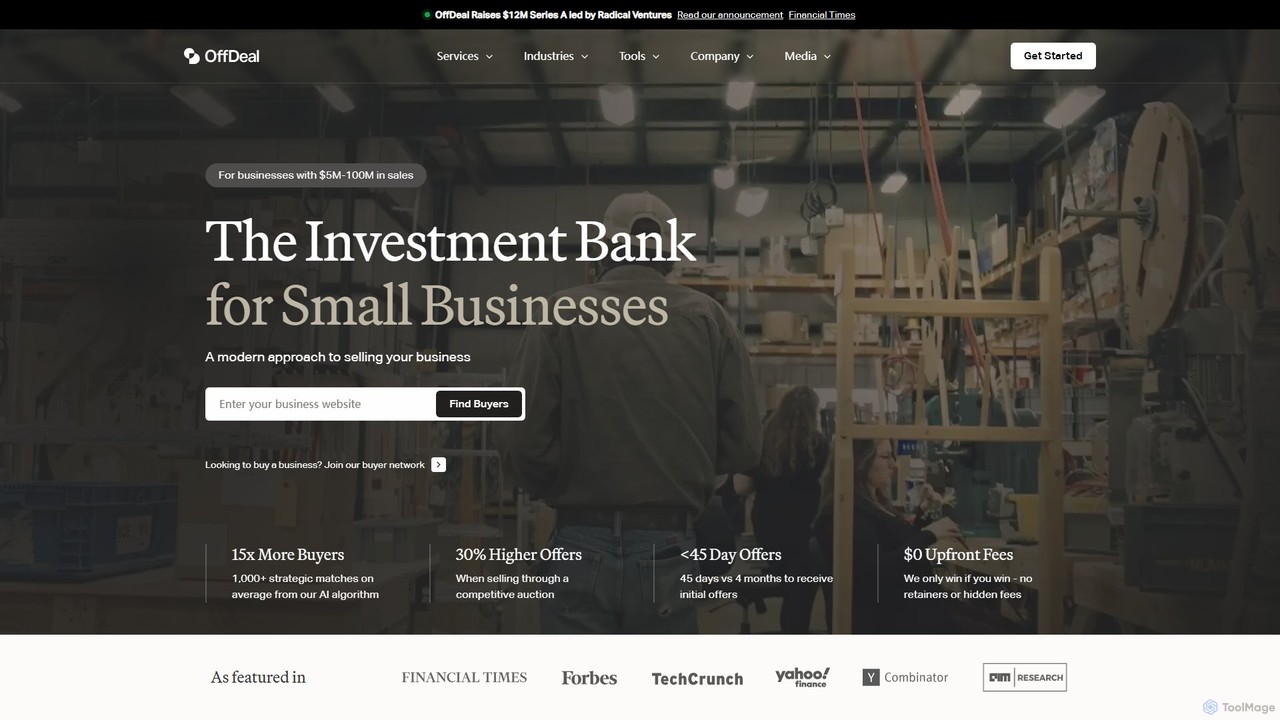
OffDeal is an AI-powered investment bank designed for small to medium-sized businesses ($5M-$100M in sales). It combines expert M&A advisory with proprietary AI technology to streamline the business sale process, identify more strategic buyers, and secure higher offers, all with no upfront fees.

Data Analysis
Visits 29.5KFavorites 134Likes 141
tupelosmb
Paid

tupelosmb

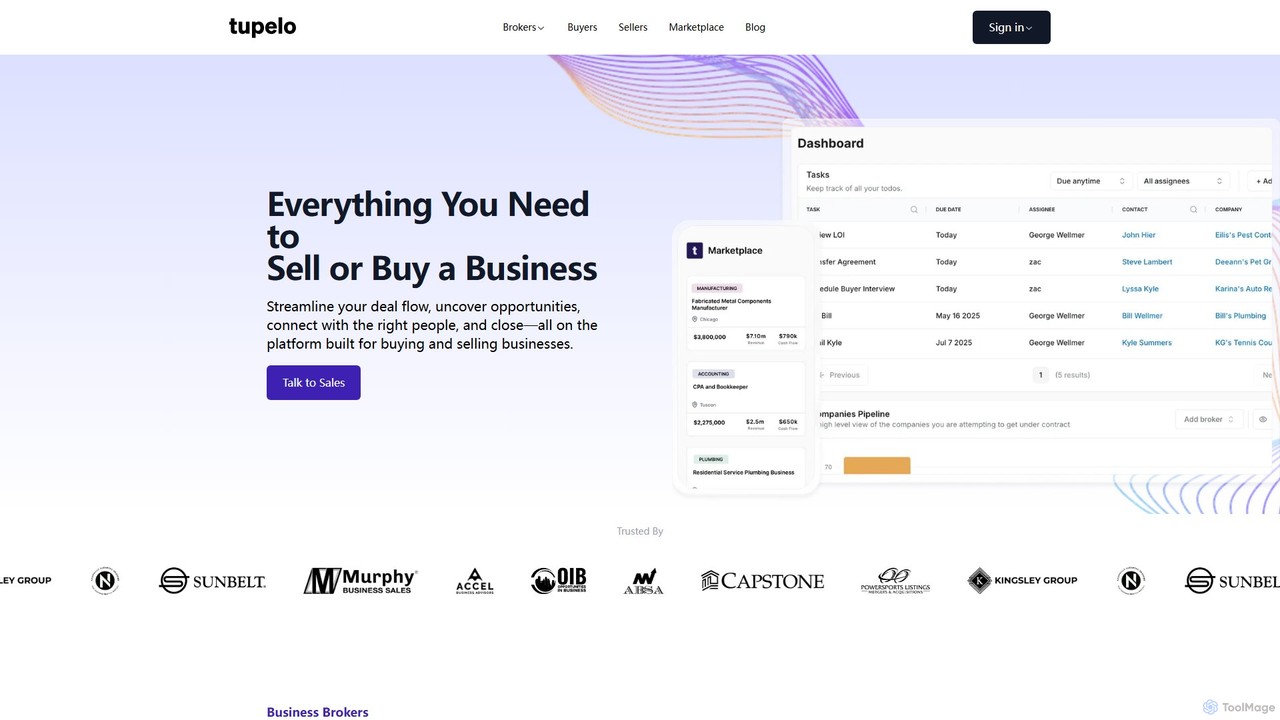
Tupelo is an all-in-one CRM platform specifically designed for business brokers, buyers, and sellers. It streamlines the entire deal flow of buying and selling businesses with features like workflow automation, secure data rooms, AI-powered valuations, and targeted email marketing, centralizing all activities into a single, intuitive workspace.

Sales
Visits 40.4KFavorites 119Likes 128
dealstream.com
Paid

dealstream.com

DealStream is an AI-powered M&A platform designed for investment bankers, private equity firms, and corporate development professionals. It streamlines the entire deal lifecycle, from intelligent deal sourcing and matching to automated due diligence and workflow management. The platform provides a secure, efficient marketplace to connect buyers, sellers, and advisors, facilitating faster and more successful transactions.

Deal Sourcing
Visits 231.8KFavorites 143Likes 155
eilla
Freemium

eilla

eilla is an AI-powered platform for Venture Capital, Private Equity, and M&A professionals. It uses specialized "AI Analysts" to automate and accelerate the deal-making process, from company research and market analysis to valuation and buyer scouting. By integrating with trusted data sources and internal files, eilla provides deep, cross-referenced insights, saving significant time and enhancing decision-making accuracy for investment professionals.

Investment
Visits 14.7KFavorites 131Likes 123
Inven
Paid

Inven

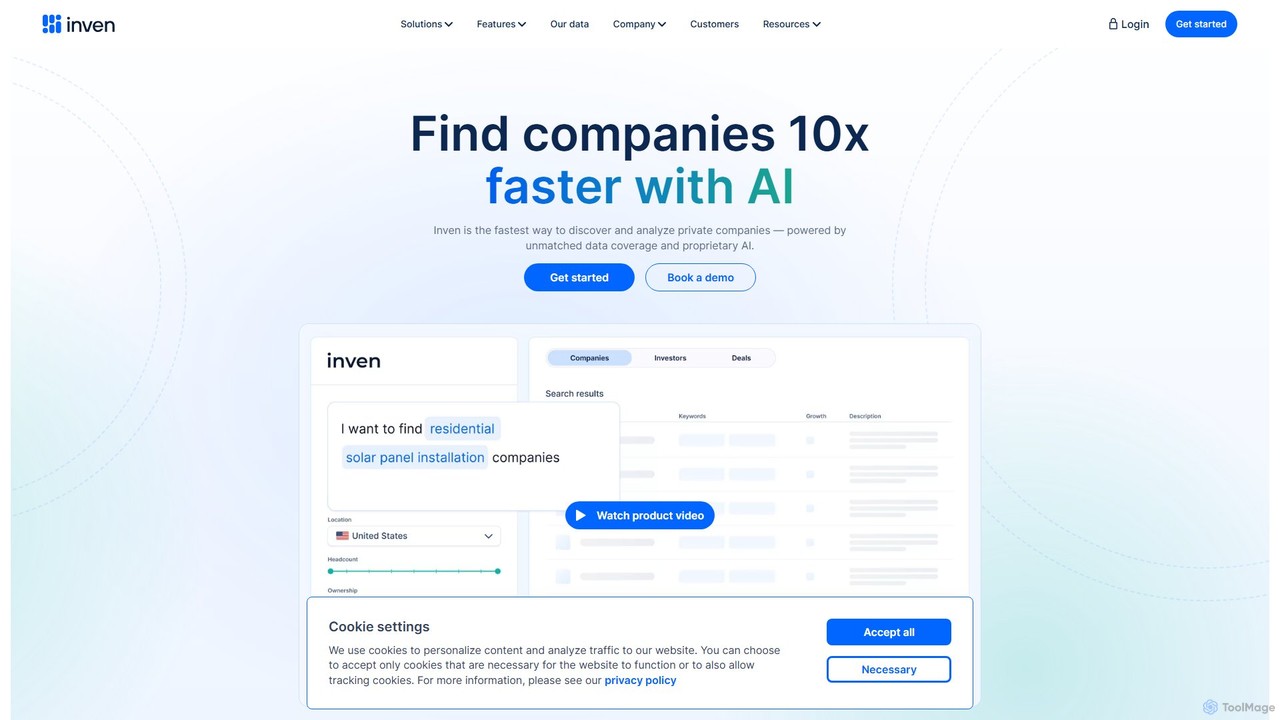
Inven is an AI-powered platform for M&A professionals, investment bankers, and private equity firms, designed to find M&A targets 10x faster. It leverages AI and NLP to scan millions of data sources, providing a comprehensive company database, advanced search, and real-time alerts to streamline deal sourcing, enhance market research, and provide a significant competitive advantage.

Lead Generation
Visits 92.8KFavorites 121Likes 125

About Mergers & Acquisitions

Mergers & Acquisitions (M&A) AI tools are specialized platforms that leverage artificial intelligence to streamline and enhance every stage of the M&A lifecycle. These tools utilize advanced algorithms, machine learning, and natural language processing to analyze vast datasets, identify strategic opportunities, and mitigate risks. They empower financial professionals, corporate development teams, and legal advisors to make data-driven decisions, accelerate due diligence, and optimize integration processes, ultimately increasing deal success rates and value creation.

Core Features

  • Target Identification & Screening: AI-driven analysis of market data, financial reports, and news to identify potential acquisition targets matching strategic criteria.
  • Automated Due Diligence: Rapid review and analysis of legal documents, financial statements, and operational data to uncover risks and opportunities.
  • Valuation & Financial Modeling: AI-assisted generation of financial models and valuation scenarios based on market trends and company performance data.
  • Integration Planning & Risk Assessment: Predictive analytics to forecast post-merger integration challenges and assess potential synergies or conflicts.
  • Contract Analysis & Compliance: NLP-powered review of contracts for key clauses, compliance issues, and potential liabilities.

Applicable Scenarios

Corporate development teams use M&A AI tools to quickly identify and evaluate potential acquisition targets, significantly reducing the time spent on manual research. Investment bankers leverage these platforms for accelerated due diligence, analyzing thousands of documents in hours rather than weeks. Legal teams utilize AI for contract review, ensuring compliance and identifying critical clauses during complex deal negotiations.

How to Choose

When selecting M&A AI tools, consider the breadth of their M&A lifecycle coverage, from target sourcing to post-merger integration. Evaluate the accuracy and explainability of their AI models, especially for critical tasks like valuation and risk assessment. Assess integration capabilities with existing financial systems and data sources, and prioritize solutions offering robust data security and compliance features. Finally, consider the user interface and ease of adoption for your team.

Mergers & Acquisitions use cases

1

Accelerated Due Diligence Document Review

Legal and financial analysts often face overwhelming volumes of documents during due diligence. M&A AI tools can ingest thousands of legal contracts, financial statements, and operational reports, automatically extracting key clauses, identifying anomalies, and flagging potential risks or liabilities. This drastically reduces manual review time by up to 70%, allowing teams to focus on strategic analysis rather than data sifting, ensuring a more thorough and efficient assessment of target companies.

2

Strategic Target Identification & Screening

Corporate development managers seeking growth opportunities can use M&A AI tools to scan global markets for companies that align with specific strategic criteria, such as revenue growth, market share, technological innovation, or geographic presence. The AI analyzes public and private data sources, news, and industry reports, presenting a ranked list of potential targets with detailed profiles, enabling faster and more informed pipeline building.

3

Enhanced Post-Merger Integration Planning

Post-merger integration teams utilize M&A AI tools to predict potential cultural clashes, operational redundancies, or system integration challenges. By analyzing employee sentiment data, operational metrics, and IT infrastructure details from both entities, the AI can model various integration scenarios, highlight critical areas for attention, and suggest optimal strategies to ensure a smoother transition and maximize synergy realization.

4

Automated Valuation & Scenario Modeling

Investment bankers and private equity professionals can leverage M&A AI tools to generate rapid, data-driven valuations for target companies. The AI processes historical financial data, market comparables, and macroeconomic indicators to build sophisticated financial models and run various 'what-if' scenarios. This provides a more dynamic and accurate valuation range, supporting robust negotiation strategies and investment decisions.

5

Risk Assessment and Compliance Monitoring

Risk management teams employ M&A AI tools to continuously monitor potential risks associated with a deal, from regulatory compliance to market volatility. The AI can track changes in legal frameworks, identify potential anti-trust issues, or flag adverse media mentions related to the target company. This proactive monitoring helps mitigate unforeseen challenges and ensures the deal adheres to all necessary legal and ethical standards throughout its lifecycle.

6

Synergy Identification and Realization Tracking

Deal teams use M&A AI tools to identify potential synergies (cost savings, revenue growth) between merging entities by analyzing operational data, supply chains, and customer bases. Post-acquisition, the tools can track the realization of these identified synergies against projections, providing real-time insights into integration progress and helping management adjust strategies to achieve planned value creation.

Mergers & Acquisitions FAQ

What are Mergers & Acquisitions (M&A) AI tools?

Mergers & Acquisitions (M&A) AI tools are software solutions that apply artificial intelligence, including machine learning and natural language processing, to various stages of the M&A process. They are designed to automate data analysis, enhance decision-making, and improve efficiency in tasks like target identification, due diligence, valuation, and post-merger integration. These tools help financial institutions, corporate development teams, and legal advisors manage complex transactions more effectively.

How do M&A AI tools differ from traditional M&A software?

Traditional M&A software primarily offers data management, project tracking, and basic reporting functionalities. M&A AI tools, however, go beyond this by providing predictive analytics, automated insights, and intelligent document processing. They can identify patterns, forecast outcomes, and extract information from unstructured data at a scale and speed impossible for traditional systems, offering a significant advantage in strategic analysis and risk mitigation.

What are the key benefits of using AI in Mergers & Acquisitions?

The key benefits of using AI in M&A include significantly accelerated due diligence processes, more accurate and data-driven target identification, enhanced risk assessment through predictive analytics, and improved post-merger integration planning. AI tools reduce manual effort, minimize human error, and provide deeper insights into complex datasets, leading to better deal outcomes, higher success rates, and greater value creation for acquiring entities.

Which stages of the M&A lifecycle can AI tools support?

AI tools can support nearly all stages of the M&A lifecycle. This includes pre-deal activities like market scanning and target identification, deal execution phases such as automated due diligence, contract analysis, and valuation modeling, and post-deal integration planning and synergy tracking. From initial strategy formulation to the final integration, AI provides valuable assistance in data analysis and decision support.

How can I choose the right M&A AI tool for my organization?

To choose the right M&A AI tool, first assess your organization's specific needs and the M&A stages you want to optimize. Look for tools with robust data security and compliance features, especially concerning sensitive financial and legal information. Evaluate the tool's integration capabilities with your existing systems, the accuracy and explainability of its AI models, and the level of customer support offered. A user-friendly interface and scalability are also important considerations for long-term adoption.