Dench
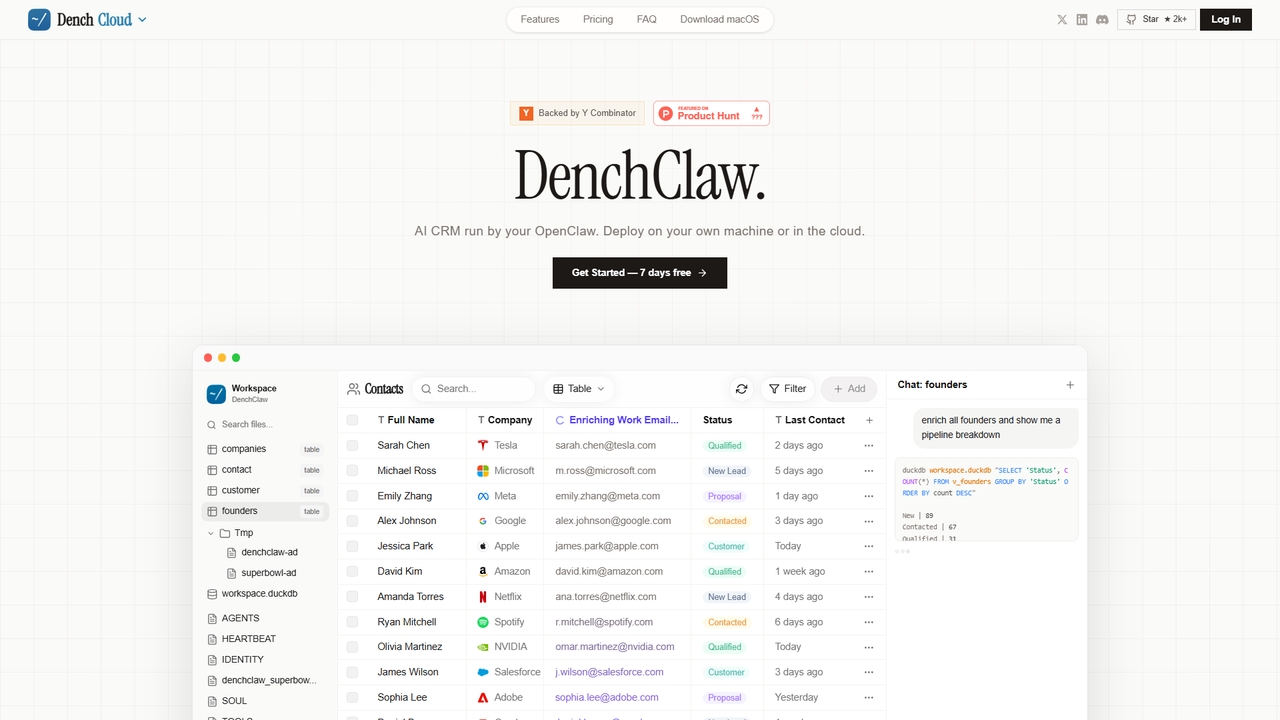
Dench is an AI-native, local-first CRM platform built on the OpenClaw framework. It allows you to manage customer …
Dench is an AI-native, local-first CRM platform built on the OpenClaw framework. It allows you to manage customer relationships through natural language commands, automate workflows, and extend functionality via a vast Skills Store. Dench emphasizes data ownership, offering both cloud and self-hosted deployment options.
tupelosmb
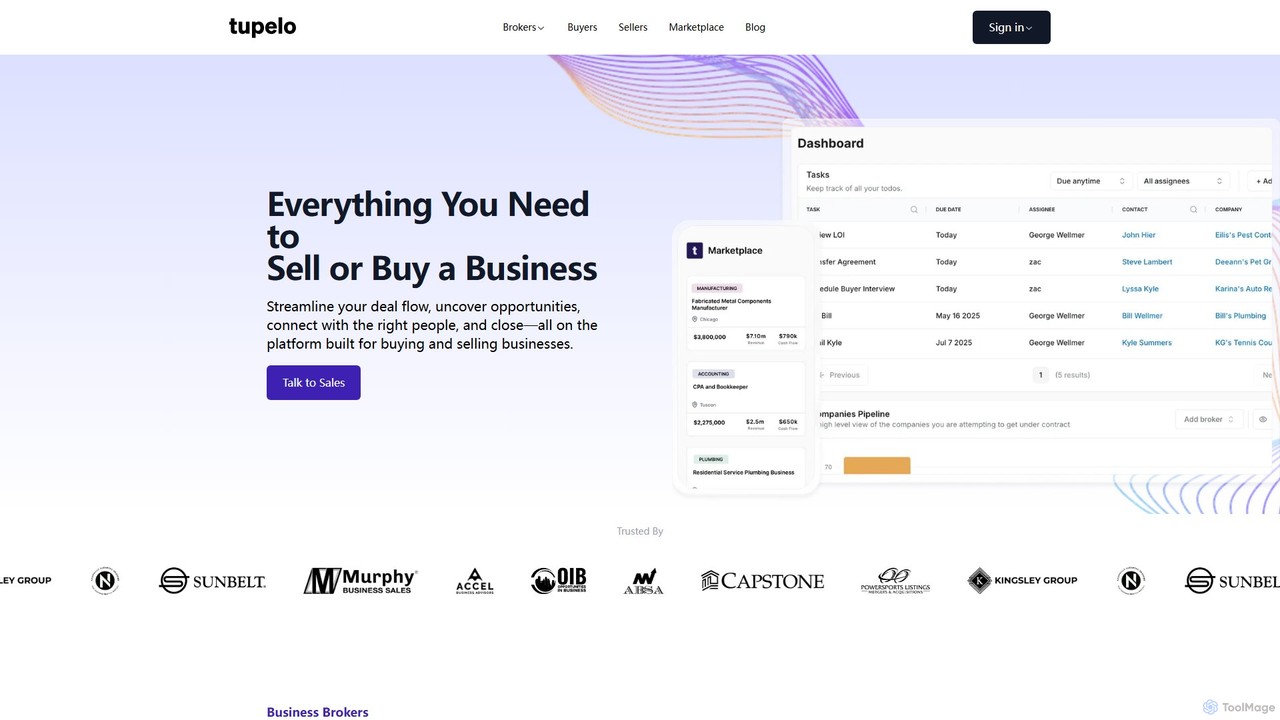
Tupelo is an all-in-one CRM platform specifically designed for business brokers, buyers, and sellers. It streamlines the entire …
Tupelo is an all-in-one CRM platform specifically designed for business brokers, buyers, and sellers. It streamlines the entire deal flow of buying and selling businesses with features like workflow automation, secure data rooms, AI-powered valuations, and targeted email marketing, centralizing all activities into a single, intuitive workspace.
HubSpot
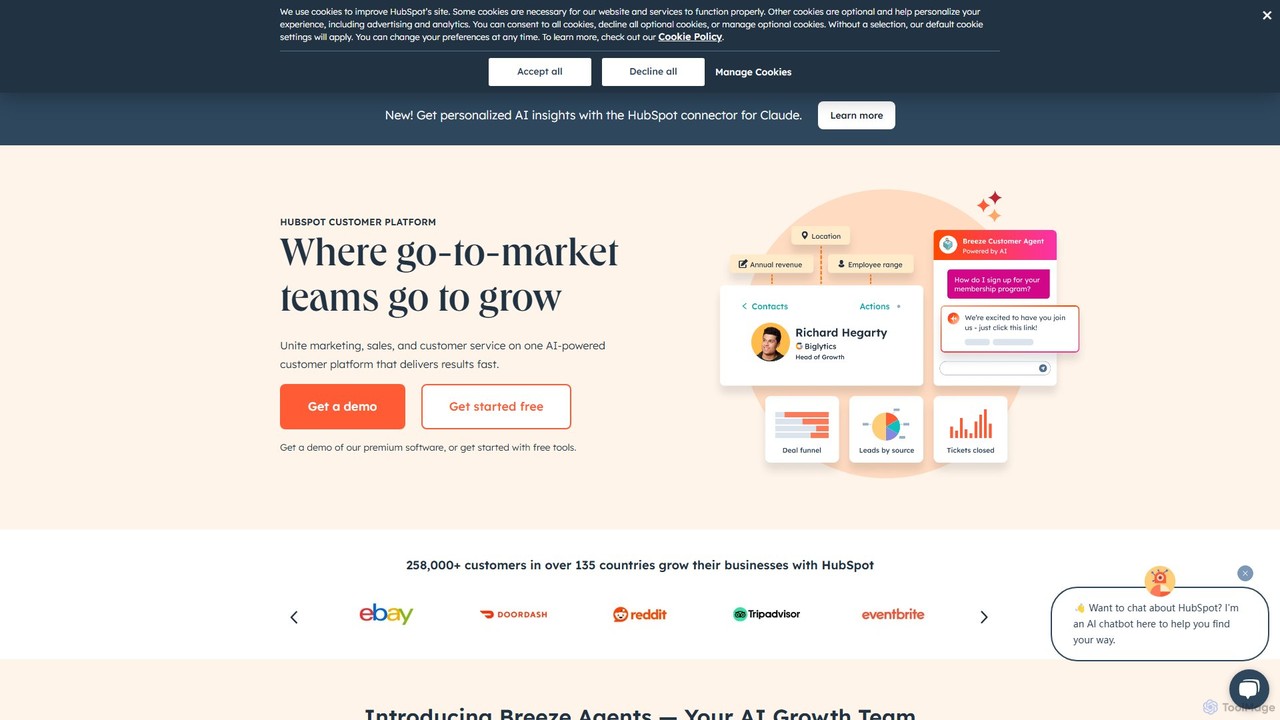
HubSpot is an AI-powered customer platform that unifies marketing, sales, service, content, and operations. It provides a suite …
HubSpot is an AI-powered customer platform that unifies marketing, sales, service, content, and operations. It provides a suite of tools, including a smart CRM and AI agents (Breeze), to help businesses attract, engage, and delight customers. By connecting all front-office teams on a single, easy-to-use platform, HubSpot enables companies to grow better and build lasting customer relationships.
Recruit CRM
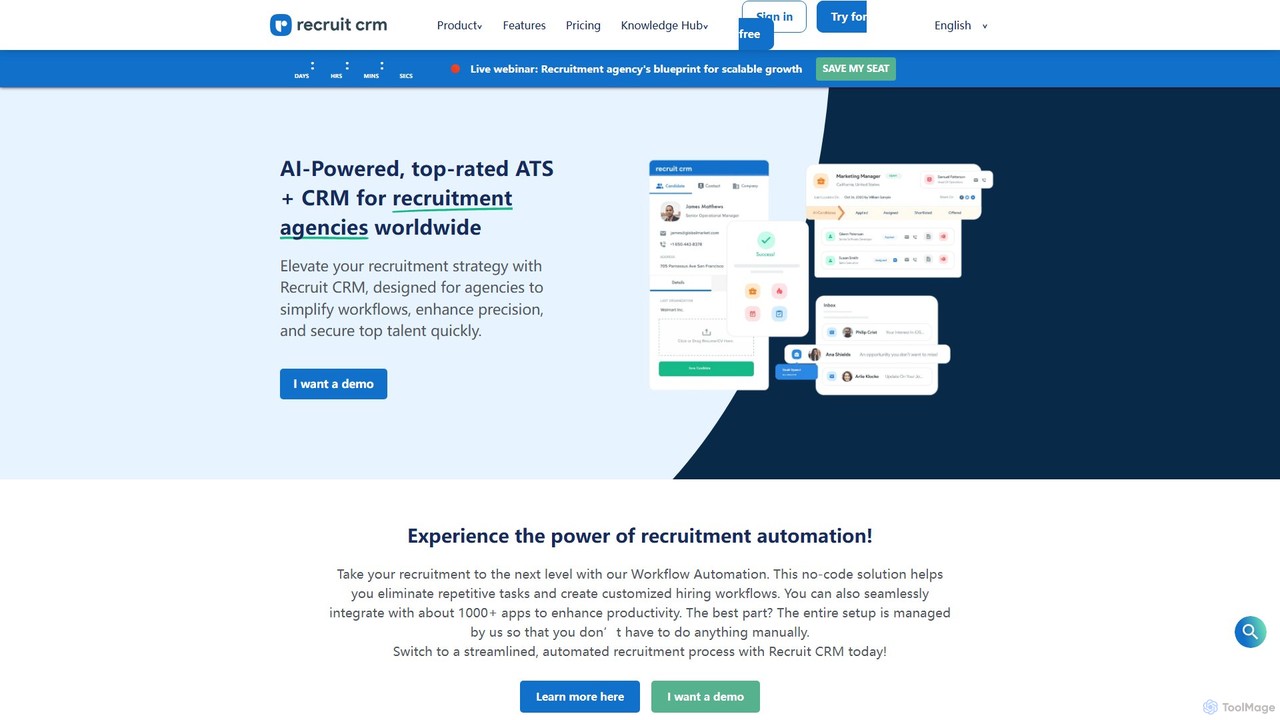
Recruit CRM is an AI-powered, all-in-one Applicant Tracking System (ATS) and CRM designed for recruitment and executive search …
Recruit CRM is an AI-powered, all-in-one Applicant Tracking System (ATS) and CRM designed for recruitment and executive search firms. It automates repetitive tasks, streamlines workflows, and uses AI for precise resume parsing and candidate matching. With features like a Chrome sourcing extension, workflow automation, and GPT integration, it helps agencies source, engage, and place top talent faster and more efficiently.
About Sales
AI Sales tools are specialized platforms that leverage artificial intelligence to optimize and automate various stages of the sales process. These tools utilize machine learning, natural language processing, and predictive analytics to enhance lead generation, qualification, engagement, and forecasting. By providing actionable insights and automating repetitive tasks, they empower sales teams to focus on high-value interactions and close deals more efficiently. They serve as an intelligent extension to traditional CRM systems, transforming raw data into strategic sales advantages.
Core Features
- Lead Scoring & Prioritization: Automatically assesses and ranks leads based on their likelihood to convert, helping sales reps focus on promising prospects.
- Sales Forecasting: Predicts future sales performance and revenue based on historical data and market trends, enabling better resource allocation.
- Automated Outreach & Personalization: Generates personalized emails, messages, and follow-ups at scale, improving engagement rates and saving time.
- Conversational AI for Sales: Deploys AI-powered chatbots or virtual assistants to handle initial inquiries, qualify leads, and schedule meetings.
- Deal Intelligence & Coaching: Analyzes sales calls and interactions to provide insights into buyer sentiment and offer coaching recommendations.
Use Cases
Sales teams across various industries utilize AI Sales tools to streamline their operations. For instance, B2B sales organizations employ these tools to identify high-potential accounts and personalize outreach campaigns, while e-commerce businesses use them for predictive product recommendations and automated customer service during the sales cycle. They are also crucial for sales managers seeking data-driven insights to optimize team performance and forecast revenue accurately.
How to Choose
When selecting an AI Sales tool, consider its integration capabilities with your existing CRM and other sales platforms. Evaluate the accuracy and relevance of its AI models for your specific industry and sales cycle. Look for features like customizable lead scoring, robust analytics, and intuitive user interfaces. Scalability, data security, and the quality of customer support are also critical factors to ensure long-term value and adoption.
SalesUse Cases
Automate Lead Qualification & Prioritization
Sales development representatives (SDRs) often spend significant time manually qualifying leads. AI Sales tools automatically analyze lead data from various sources (website visits, engagement, firmographics) to score and prioritize prospects. This allows SDRs to focus their efforts on the most promising leads, significantly reducing time spent on unqualified contacts and increasing conversion rates by up to 20%.
Generate Personalized Sales Outreach at Scale
Marketing and sales teams struggle to send personalized emails to a large volume of prospects. AI-powered tools analyze prospect profiles and past interactions to generate highly personalized email drafts, subject lines, and call-to-actions. This automation ensures each message resonates with the recipient, improving open rates and response rates without manual customization for every single email.
Analyze Sales Calls for Performance Coaching
Sales managers need to provide effective coaching but often lack time to review every sales call. AI Sales tools transcribe and analyze recorded sales conversations, identifying key discussion points, sentiment, talk-to-listen ratios, and adherence to scripts. This provides managers with objective data to pinpoint areas for improvement, offer targeted coaching, and replicate successful sales strategies across the team.
Predict Future Sales & Revenue Accurately
Sales leaders and finance departments require accurate sales forecasts for strategic planning and resource allocation. AI Sales forecasting tools analyze historical sales data, market trends, pipeline health, and external economic indicators to generate highly accurate revenue predictions. This enables better inventory management, budget planning, and proactive adjustments to sales strategies.
Enrich CRM Data with Real-time Insights
Maintaining up-to-date and comprehensive CRM data is crucial but often neglected. AI Sales tools automatically enrich existing CRM records by pulling in real-time information from public sources, social media, and news feeds. This ensures sales reps have the latest company news, contact changes, and relevant industry updates, empowering them with more context for their outreach.
Automate Follow-ups and Meeting Scheduling
Sales reps spend considerable time on follow-up emails and coordinating meeting times. AI Sales assistants can automate the entire follow-up sequence based on predefined triggers and prospect engagement. They can also intelligently suggest and schedule meeting times directly into calendars, reducing administrative burden and ensuring no potential deal falls through due to missed follow-ups.