ToolMage
Sign in

Best 2 Relationship Management AI tools for Crm

Popular Relationship Management AI tools in Crm include Affinity and Centralize, helping you work more efficiently.

Centralize
Paid

Centralize

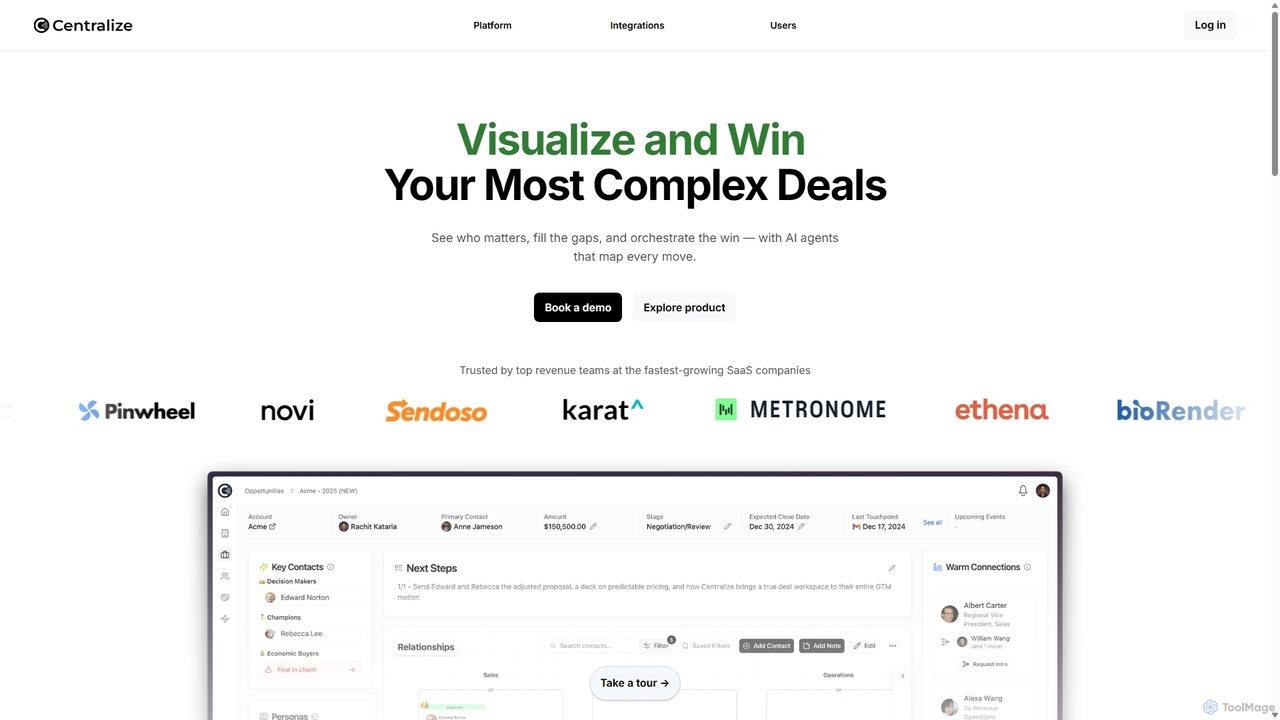
Centralize is an AI-powered sales intelligence platform designed for B2B revenue teams to visualize, manage, and win complex deals. It automates stakeholder research, maps relationship dynamics, and provides actionable insights by integrating with your CRM, email, and calendar. This helps sales teams understand who matters, identify gaps, and orchestrate winning strategies.

Relationship Management
Visits 18.2KFavorites 132Likes 131
Affinity
Paid

Affinity

Affinity is a relationship intelligence platform and CRM designed for relationship-driven industries like private capital, investment banking, and consulting. It uses AI to automatically capture and analyze data from emails and calendars, eliminating manual data entry and providing deep insights into your team's network to help you find, manage, and close more deals.

Relationship Management
Visits 429.5KFavorites 136Likes 114

About Relationship Management

AI Relationship Management tools are specialized platforms designed to intelligently nurture and strengthen professional connections. They leverage AI to automatically track interactions, enrich contact data, and provide actionable insights for maintaining key relationships. These tools go beyond traditional CRM by focusing on the quality and depth of engagement, helping users build long-term value from their network. They analyze communication patterns to suggest timely follow-ups and highlight at-risk connections.

Core Features

  • Automated Interaction Logging: Automatically captures emails, meetings, and calls to create a complete history for each contact.
  • Contact Data Enrichment: Scans public sources and email signatures to update contact profiles with current information.
  • Relationship Strength Scoring: Uses AI to analyze communication frequency and sentiment to score the health of each relationship.
  • Intelligent Follow-up Reminders: Proactively suggests when to reconnect with contacts based on past interaction patterns.
  • Network Mapping: Visualizes the connections between your contacts to uncover new opportunities and influencers.

Use Cases

These tools are ideal for professionals whose success depends on strong networks, such as sales account managers, business development executives, freelancers, consultants, and venture capitalists. They are used to manage key client accounts, nurture investor relations, and maintain a robust professional network for career growth and opportunities.

How to Choose

When selecting a tool, consider its integration capabilities with your email and calendar systems. Evaluate the sophistication of its AI-driven insights, such as relationship scoring and follow-up suggestions. Also, assess the user interface for ease of use in daily workflows and check the pricing model to ensure it aligns with your team size and needs.

Relationship Management use cases

1

Nurturing High-Value Client Accounts

For account managers in B2B sales, maintaining strong relationships with key clients is critical for retention and upselling. An AI Relationship Management tool automatically logs all communications, analyzes sentiment in emails, and sets intelligent reminders to check in at crucial moments. This prevents valuable clients from feeling neglected and helps managers proactively address potential issues, turning a reactive process into a strategic one.

2

Managing a Freelancer's Client Network

Freelancers and consultants rely on repeat business and referrals. These tools act as a personal CRM, reminding them to follow up with past clients, share relevant articles, or send a congratulatory note on a work anniversary. By systematically maintaining these 'weak ties,' freelancers can stay top-of-mind and generate a steady stream of inbound project inquiries without active marketing.

3

Streamlining Investor and Stakeholder Relations

Executives and startup founders use these tools to manage communications with investors, board members, and key partners. The system ensures regular updates are sent, tracks engagement with reports, and provides a centralized view of all interactions. This builds trust and transparency, ensuring critical stakeholders remain informed and aligned with the company's progress.

4

Building a Strategic Professional Network

For professionals like venture capitalists, journalists, or business development leaders, the network is their primary asset. An AI tool helps them systematically manage hundreds of contacts by suggesting who to connect with, providing context for conversations ('You last spoke 3 months ago about...'), and ensuring no important connection goes cold.

5

Enhancing Recruitment and Talent Sourcing

Modern recruiters build long-term talent pipelines. They use relationship management tools to stay in touch with promising candidates, even when no immediate role is available. The AI can track interactions, note candidate preferences, and suggest opportune times to re-engage, creating a warm pool of talent for future hiring needs.

6

Cultivating a Partner Ecosystem

Partnership managers are responsible for developing and maintaining relationships with other companies. These tools help track joint initiatives, monitor communication health between teams, and ensure that commitments are met. By visualizing the network of contacts within a partner organization, managers can identify key decision-makers and build more resilient collaborations.

Relationship Management FAQ

What are AI Relationship Management tools?

AI Relationship Management tools are software applications that use artificial intelligence to help professionals build and maintain strong connections. Unlike broad CRM systems, they focus specifically on analyzing communication patterns, automating follow-ups, and providing insights to deepen individual relationships with clients, partners, or network contacts.

How do Relationship Management tools differ from traditional CRM?

The primary difference lies in focus and scale. Traditional CRM is process-oriented, designed to manage a large volume of leads and customers through sales and support funnels. Relationship Management tools are people-oriented, focusing on the quality and strength of a smaller number of high-value connections. They provide more nuanced insights into individual interactions rather than macro-level pipeline metrics.

How to choose the right AI Relationship Management tool?

To choose the right tool, consider these factors:

  • Integrations: Does it seamlessly connect with your primary tools like email (Gmail, Outlook) and calendar?
  • AI Features: Evaluate the quality of its automated data entry, relationship scoring, and follow-up suggestions.
  • User Experience: Is the interface intuitive and easy to incorporate into your daily routine?
  • Privacy & Security: How does the tool handle your sensitive contact and communication data?
Who should use a Relationship Management tool?

These tools are most beneficial for individuals and teams whose success is directly tied to the strength of their network. This includes sales account managers, business development professionals, freelancers, consultants, executives, venture capitalists, and recruiters. Anyone who needs to manage and nurture key professional connections beyond a simple contact list can benefit.

What key features do these tools offer?

Core features typically include automatic logging of emails and meetings, enriching contact profiles with public data, AI-powered scoring of relationship strength, intelligent reminders for follow-ups, and visualizing your professional network. Some advanced tools also offer communication analysis, providing feedback on tone and sentiment to improve engagement.