People.ai
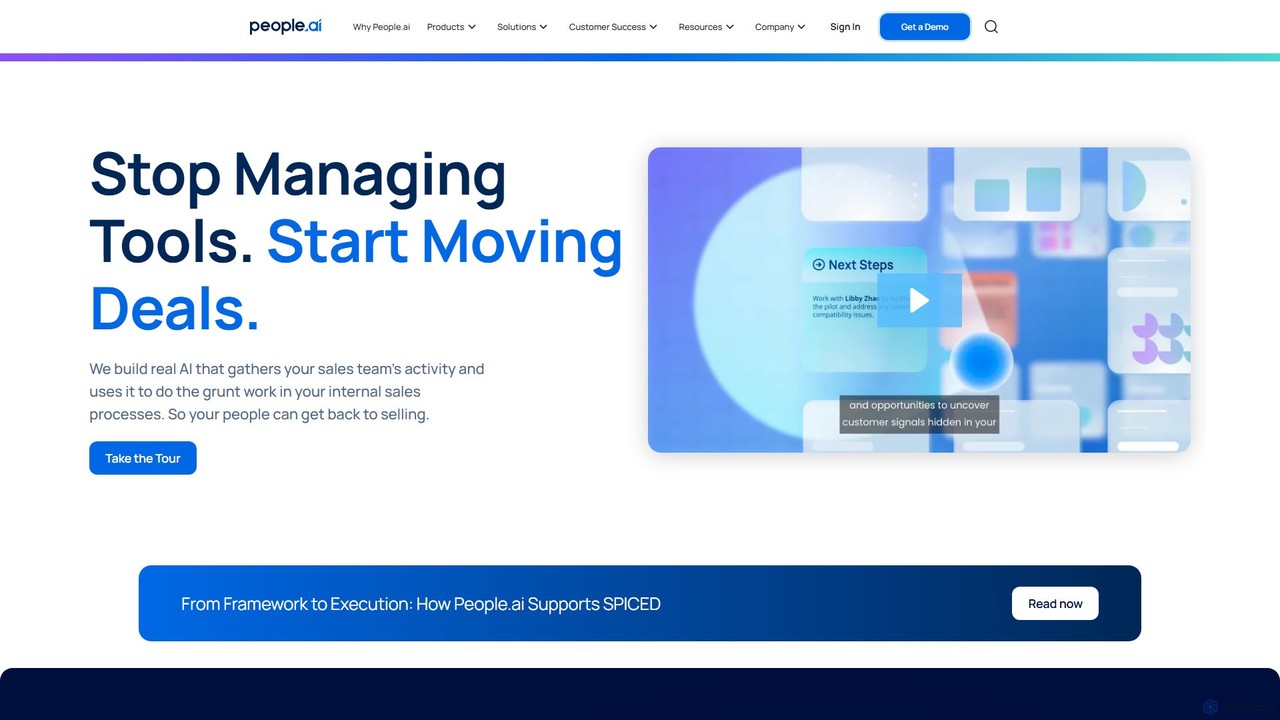
People.ai is an AI-powered revenue intelligence platform that automates the capture of all sales and marketing activities, unifies …
People.ai is an AI-powered revenue intelligence platform that automates the capture of all sales and marketing activities, unifies go-to-market (GTM) data, and provides actionable insights. It helps sales teams eliminate manual data entry, improve forecast accuracy, and execute data-driven account and opportunity strategies to accelerate revenue growth.
CustomerIQ
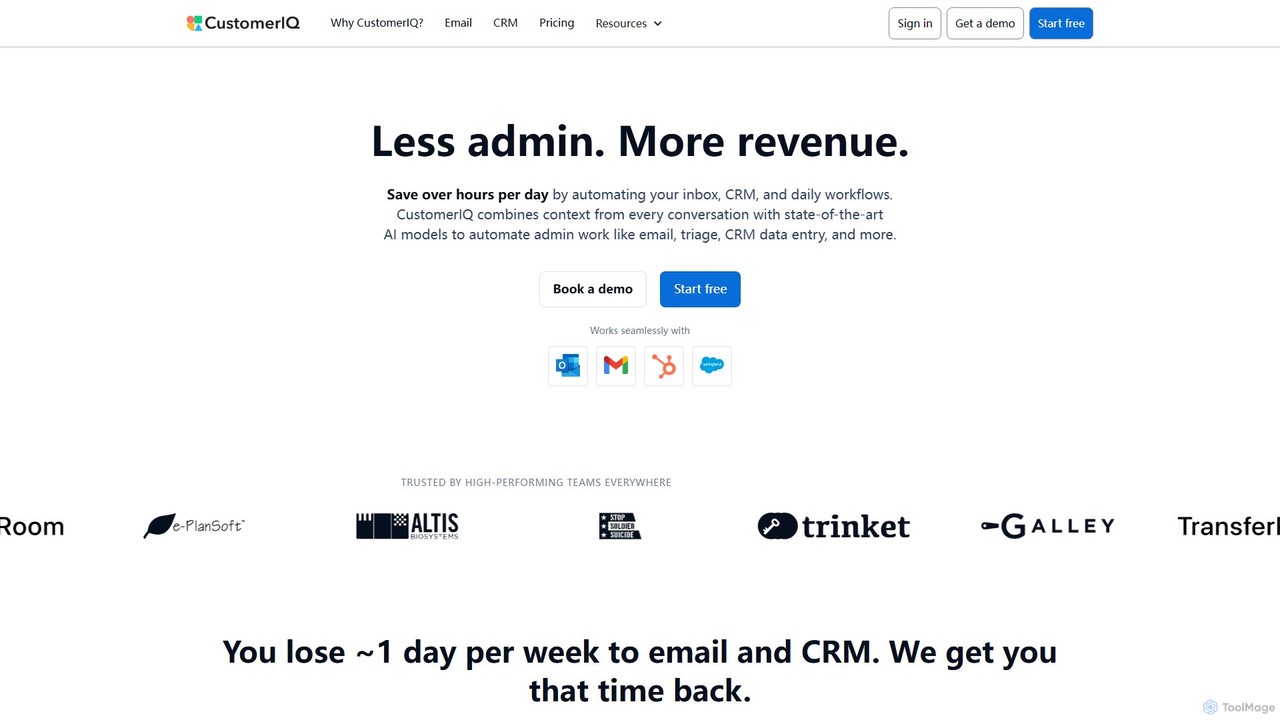
CustomerIQ is an AI Sales Coordinator that automates administrative tasks for sales teams. It saves hours daily by …
CustomerIQ is an AI Sales Coordinator that automates administrative tasks for sales teams. It saves hours daily by automating inbox management, CRM data entry, meeting notes, and follow-up emails. Powered by a contextual AI engine, it drafts human-like emails in your tone, ensuring you never miss a follow-up and can focus on closing deals and building relationships.
Sybill
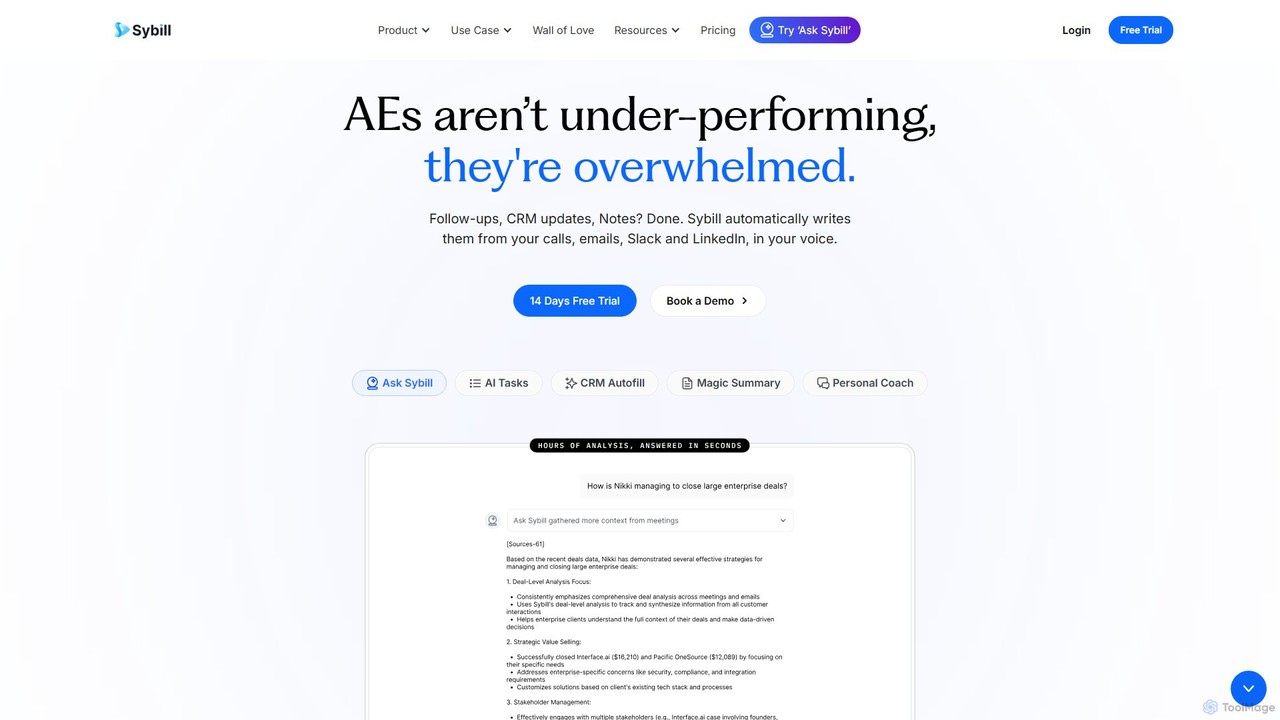
Sybill is an AI sales assistant designed to automate administrative tasks for sales teams. It analyzes calls, emails, …
Sybill is an AI sales assistant designed to automate administrative tasks for sales teams. It analyzes calls, emails, and other communications to generate follow-ups, update CRM records, and provide deep deal insights, allowing sales professionals to focus on selling.
About Data Management
AI-powered Data Management tools are designed to automate and optimize the collection, storage, organization, and maintenance of an organization's data assets. These solutions leverage artificial intelligence and machine learning to enhance data quality, ensure compliance, and streamline data workflows, particularly within complex systems like CRM. They enable businesses to transform raw data into actionable insights, supporting better decision-making and operational efficiency. By intelligently processing and structuring information, these tools significantly reduce manual effort and improve data reliability across various departments.
Core Features
- Automated Data Ingestion: Automatically collects and processes data from diverse sources, ensuring real-time availability.
- Data Quality & Cleansing: Identifies and corrects errors, duplicates, and inconsistencies to maintain high data integrity.
- Master Data Management (MDM): Creates a single, authoritative source of truth for critical business data, like customer or product information.
- Data Governance & Compliance: Enforces policies and regulations for data access, usage, and security, ensuring regulatory adherence.
- Intelligent Data Integration: Seamlessly connects disparate data systems, enabling a unified view of information.
Applicable Scenarios
Businesses across various sectors, especially those with large volumes of customer data or complex operational systems, benefit from AI data management. This includes e-commerce platforms managing product catalogs, financial institutions ensuring data compliance, and marketing teams needing unified customer profiles for targeted campaigns. It's crucial for organizations aiming to leverage data for advanced analytics and personalized customer experiences.
How to Choose
When selecting an AI data management tool, prioritize its ability to integrate with existing CRM and other enterprise systems. Evaluate its data quality features, including deduplication and validation, and assess its scalability to handle growing data volumes. Consider the level of automation offered for tasks like data ingestion and governance, and ensure it meets specific industry compliance requirements. User-friendliness and robust security protocols are also vital for successful adoption.
Data ManagementUse Cases
Automating Customer Data Cleansing in CRM
For sales and marketing teams, AI data management tools automatically identify and merge duplicate customer records within CRM systems. This ensures sales representatives work with accurate, up-to-date contact information, preventing redundant outreach and improving personalization. It also cleanses outdated or incorrect entries, maintaining a high-quality customer database for more effective campaigns and better customer relationship management.
Ensuring Data Compliance for Financial Records
Financial institutions use AI data management to monitor and enforce strict regulatory compliance for sensitive customer financial data. The tools automatically classify data, apply access controls, and track data lineage, ensuring adherence to regulations like GDPR or CCPA. This minimizes legal risks, protects customer privacy, and streamlines audit processes by providing a clear, auditable trail of data handling.
Unifying Product Information Across E-commerce Platforms
E-commerce businesses leverage AI data management to create a single source of truth for product data across multiple sales channels. This involves automatically standardizing product descriptions, images, and pricing from various suppliers. It ensures consistency in product listings, reduces manual data entry errors, and provides customers with accurate information, enhancing the shopping experience and operational efficiency.
Enhancing Master Data Management for Enterprise Resources
Large enterprises utilize AI for master data management (MDM) to consolidate and maintain consistent core business entities like customers, products, and suppliers. AI algorithms identify and resolve discrepancies across disparate systems, creating a unified view. This foundational data integrity supports accurate reporting, streamlined supply chains, and consistent customer interactions across all departments.
Intelligent Data Integration for Business Intelligence
Business analysts and data scientists employ AI data management to integrate data from various sources—CRM, ERP, marketing platforms—into a unified data warehouse. AI automates the mapping and transformation processes, handling complex data structures and formats. This provides a comprehensive, real-time view of business operations, enabling more accurate analytics and informed strategic decisions.
Proactive Data Security and Anomaly Detection
IT security teams use AI data management tools to continuously monitor data access patterns and identify unusual activities that could indicate a security breach. AI algorithms learn normal data behavior and flag anomalies, such as unauthorized access attempts or large data transfers. This enables proactive threat detection and rapid response, safeguarding sensitive information and maintaining data integrity.