The Good Face Project
An AI-powered software platform for the cosmetics industry, designed to streamline product formulation, ensure regulatory compliance, and validate …
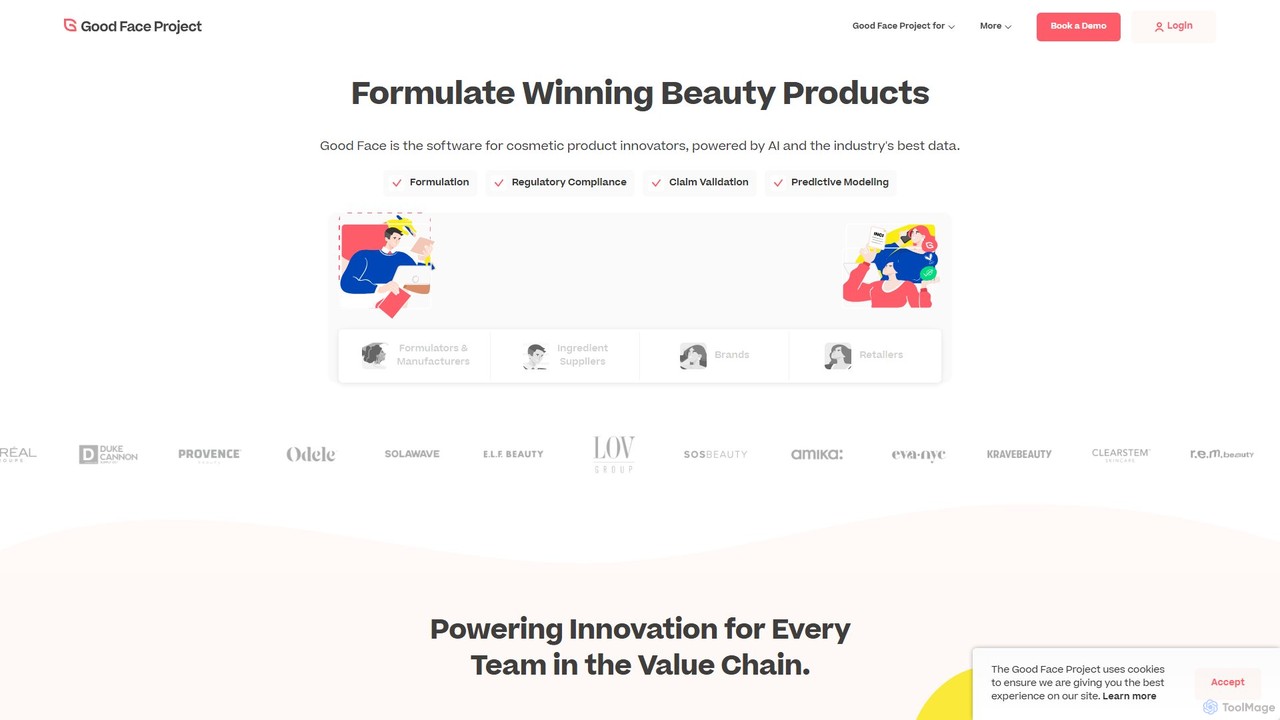
An AI-powered software platform for the cosmetics industry, designed to streamline product formulation, ensure regulatory compliance, and validate marketing claims. It serves formulators, brands, and manufacturers by providing a comprehensive ingredient database and real-time analysis.
About Regulatory Compliance
Regulatory Compliance tools are AI-powered platforms designed to automate the monitoring, interpretation, and management of legal and industry regulations. These tools utilize Natural Language Processing (NLP) and machine learning to scan vast regulatory databases, identify relevant changes, and map them to a company's internal policies. This helps organizations proactively manage compliance risks, reduce manual workload, and ensure adherence to evolving standards in sectors like finance and healthcare. They provide a dynamic and intelligent alternative to traditional, static compliance methods.
Core Features
- Regulatory Change Monitoring: Automatically tracks updates from thousands of global regulatory bodies and alerts users to relevant changes.
- Automated Reporting: Generates compliance reports, audit trails, and documentation required by regulators.
- Risk Assessment & Mapping: Identifies potential compliance gaps by mapping regulations to internal controls and business processes.
- Policy Management Automation: Helps create, update, and distribute internal policies in response to regulatory shifts.
- Compliance Obligation Management: Creates a centralized library of all applicable regulatory obligations and their status.
Use Cases
These tools are critical for highly regulated industries such as financial services (for AML, KYC), healthcare (for HIPAA, FDA), and technology (for GDPR, CCPA). Legal departments, compliance officers, and risk managers use them to stay ahead of legislative changes, automate evidence collection for audits, and ensure business operations remain compliant across multiple jurisdictions.
How to Choose
When selecting a tool, consider its jurisdictional and industry-specific coverage. Evaluate its integration capabilities with your existing GRC (Governance, Risk, and Compliance) systems. Assess the sophistication of its AI for interpreting regulatory nuances versus simple keyword matching. Also, consider the quality of its real-time alerting system and the robustness of its audit trail generation features.

Regulatory ComplianceUse Cases
Automating AML/KYC Monitoring in Finance
A compliance officer at a global bank uses an AI tool to automate Anti-Money Laundering (AML) and Know Your Customer (KYC) processes. The platform continuously scans transaction data and customer profiles against thousands of global watchlists and sanctions lists in real-time. It uses machine learning to detect unusual patterns that may indicate fraudulent activity, automatically flagging high-risk accounts for human review. This significantly reduces false positives and allows the compliance team to focus on genuine threats, ensuring adherence to strict financial regulations.
Managing Data Privacy Compliance (GDPR/CCPA)
A tech company's Data Protection Officer (DPO) employs an AI compliance platform to ensure adherence to GDPR and CCPA. The tool scans the company's websites, applications, and internal data stores to map personal data flows. It automatically identifies non-compliant data processing activities, such as missing user consent for cookies or inadequate privacy policies. The platform also generates Data Protection Impact Assessments (DPIAs) and helps manage subject access requests, creating an auditable trail that demonstrates ongoing compliance to regulators.
Tracking Regulatory Changes in Healthcare
A compliance team at a large hospital system uses an AI tool to monitor changes from healthcare regulators like the FDA and HHS. The software scans thousands of sources daily, including government websites and legal journals, for updates related to patient privacy (HIPAA), medical device regulations, and billing codes. It uses NLP to summarize complex legal text into actionable insights and automatically assigns tasks to relevant department heads to update internal protocols. This proactive approach prevents non-compliance penalties and ensures patient safety standards are always met.
Automating Environmental Compliance Reporting
An environmental manager at a manufacturing plant uses an AI platform to streamline compliance with EPA regulations. The tool integrates with on-site sensors to automatically collect emissions and waste data. It then cross-references this data with the latest environmental laws, identifies any deviations, and generates the required monthly and annual reports for submission. The system also predicts potential future compliance issues based on production forecasts, allowing the manager to take preventative action and maintain a strong environmental record.
Streamlining Contractual Compliance for Legal Teams
A corporate legal team uses an AI compliance tool to analyze thousands of supplier and client contracts. The software scans documents to ensure key clauses related to liability, data security, and regulatory adherence (e.g., anti-bribery laws) are present and meet company standards. It flags non-standard or risky language for legal review and creates a centralized dashboard to track contract renewal dates and compliance obligations. This automates a previously manual and error-prone process, reducing contractual risk across the organization.
Conducting Proactive Internal Audits
An internal auditor uses an AI compliance tool to perform continuous, proactive audits instead of periodic manual checks. The platform connects to various business systems (e.g., ERP, HRIS) and constantly monitors activities against a library of internal policies and external regulations. It can identify control weaknesses, policy violations, or segregation of duties conflicts in real-time. The auditor receives automated alerts and detailed reports, allowing them to address issues immediately rather than discovering them months later during a formal audit cycle.