Business Best in category 1 results Requirement Gathering AI Tool

Popular AI tools in the Requirement Gathering field of Business include Auctor, etc., helping you quickly improve efficiency.

Auctor

Auctor

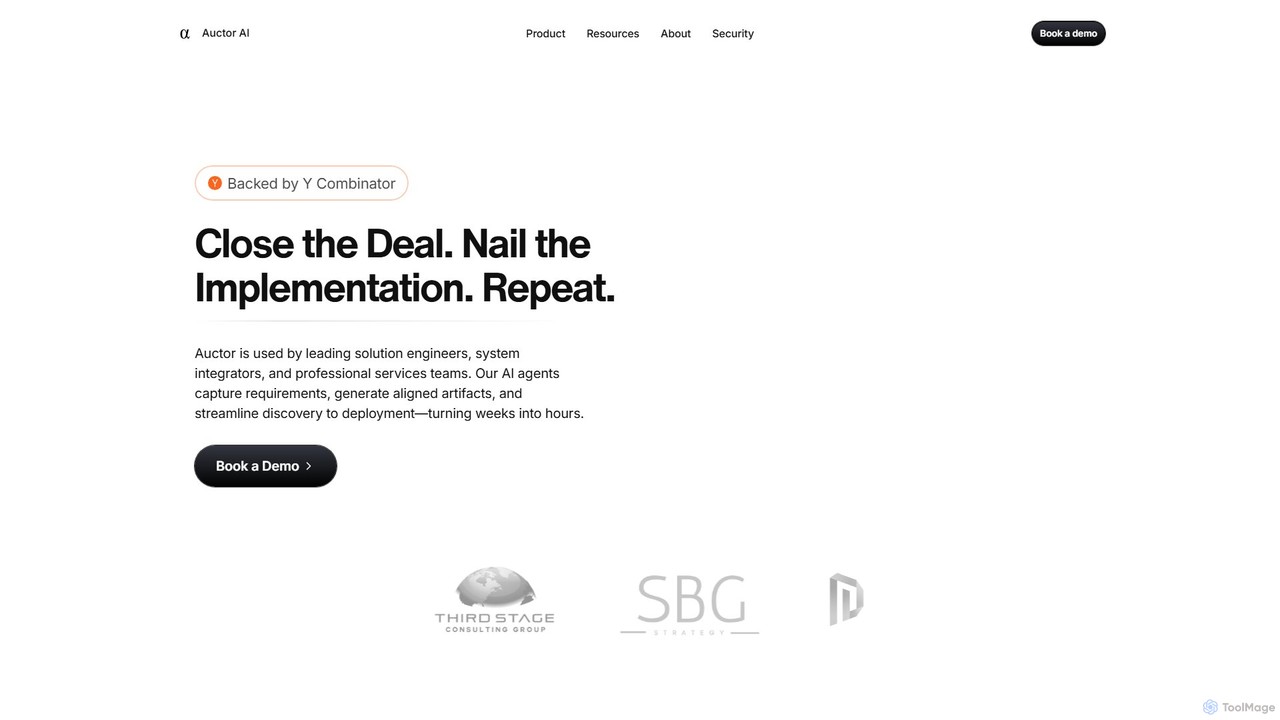
Auctor is an AI-powered platform designed for solution engineers, system integrators, and professional services teams. It uses AI …

47.4K

About Requirement Gathering

Requirement Gathering tools are a specialized class of AI software designed to automate the collection, analysis, and synthesis of project requirements. These tools leverage Natural Language Processing (NLP) to interpret unstructured data from sources like user interviews, feedback forms, and documents. They significantly reduce manual effort in identifying key needs, pain points, and feature requests, ensuring requirements are clear, consistent, and traceable. This process helps teams build products that more accurately reflect user needs and business goals.

Core Features

  • Automated Transcription & Analysis: Converts audio/video interviews into text and automatically extracts key themes, user needs, and sentiment.
  • Requirement Synthesis: Groups and clusters similar feedback from multiple sources to identify high-impact requirements and patterns.
  • User Story Generation: Automatically drafts user stories, epics, and acceptance criteria from raw qualitative data, speeding up backlog creation.
  • Traceability Mapping: Creates clear links between raw feedback sources and the resulting requirements or user stories for validation.
  • Prioritization Assistance: Uses AI to score and suggest requirement priorities based on frequency, customer impact, or strategic alignment.

Applicable Scenarios

These tools are primarily used in software development, product management, and business analysis. Product managers utilize them to analyze user feedback and build data-driven roadmaps. Business analysts employ them to consolidate complex stakeholder needs for enterprise system implementations (like CRM or ERP). UX researchers also use them to synthesize findings from qualitative studies.

Selection Criteria

When choosing a Requirement Gathering tool, consider its integration capabilities with your existing systems (e.g., Jira, Slack, Zapier). Evaluate the accuracy and sophistication of its NLP model for your specific data types (interviews, surveys, support tickets). Also, assess the quality of its automated outputs, such as user stories, and its collaboration features for team-based workflows.

Requirement GatheringUse Cases

1

Analyze User Interviews for Product Roadmapping

A product manager for a SaaS application needs to plan the next quarter's roadmap. They upload 20 hours of video-recorded user interviews into an AI Requirement Gathering tool. The tool automatically transcribes the conversations, identifies recurring themes like 'confusing navigation' and 'desire for better reporting,' and clusters all related comments. This provides quantifiable evidence of user pain points, allowing the manager to confidently prioritize a navigation redesign and enhanced reporting features, directly linking roadmap items to specific user feedback.

2

Consolidate Stakeholder Needs for ERP Implementation

A business analyst is tasked with gathering requirements for a new company-wide ERP system. They receive input from dozens of stakeholders via emails, Word documents, and workshop notes. Instead of manually sifting through hundreds of pages, they feed all documents into an AI tool. The AI extracts and categorizes functional requirements, such as 'invoice processing rules' and 'inventory tracking alerts,' and identifies conflicting requests from different departments. This creates a unified, structured, and de-duplicated list of requirements, drastically reducing the risk of missing critical business needs.

3

Generate User Stories from Customer Feedback Tickets

An agile development team wants to be more customer-centric. They connect their customer support platform (like Zendesk) to an AI Requirement Gathering tool. The tool analyzes incoming support tickets and feedback submissions, identifying recurring feature requests. For a frequently requested 'CSV export' feature, the AI automatically drafts a user story: 'As a user, I want to export my data as a CSV file, so that I can perform custom analysis in a spreadsheet.' It also suggests acceptance criteria, allowing the team to quickly add a well-defined, customer-validated item to their sprint backlog.

4

Synthesize Qualitative Data from UX Research

A UX research team completes a series of usability tests and surveys for a mobile app, resulting in a large volume of qualitative notes and open-ended responses. They use an AI tool to process this data. The AI identifies and tags mentions of usability issues, user frustrations, and positive comments. It then generates a summary report highlighting the top three usability problems, complete with illustrative quotes from participants. This automates the most time-consuming part of qualitative analysis, allowing researchers to focus on developing actionable design recommendations.

5

Ensure Traceability for Compliance and Audits

A development team in a regulated industry, such as finance or healthcare, must demonstrate how every feature maps back to a specific regulatory requirement. They use an AI Requirement Gathering tool to ingest regulatory documents and stakeholder requests. The tool helps create a traceability matrix, automatically linking each user story and piece of code back to its original source document and clause. During an audit, they can instantly show why a feature was built and which specific compliance rule it satisfies, saving weeks of manual documentation and cross-referencing.

6

Prioritize Feature Backlog Based on Customer Impact

A product team has a backlog with over 200 feature ideas and requests. Deciding what to build next is challenging. They use an AI tool that analyzes the source of each request (e.g., high-value enterprise client, free-tier user feedback, internal idea). The AI scores each item based on factors like request frequency, associated customer revenue, and strategic alignment scores provided by the team. This generates a data-informed priority list, helping the team focus development efforts on features that will deliver the most value to their most important customers, moving beyond simple 'squeaky wheel' prioritization.

Requirement GatheringFrequently Asked Questions