
ToolMage
Sign in

Best 1 Revenue Operations AI tools for Business

Popular Revenue Operations AI tools in Business include Rattle, helping you work more efficiently.

Rattle
Paid

Rattle

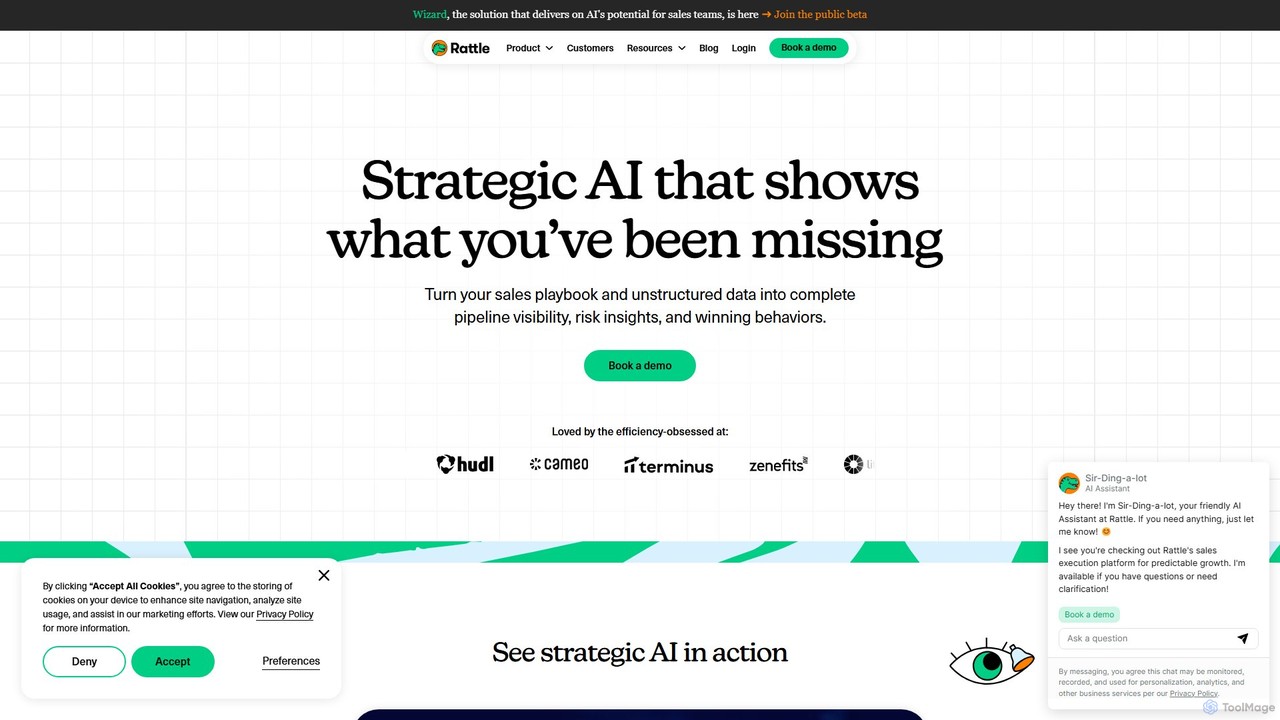
Rattle is an AI-powered sales execution platform that connects your CRM (like Salesforce) with communication tools (Slack & Teams). It automates workflows, ensures data hygiene, and streamlines deal execution, helping revenue teams improve efficiency, forecasting accuracy, and close deals faster.

Revenue Operations
Visits 22.7KFavorites 162Likes 142

About Revenue Operations

Revenue Operations (RevOps) tools are a category of AI-powered solutions designed to unify and optimize the entire revenue generation process across sales, marketing, and customer success. These platforms leverage data integration and automation to break down silos, providing a holistic view of the customer journey and operational efficiency. By streamlining workflows and enhancing data-driven decision-making, RevOps tools help businesses achieve predictable growth and improve customer experience.

Core Features

  • Unified Data Platform: Centralizes customer data from sales, marketing, and service systems for a single source of truth.
  • Workflow Automation: Automates repetitive tasks across the revenue cycle, such as lead routing, quote generation, and contract management.
  • Performance Analytics: Provides comprehensive dashboards and reports on key revenue metrics, pipeline health, and team performance.
  • Sales & Marketing Alignment: Facilitates collaboration and communication between sales and marketing teams through shared data and processes.
  • Customer Journey Optimization: Maps and optimizes the customer experience from initial contact to post-sales support, identifying friction points.

Use Cases

Revenue Operations tools are essential for businesses seeking to align their customer-facing teams and optimize their revenue engine. They are particularly valuable for B2B companies, SaaS providers, and enterprises with complex sales cycles, enabling them to improve lead conversion, accelerate deal velocity, and enhance customer retention.

How to Choose

When selecting Revenue Operations tools, consider their integration capabilities with existing CRM and marketing automation platforms, the depth of their analytics and reporting features, and the flexibility of their workflow automation. Evaluate scalability to ensure the solution can grow with your business, and assess the level of support and training provided to maximize adoption and impact.

Revenue Operations use cases

1

Streamline Lead-to-Cash Process for SaaS Companies

A SaaS sales team uses RevOps tools to automate lead qualification, assign leads to the right sales reps based on predefined rules, and generate quotes and contracts seamlessly. This reduces manual errors, accelerates the sales cycle, and ensures a consistent customer experience from initial contact to subscription renewal, leading to faster revenue recognition and improved operational efficiency.

2

Enhance Sales Forecasting Accuracy

Sales leaders utilize RevOps platforms to consolidate pipeline data from various sources, apply AI-driven predictive analytics, and generate more accurate sales forecasts. This enables better resource allocation, more informed strategic planning, and improved accountability across the sales organization, reducing the risk of missed targets and optimizing revenue predictability.

3

Optimize Customer Onboarding and Retention

Customer success teams leverage RevOps tools to monitor customer health scores, automate onboarding workflows, and proactively identify at-risk accounts. By integrating with CRM and support systems, these tools ensure a smooth customer journey post-sale, reduce churn, and identify upsell/cross-sell opportunities, directly contributing to higher customer lifetime value and recurring revenue.

4

Improve Marketing ROI Measurement

Marketing teams use RevOps tools to track the full attribution of marketing campaigns across the entire customer lifecycle, from initial touchpoint to closed-won deals. This allows for precise measurement of marketing ROI, optimization of budget allocation, and a clear understanding of which channels and campaigns drive the most revenue, moving beyond simple lead generation metrics.

5

Standardize Sales Processes and Enablement

Sales operations managers deploy RevOps tools to standardize sales playbooks, automate training content delivery, and ensure consistent adherence to best practices across the sales force. This leads to improved sales rep productivity, faster ramp-up times for new hires, and a more predictable sales performance, by providing reps with the right tools and information at every stage of the sales process.

6

Centralize Revenue Data for Executive Reporting

C-suite executives and department heads leverage RevOps dashboards to gain a unified, real-time view of key revenue metrics, pipeline status, and team performance across marketing, sales, and customer success. This centralized data enables more accurate executive reporting, facilitates cross-functional strategic alignment, and supports data-driven decisions for overall business growth and resource optimization.

Revenue Operations FAQ

What is Revenue Operations (RevOps)?

Revenue Operations (RevOps) is a strategic function that aligns sales, marketing, and customer success teams to optimize the entire revenue generation process. It focuses on creating a seamless customer journey, improving operational efficiency, and leveraging data to drive predictable growth. RevOps tools integrate various platforms (CRM, marketing automation, sales enablement) to provide a unified view of the customer, streamline workflows, and enhance decision-making across the revenue funnel.

How do Revenue Operations tools differ from Sales Operations tools?

While Sales Operations focuses specifically on optimizing the sales team's efficiency and processes, Revenue Operations takes a broader, holistic view. RevOps integrates sales, marketing, and customer success operations, aiming to align all revenue-generating functions. Sales Ops might manage CRM hygiene and sales forecasting, whereas RevOps would also oversee marketing attribution, customer onboarding, and the overall customer journey to ensure seamless transitions and shared revenue goals across departments.

What are the key benefits of implementing Revenue Operations tools?

Implementing Revenue Operations tools brings several key benefits, including improved cross-functional alignment between sales, marketing, and customer success teams, leading to a more cohesive customer experience. Businesses can expect enhanced data accuracy and accessibility, enabling better decision-making and more reliable revenue forecasting. Additionally, these tools drive operational efficiency through automation, reduce manual errors, and ultimately contribute to accelerated revenue growth and increased customer lifetime value.

Who benefits most from using Revenue Operations tools?

Revenue Operations tools primarily benefit B2B companies, SaaS providers, and enterprises with complex sales cycles that rely heavily on cross-functional collaboration for revenue generation. Roles such as RevOps leaders, sales operations managers, marketing operations specialists, and customer success managers gain significant value. These tools help them gain a unified view of the customer, automate processes, and make data-driven decisions to optimize the entire revenue funnel, from lead acquisition to customer retention.

What are the key considerations when choosing a Revenue Operations platform?

When selecting a Revenue Operations platform, prioritize its integration capabilities with your existing CRM, marketing automation, and ERP systems to ensure seamless data flow. Evaluate the depth of its analytics and reporting features, focusing on customizable dashboards and predictive insights. Consider the platform's scalability, the flexibility of its workflow automation, and the level of vendor support and training. Finally, assess the total cost of ownership, including implementation and ongoing maintenance, to ensure it aligns with your budget and long-term strategic goals.