openapps
A curated directory of high-quality, open-source software alternatives to popular SaaS products. Vetted by a seasoned technologist, openapps …
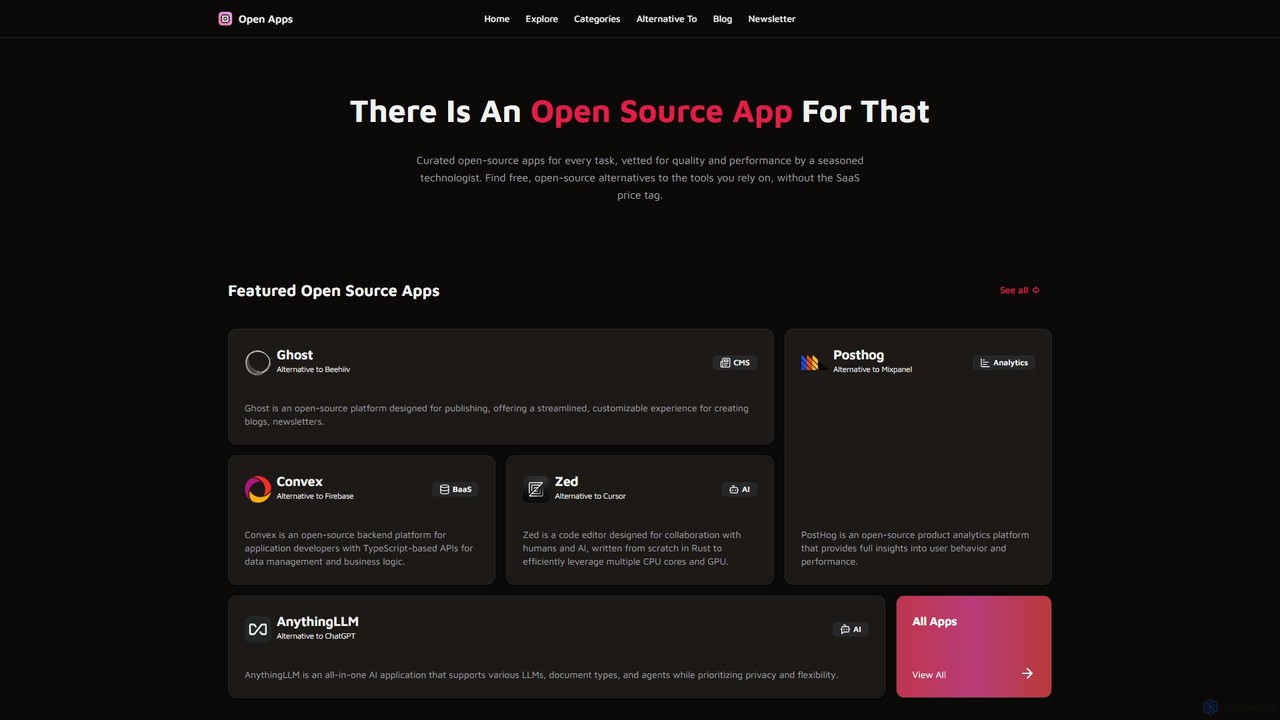
A curated directory of high-quality, open-source software alternatives to popular SaaS products. Vetted by a seasoned technologist, openapps helps developers, businesses, and individuals find free, reliable tools for every task, from development and analytics to productivity and content management.
About Saas Alternatives
SaaS Alternatives are solutions that provide similar functionalities to traditional Software as a Service (SaaS) products but often with different deployment models, ownership structures, or pricing. These tools empower businesses to gain greater control over their data, customize software to specific needs, and potentially reduce long-term operational costs, positioning them as strategic choices within the broader Business category.
Core Features
- Data Sovereignty: Users maintain full control and ownership of their data, often hosted on private infrastructure.
- Enhanced Customization: Greater flexibility to modify, extend, or integrate the software to fit unique business processes.
- Reduced Vendor Lock-in: Freedom from reliance on a single vendor's ecosystem, allowing for easier migration or integration.
- Long-term Cost Efficiency: Potential for lower total cost of ownership (TCO) compared to recurring subscription fees.
- Deployment Flexibility: Options for self-hosting, on-premise installation, or leveraging open-source frameworks.
Applicable Scenarios
Businesses with stringent data privacy requirements, such as healthcare or finance, often opt for SaaS alternatives to ensure compliance and security. Companies requiring highly specialized or deeply integrated solutions, like manufacturing or logistics, benefit from the customization potential. Additionally, organizations aiming to optimize long-term IT expenditure find value in the predictable costs of owned software.
How to Choose
When selecting SaaS alternatives, evaluate the total cost of ownership (TCO), including initial setup, maintenance, and potential development. Assess the required technical expertise for deployment and ongoing management. Consider the level of customization needed and the availability of community support or professional services. Finally, ensure the solution offers the necessary scalability and security features for your business operations.

Saas AlternativesUse Cases
Deploying a Self-Hosted CRM for Data Privacy
A financial advisory firm handles highly sensitive client data and faces strict regulatory compliance. Instead of a cloud-based SaaS CRM, they implement a self-hosted open-source CRM solution. This allows them to store all client information on their own secure servers, ensuring complete data sovereignty and meeting compliance requirements, while still benefiting from robust customer relationship management features.
Customizing an Open-Source ERP for Unique Workflows
A specialized manufacturing company has unique production processes that no off-the-shelf SaaS Enterprise Resource Planning (ERP) system can fully accommodate. They choose an open-source ERP alternative, enabling their in-house development team to extensively customize modules, integrate proprietary machinery, and tailor workflows precisely to their operational needs, leading to optimized efficiency and reduced manual workarounds.
On-Premise Project Management for Classified Projects
A government contractor manages projects involving classified information that cannot be stored on external cloud services. They opt for an on-premise project management software alternative. This ensures all project data, communications, and documents remain within their secure internal network, preventing unauthorized access and adhering to national security protocols, while facilitating collaborative project execution.
Leveraging Local AI for Sensitive Data Analytics
A healthcare research institution needs to analyze vast datasets of patient health records for medical breakthroughs. Due to extreme data privacy concerns, they cannot upload this data to cloud-based AI analytics SaaS platforms. Instead, they deploy an open-source AI framework and train models locally on their secure, on-premise infrastructure, enabling advanced analytics without compromising patient confidentiality.
One-Time Purchase AI Content Generation for Marketing
A small marketing agency frequently generates large volumes of marketing copy, social media posts, and blog outlines. Instead of subscribing to multiple AI writing SaaS tools, they invest in a one-time purchase, locally installable AI content generation software. This provides them with unlimited usage without recurring fees, allowing for cost-effective, high-volume content creation while maintaining control over their creative assets.
Building Internal Tools with Open-Source AI Frameworks
A technology startup needs a bespoke internal tool for automating specific customer support tasks, but existing SaaS solutions are either too generic or too expensive. They decide to build a custom solution using open-source AI frameworks like TensorFlow or PyTorch. This allows them to develop a highly tailored, AI-powered tool that perfectly integrates with their existing systems, offering a cost-effective and scalable alternative to third-party SaaS.