ToolMage
Sign in

Best 1 Digital Transformation AI tools for Business Solutions

Popular Digital Transformation AI tools in Business Solutions include NextChainX, helping you work more efficiently.

NextChainX

NextChainX

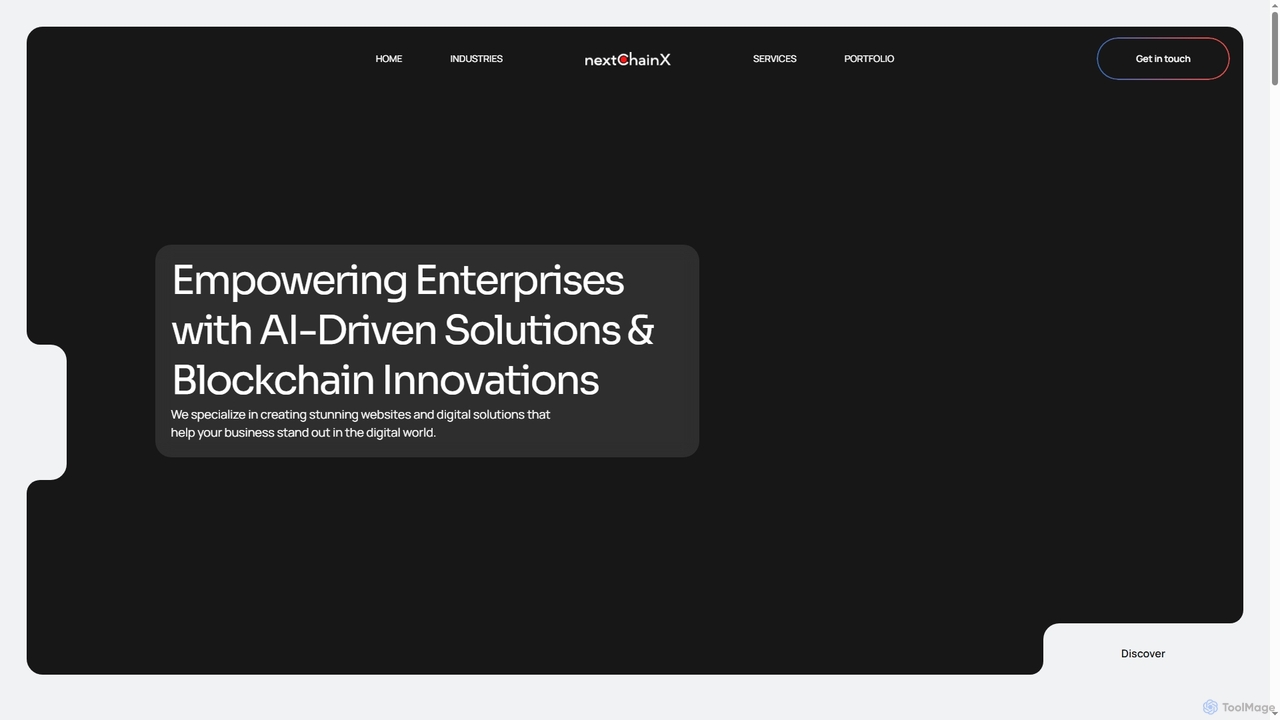
NextChainX specializes in empowering enterprises with advanced AI-driven solutions and blockchain innovations. They offer custom AI assistants, LLM integration, automation tools, and high-performance Solana development for DeFi, NFTs, and dApps, enhancing business intelligence, efficiency, and customer engagement across various industries.

Ai Development
Visits 5.7KFavorites 142Likes 140

About Digital Transformation

Digital Transformation tools are a class of AI-powered solutions designed to fundamentally reshape business processes, culture, and customer experiences. They leverage technologies like machine learning, intelligent automation, and advanced analytics to integrate digital capabilities into all areas of a business. This results in profound changes in how companies operate and deliver value, moving beyond simple optimization to create new strategic advantages. Unlike standard business software, these tools focus on holistic, data-driven change rather than isolated task management.

Core Features

  • Intelligent Process Automation (IPA): Automates complex, end-to-end business workflows by combining AI with Robotic Process Automation (RPA).
  • Predictive Analytics & Forecasting: Uses historical and real-time data to predict market trends, customer behavior, and operational risks.
  • AI-Driven Customer Journey Mapping: Analyzes customer interactions across all touchpoints to personalize experiences and identify improvement areas.
  • Data-Driven Strategy Formulation: Synthesizes vast amounts of internal and external data to support high-level strategic decision-making.
  • Digital Twin Creation: Develops virtual models of processes, products, or services to run simulations and optimize performance before implementation.

Use Cases

These tools are crucial for industries undergoing significant change, such as manufacturing (Industry 4.0), retail (omnichannel experience), finance (FinTech), and healthcare (personalized medicine). They are typically used by C-level executives (CIO, CTO), digital transformation officers, and strategy teams to lead large-scale organizational change.

How to Choose

When selecting a Digital Transformation tool, consider its scalability to grow with your entire organization. Evaluate its integration capabilities with existing legacy systems and cloud services. Ensure the platform's data governance and security protocols meet your industry standards. Finally, assess the vendor's implementation support and change management resources, as successful transformation is as much about people as it is about technology.

Digital Transformation use cases

1

Optimizing Supply Chains with Predictive Analytics

A global manufacturing company uses a digital transformation platform to overhaul its supply chain management. The AI analyzes historical shipping data, real-time weather patterns, port congestion reports, and geopolitical news. It then generates predictive models that forecast potential disruptions weeks in advance. Based on these predictions, the system automatically suggests rerouting shipments, adjusting inventory levels across different warehouses, and pre-booking alternative freight options, reducing delays by up to 30% and minimizing stockout risks.

2

Proactive Equipment Maintenance in Manufacturing

A plant manager uses an AI platform that integrates with IoT sensors on the factory floor. The system continuously analyzes vibration, temperature, and performance data to predict when a machine is likely to fail. Instead of reactive repairs, the manager schedules maintenance during planned downtime, preventing costly unexpected shutdowns and extending equipment lifespan.

3

Creating Hyper-Personalized Retail Experiences

An e-commerce giant implements an AI-driven platform to transform its customer experience. The system integrates data from website browsing behavior, purchase history, app usage, and social media interactions. It uses this data to create a dynamic, 360-degree view of each customer, enabling hyper-personalized product recommendations, customized marketing emails, and adaptive website layouts. This shift from generic marketing to individualized engagement leads to a 15% increase in customer lifetime value and a significant improvement in brand loyalty.

4

Dynamic Supply Chain Optimization

A global logistics company employs an AI-driven digital transformation tool to manage its supply chain. The platform analyzes weather patterns, traffic data, port congestion, and demand forecasts in real-time. It automatically re-routes shipments to avoid delays, optimizes inventory levels across warehouses, and provides stakeholders with a transparent, unified view of the entire supply chain.

5

Personalized Customer Journeys in Retail

An e-commerce enterprise implements an AI solution to overhaul its customer experience. The tool analyzes browsing history, purchase data, and real-time behavior to create a unique profile for each shopper. It then automates the delivery of personalized product recommendations, targeted promotions, and dynamic website content, significantly increasing conversion rates and customer loyalty.

6

Automating Financial Compliance and Risk Assessment

A major financial institution uses an AI transformation tool to automate its compliance and risk management processes. The platform continuously monitors millions of transactions in real-time, using machine learning algorithms to detect anomalies and flag potential fraudulent activities with high accuracy. It also automates the generation of complex regulatory reports, cross-referencing data from multiple systems to ensure consistency and accuracy. This transformation significantly reduces manual effort, lowers the risk of human error, and enables the bank to adapt more quickly to changing regulations.

7

Automating Financial Risk Assessment

A financial institution uses an AI platform to transform its loan approval and risk management processes. The system analyzes thousands of data points beyond traditional credit scores, including transaction history and market trends, to generate a more accurate risk assessment in minutes. This accelerates decision-making, reduces human bias, and improves the quality of the loan portfolio.

8

Developing Smart Factory (Industry 4.0) Operations

An automotive manufacturer implements a digital twin platform to create a virtual replica of its entire production line. This AI-powered model is fed with real-time data from IoT sensors on machinery. It simulates different production scenarios, identifies potential bottlenecks, and predicts maintenance needs before a breakdown occurs (predictive maintenance). Plant managers use these insights to optimize workflows, reduce downtime by 20%, and improve overall equipment effectiveness (OEE), transforming a traditional factory into a data-driven smart factory.

9

Transforming HR with AI-Powered Talent Management

A large corporation adopts a digital transformation platform for its Human Resources department. The AI analyzes employee performance data, skills inventories, and career progression paths across the organization. It identifies critical skill gaps and proactively recommends personalized training modules and internal mobility opportunities to employees. This shifts the HR function from a reactive, administrative role to a strategic talent developer, improving employee retention by 25% and building a more agile and skilled workforce.

10

Optimizing Hospital Operations and Patient Flow

A large hospital network deploys a digital transformation platform to improve efficiency. The AI analyzes historical admission data, scheduled surgeries, and staff availability to predict daily patient loads. This allows administrators to optimize bed allocation, manage staffing schedules effectively, and streamline the patient discharge process, reducing wait times and improving care quality.

11

Creating a Data-Driven Corporate Strategy

A company's executive team uses a strategic AI platform to guide its digital transformation. The tool aggregates market data, competitor performance, internal operational metrics, and customer feedback. It identifies emerging market opportunities and internal inefficiencies, providing data-backed recommendations that help leadership make informed decisions on new product development, market entry, and operational restructuring.

12

Accelerating Drug Discovery in Pharmaceuticals

A pharmaceutical research lab leverages an AI platform to accelerate the drug discovery process. The tool analyzes vast datasets, including genomic data, clinical trial results, and scientific literature, to identify potential biological targets for new drugs. It also simulates how different chemical compounds might interact with these targets, predicting efficacy and potential side effects. This data-driven approach allows researchers to prioritize the most promising candidates, reducing the initial research phase from years to months and significantly lowering R&D costs.

Digital Transformation FAQ

What are AI Digital Transformation tools?

AI Digital Transformation tools are strategic software platforms that use artificial intelligence to fundamentally change how a business operates. Unlike tools that just digitize paper or automate a single task, these solutions integrate across departments to re-engineer core processes, generate predictive insights from data, and enable new business models. They focus on holistic, strategic change rather than incremental improvements.

What are AI Digital Transformation tools?

AI Digital Transformation tools are advanced software solutions that use artificial intelligence to help businesses fundamentally change their core operations, strategies, and customer engagement models. Unlike tools that automate single tasks, they focus on integrating digital technology across the entire organization to drive strategic, holistic change. Key capabilities include intelligent process automation, predictive analytics for decision-making, and creating personalized customer experiences at scale.

How do Digital Transformation tools differ from standard business automation software?

The key difference lies in scope and objective. Standard business automation software, like Robotic Process Automation (RPA), typically focuses on automating specific, repetitive tasks within an existing process to improve efficiency. Digital Transformation tools, however, aim for a much broader, strategic impact. They don't just automate tasks; they use AI to analyze, redesign, and optimize entire end-to-end processes, create new data-driven business models, and fundamentally change how a company interacts with its customers and market.

How do AI tools accelerate digital transformation?

AI tools accelerate digital transformation by performing tasks at a scale and speed impossible for humans. They achieve this through:

  • Intelligent Automation: Automating complex, multi-step workflows, not just simple tasks.
  • Predictive Insights: Analyzing vast datasets to forecast outcomes and identify opportunities before they become obvious.
  • Hyper-Personalization: Customizing customer experiences in real-time for millions of users.
  • Data-Driven Decisions: Replacing guesswork with verifiable data analysis for strategic planning.

What is the difference between Digital Transformation tools and standard business software?

Standard business software, like a CRM or accounting program, typically optimizes a specific, existing function within a department. Digital Transformation tools are more comprehensive and strategic. They often connect multiple systems (e.g., CRM, ERP, supply chain) and use AI to redesign the entire process that spans these systems. The goal is not just to do the same thing faster, but to do things in a fundamentally new and more effective way.

How should a company choose the right Digital Transformation platform?

Choosing the right platform requires a strategic approach. Consider the following factors:

  • Strategic Alignment: Does the platform's functionality directly support your company's specific transformation goals, whether it's customer experience, operational efficiency, or product innovation?
  • Scalability and Integration: Can the tool integrate seamlessly with your existing IT infrastructure (including legacy systems) and scale across the entire organization?
  • Data Capabilities: Evaluate its ability to ingest, process, and analyze large volumes of diverse data, as well as its data governance and security features.
  • Vendor Partnership: Look for a vendor that offers strong implementation support, training, and change management resources, as transformation is a long-term journey.
What are the key benefits of using AI in digital transformation?

Using AI in digital transformation provides benefits that go far beyond simple cost savings. Key advantages include:

  • Data-Driven Decision Making: AI can analyze vast datasets to uncover insights and predict outcomes, enabling more accurate strategic decisions.
  • Enhanced Customer Experience: AI allows for hyper-personalization at scale, anticipating customer needs and delivering tailored experiences.
  • Increased Agility and Innovation: By automating complex processes and providing predictive insights, AI helps businesses adapt faster to market changes and identify new opportunities for innovation.
  • Creation of New Business Models: AI can unlock entirely new ways of creating and delivering value, such as predictive maintenance as a service or data-driven product recommendations.
Who in a company uses Digital Transformation tools?

The implementation of Digital Transformation tools is typically led by C-level executives like the Chief Digital Officer (CDO), Chief Information Officer (CIO), or CEO. However, their use spans the entire organization. Data scientists and IT teams manage the platform, while business leaders and department heads use the insights for strategic planning. Frontline employees in operations, marketing, and finance interact with the automated workflows and data dashboards in their daily work.

What are key factors for choosing a Digital Transformation platform?

When selecting a platform, focus on strategic fit and technical capabilities. Key factors include:

  • Scalability: Can the platform grow with your business from a single department to the entire enterprise?
  • Integration: How well does it connect with your existing legacy systems, databases, and third-party applications?
  • Data Security & Governance: Does it meet industry standards for data protection and compliance (e.g., GDPR, HIPAA)?
  • Customization & Flexibility: Can the tool be adapted to your unique business processes and strategic objectives?
  • Vendor Partnership: Does the vendor offer robust support, training, and strategic guidance for implementation?

Which roles or departments benefit most from Digital Transformation tools?

Digital transformation is an enterprise-wide initiative, so its benefits are felt across many departments. However, some roles are central to leading and executing it:

  • C-Suite Executives (CEO, CIO, CTO): For strategic planning, overseeing implementation, and aligning transformation with business goals.
  • Strategy and Operations Teams: For redesigning business processes, analyzing performance data, and identifying areas for optimization.
  • IT Departments: For managing the integration of new platforms with existing systems and ensuring data security and governance.
  • Marketing and Sales: For leveraging AI to understand customer behavior, personalize campaigns, and improve customer relationship management.