Business Best in category 2 results Startup Growth AI Tool

Popular AI tools in the Startup Growth field of Business include InfoBeatLive、Waivly, etc., helping you quickly improve efficiency.

Waivly

Waivly

Waivly is a comprehensive platform designed for future-led professionals, offering a streamlined environment for networking, learning, career advancement, …

1.8K
InfoBeatLive

InfoBeatLive

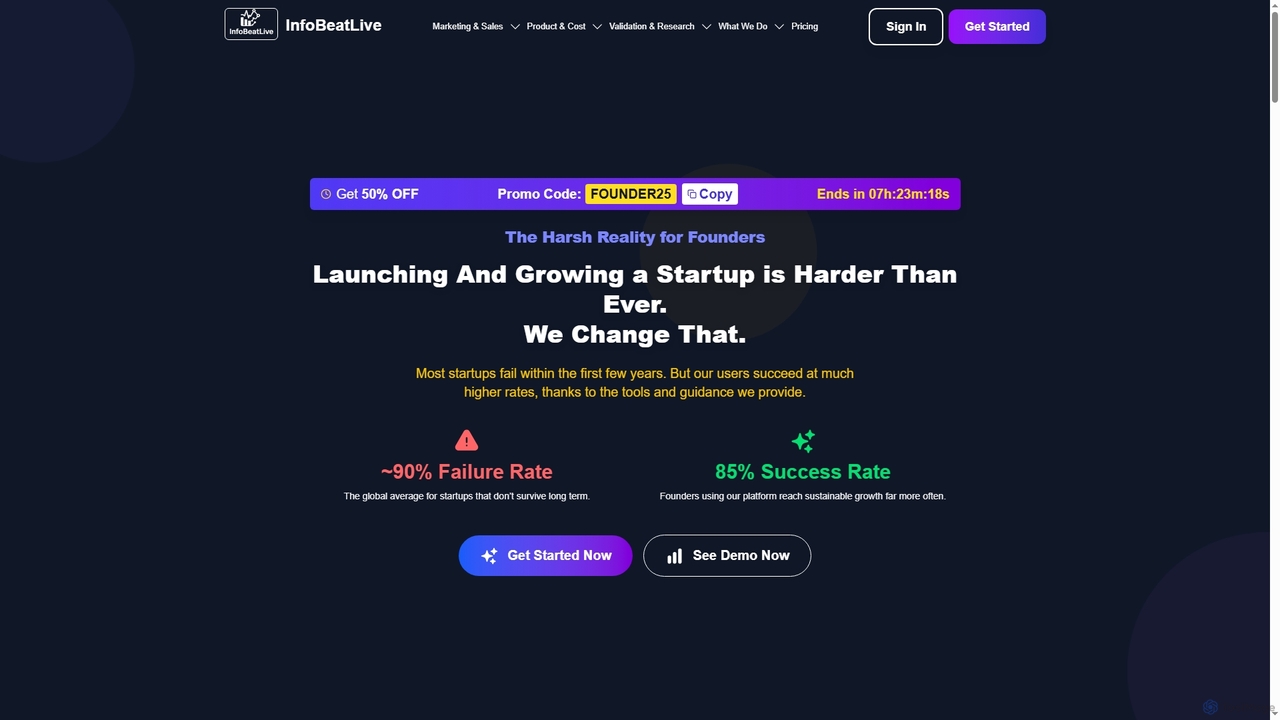
InfoBeatLive is an AI-powered platform designed for founders to accelerate startup growth. It provides comprehensive tools for market …

1.9K

About Startup Growth

Startup Growth AI tools are specialized solutions leveraging artificial intelligence to accelerate the development and expansion of new businesses. These tools utilize advanced algorithms to automate and optimize critical operational areas, from market analysis and customer acquisition to sales and retention. Their primary value lies in providing data-driven insights, streamlining workflows, and enabling rapid iteration, which are essential for early-stage companies to scale efficiently and achieve sustainable growth.

Core Features

  • Market Intelligence: AI-driven analysis of market trends, competitor activities, and customer behavior to identify growth opportunities.
  • Automated Lead Generation: Tools for identifying, qualifying, and nurturing potential leads through personalized outreach and engagement.
  • Personalized Marketing: AI-powered content creation and optimization for ads, emails, and social media, tailored to specific audience segments.
  • Sales & CRM Automation: Streamlining sales pipelines, managing customer relationships, and automating follow-ups to improve conversion rates.
  • Customer Retention & Support: AI chatbots and predictive analytics to enhance customer experience, reduce churn, and provide proactive support.

Use Cases

Startup Growth AI tools are invaluable for founders, marketing teams, sales departments, and product managers in new ventures. They are used to quickly validate product-market fit, optimize customer acquisition funnels, scale marketing efforts without extensive manual labor, and make data-informed decisions on product development and strategic direction. These tools help startups navigate competitive landscapes and allocate limited resources effectively.

How to Choose

When selecting Startup Growth AI tools, consider the specific growth stage of your company and your primary focus area (e.g., marketing, sales, operations). Evaluate the tool's integration capabilities with your existing tech stack, its scalability to accommodate future expansion, and the clarity of its data analytics and reporting features. Assess the pricing model relative to your budget and ensure the user interface is intuitive for your team, minimizing the learning curve.


Startup GrowthUse Cases

1

Automate Lead Generation and Qualification

Sales and marketing teams in early-stage startups leverage AI tools to identify high-potential leads from various online sources, qualify them based on predefined criteria, and prioritize outreach efforts. By automating the initial lead discovery and scoring process, startups can significantly reduce manual effort, focus on the most promising prospects, and improve their conversion rates, accelerating the sales pipeline.

2

Personalized Marketing Campaign Creation

Marketing managers in startups utilize AI to analyze customer data, segment audiences into granular groups, and generate highly personalized ad copy, email content, and social media posts. This data-driven approach ensures that marketing messages resonate deeply with each segment, leading to higher engagement rates, improved click-through rates, and a more efficient allocation of marketing spend, ultimately boosting customer acquisition.

3

Optimize Customer Onboarding and Retention

Product and customer success teams deploy AI tools to enhance the customer journey from onboarding to long-term retention. This includes using AI chatbots to guide new users through product setup, answer common questions instantly, and proactively identify users at risk of churn based on usage patterns. By providing personalized support and timely interventions, startups can significantly improve user experience and foster greater customer loyalty.

4

Market Trend Analysis and Competitor Monitoring

Business strategists and product managers in startups leverage AI tools to scan vast amounts of market data, news, and social media to identify emerging trends, analyze competitor strategies, and pinpoint untapped opportunities. This capability allows startups to make agile, data-informed decisions regarding product development, market entry, and competitive positioning, ensuring they remain ahead in a fast-evolving landscape.

5

Streamline Sales Outreach and Follow-ups

Sales representatives in startups use AI-powered tools to automate repetitive tasks such as scheduling meetings, sending personalized follow-up emails, and managing their sales pipeline more efficiently. This automation frees up valuable time for reps to focus on high-value interactions, build stronger relationships with prospects, and accelerate sales cycles, directly contributing to revenue growth.

6

Data-Driven Product Feature Prioritization

Product managers in startups employ AI to analyze vast amounts of user feedback, usage patterns, and market demand data. This analysis helps them identify the most impactful features to develop next, ensuring that product enhancements align with user needs and market opportunities. By prioritizing features based on data, startups can achieve better product-market fit, reduce development waste, and accelerate their product's growth trajectory.

Startup GrowthFrequently Asked Questions