trendoo
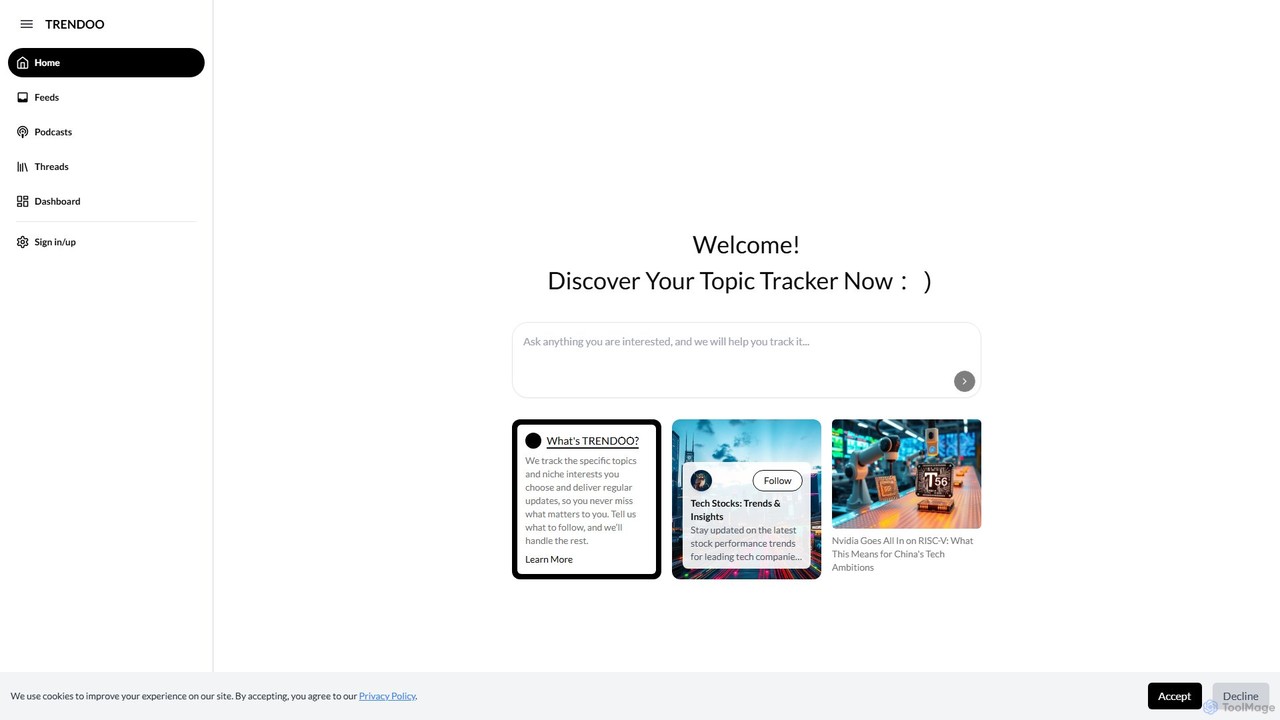
trendoo is an AI-powered intelligence platform that tracks specific topics and niche interests you choose. It delivers curated, …
trendoo is an AI-powered intelligence platform that tracks specific topics and niche interests you choose. It delivers curated, regular updates through feeds, podcasts, and discussion threads, ensuring you never miss critical information in technology, finance, startups, and more.
Spate
Spate is an AI-driven market research and consumer trend forecasting platform. It analyzes billions of data points from …
Spate is an AI-driven market research and consumer trend forecasting platform. It analyzes billions of data points from search and social media to identify the next big consumer trends, helping brands make data-driven decisions for product development, marketing, and innovation.
About Trend Analysis
Trend Analysis tools are AI-powered platforms designed to identify, monitor, and predict patterns and shifts in data over time. Leveraging advanced machine learning and statistical models, these tools transform vast datasets into actionable insights, enabling businesses to anticipate market changes, consumer behavior, and emerging opportunities. They provide a strategic advantage by revealing underlying dynamics that inform future planning and decision-making within the broader business context.
Core Features
- Automated Data Collection: Gathers and aggregates data from diverse sources like social media, news, market reports, and internal databases.
- Pattern Recognition: Utilizes AI algorithms to detect recurring patterns, anomalies, and correlations that human analysis might miss.
- Predictive Modeling: Employs machine learning to forecast future trends, market demand, and potential risks based on historical data.
- Sentiment Analysis: Analyzes text data to gauge public opinion and emotional tone towards brands, products, or topics, indicating shifts in perception.
- Interactive Visualization: Presents complex trend data through intuitive dashboards, charts, and graphs for easier interpretation and decision-making.
Use Cases
These tools are indispensable for market researchers, strategists, product developers, and marketing professionals across various industries. They are used to understand evolving consumer preferences, track competitor movements, and identify nascent market opportunities. Businesses leverage them to stay agile and responsive in dynamic environments, ensuring their strategies remain relevant and competitive.
How to Choose
When selecting a Trend Analysis tool, consider its data source compatibility (e.g., social media, financial, proprietary), the accuracy and depth of its predictive models, and its ability to customize analysis parameters. Evaluate the clarity of its visualization features, ease of integration with existing business intelligence systems, and the level of technical expertise required for operation. Scalability and pricing models are also crucial factors for long-term value.

Trend AnalysisUse Cases
Forecasting Market Demand for New Products
Product managers in the consumer goods sector utilize AI Trend Analysis tools to predict future demand for upcoming product launches. By analyzing historical sales data, social media trends, economic indicators, and competitor activities, these tools identify emerging consumer preferences and market shifts. This enables more accurate inventory planning, optimized marketing campaigns, and reduced risk of overstocking or understocking, leading to improved profitability and market share.
Identifying Emerging Technologies and Investment Opportunities
Venture capitalists and corporate innovation teams leverage AI Trend Analysis tools to scan vast amounts of research papers, patent filings, startup news, and industry reports. These tools pinpoint nascent technological breakthroughs, identify key players, and assess the growth trajectory of specific sectors. This allows investors to make data-driven decisions on where to allocate capital, spotting high-potential ventures before they become mainstream and gaining a competitive edge in the investment landscape.
Monitoring Brand Reputation and Public Sentiment
Marketing and PR teams use AI Trend Analysis tools to continuously monitor online conversations, news articles, and social media mentions related to their brand, products, or industry. These tools perform real-time sentiment analysis to detect shifts in public perception, identify potential crises early, and track the effectiveness of communication campaigns. This proactive monitoring allows companies to respond swiftly to negative feedback, capitalize on positive trends, and maintain a strong brand image.
Optimizing Content Strategy for Audience Engagement
Content creators and digital marketers employ AI Trend Analysis tools to understand what topics are gaining traction, which keywords are rising in popularity, and what content formats resonate most with their target audience. By analyzing search trends, social media engagement, and competitor content performance, these tools help identify content gaps and emerging narratives. This insight enables them to create highly relevant and engaging content that drives traffic, improves SEO, and fosters stronger audience connections.
Detecting Fraudulent Activities and Security Threats
Financial institutions and cybersecurity firms utilize AI Trend Analysis tools to identify unusual patterns in transaction data, network traffic, and user behavior that may indicate fraudulent activities or emerging security threats. These tools can detect subtle anomalies that deviate from established norms, such as sudden spikes in failed login attempts or unusual money transfers. By continuously analyzing these trends, organizations can implement proactive security measures, prevent financial losses, and protect sensitive data from sophisticated attacks.
Optimizing Supply Chain and Logistics Operations
Logistics managers and supply chain analysts use AI Trend Analysis tools to predict fluctuations in demand, identify potential disruptions, and optimize inventory levels. By analyzing historical shipping data, weather patterns, geopolitical events, and supplier performance, these tools can forecast bottlenecks or delays. This enables proactive adjustments to routes, inventory rebalancing, and improved resource allocation, leading to reduced operational costs, enhanced delivery efficiency, and greater resilience against unforeseen challenges in the supply chain.