ToolMage
Sign in

Best 4 Information Aggregator AI tools for Productivity

Popular Information Aggregator AI tools in Productivity include AIModels.fyi, Telborg, last24, and trendoo, helping you work more efficiently.

last24
Freemium

last24

last24 is an AI-powered news summarizer that transforms the latest articles and reports from the last 24 hours into simple, visual summaries. It covers diverse topics like stock markets, cryptocurrency, politics, and health, helping users stay informed efficiently and cut through information overload.

Market Analysis
Visits 5.8KFavorites 113Likes 134
trendoo
Freemium

trendoo

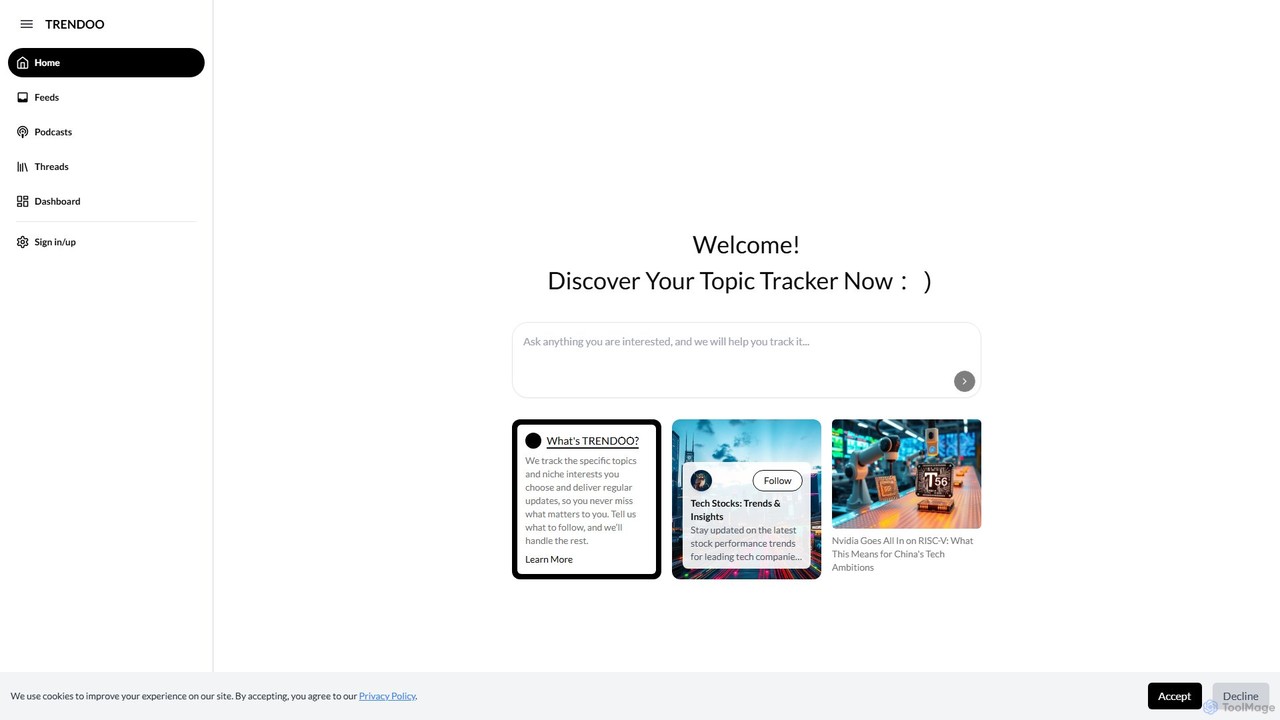
trendoo is an AI-powered intelligence platform that tracks specific topics and niche interests you choose. It delivers curated, regular updates through feeds, podcasts, and discussion threads, ensuring you never miss critical information in technology, finance, startups, and more.

Trend Analysis
Visits 5.4KFavorites 94Likes 116
AIModels.fyi
Freemium

AIModels.fyi

AIModels.fyi is a specialized AI research assistant designed for professionals to track, summarize, and discover the latest AI papers, models, and tools. It cuts through the noise with curated digests and focused alerts, ensuring you never miss a critical breakthrough in the fast-paced world of AI.

Model Discovery
Visits 71.1KFavorites 130Likes 126
Telborg
Freemium

Telborg

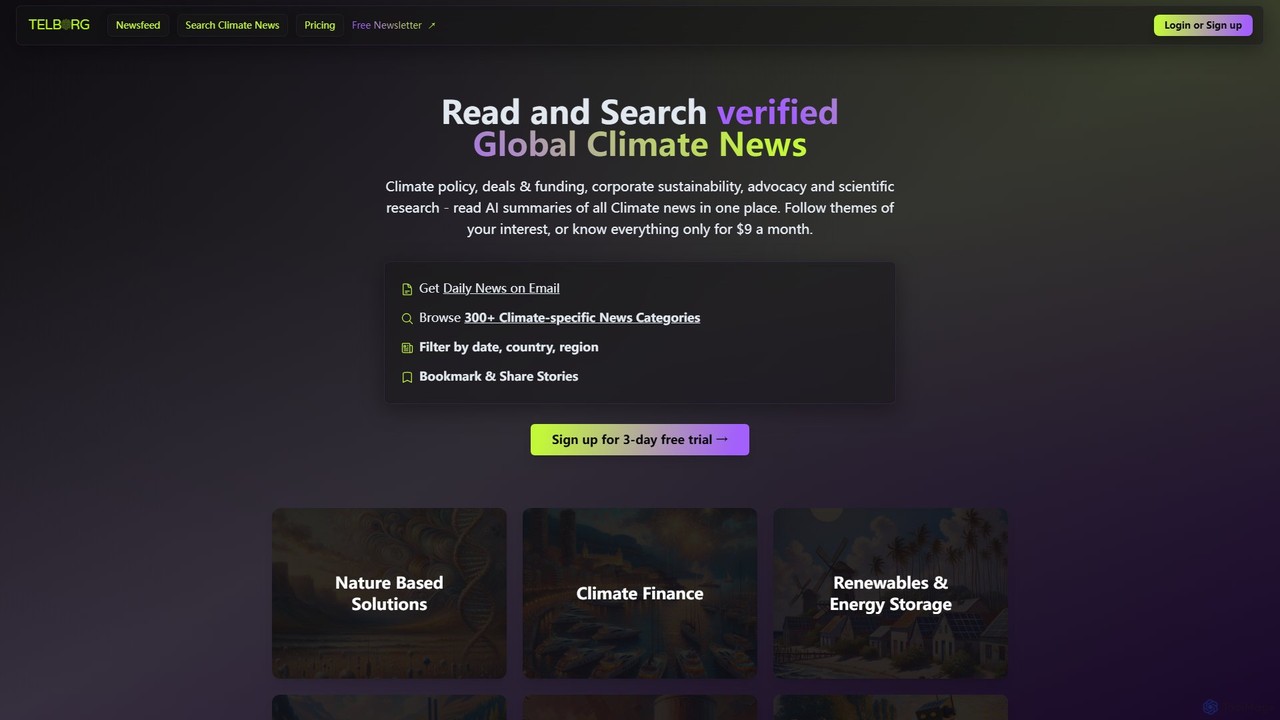
Telborg is an AI-powered news platform delivering concise, verified global climate news. It sources information directly from official bodies like governments, corporations, and research institutions, providing AI-generated summaries across 300+ specific climate categories. It's designed for professionals who need credible, up-to-date insights on climate policy, finance, technology, and sustainability.

Research
Visits 6.5KFavorites 161Likes 168

About Information Aggregator

Information Aggregators are AI-powered tools designed to automatically collect, process, and present data from diverse online sources in a consolidated and often personalized format. Leveraging advanced natural language processing (NLP) and machine learning, these tools efficiently filter, summarize, and categorize vast amounts of information. They empower users to cut through digital noise, gain curated insights, and stay informed on specific topics without manual searching, significantly boosting productivity within the broader productivity tools ecosystem.

Core Features

  • Automated Data Collection: Gathers information from websites, news feeds, social media, and databases.
  • Intelligent Filtering & Summarization: Uses AI to identify relevant content and extract key insights, presenting concise summaries.
  • Personalized Feeds & Alerts: Delivers customized content streams and real-time notifications based on user preferences.
  • Topic Clustering & Categorization: Organizes disparate information into coherent themes and categories for easier navigation.
  • Trend Identification: Analyzes aggregated data to detect emerging patterns and shifts in topics of interest.

Use Cases

Professionals across various sectors utilize Information Aggregators to streamline their research and monitoring efforts. Marketing teams track industry news and competitor campaigns, while financial analysts monitor market trends and company reports. These tools are invaluable for anyone needing to stay updated on specific subjects efficiently, from academic researchers to business strategists.

How to Choose

When selecting an AI Information Aggregator, consider the breadth of its data sources, the quality of its AI-driven summarization and filtering, and the level of personalization offered. Evaluate its integration capabilities with existing workflows, the frequency of real-time updates, and the intuitiveness of its user interface to ensure it meets your specific information needs and enhances your decision-making process.

Information Aggregator use cases

1

Monitor Industry Trends for Strategic Planning

Business strategists and market analysts can leverage AI Information Aggregators to continuously scan news, reports, and social media for emerging industry trends, technological advancements, and regulatory changes. By aggregating data from hundreds of sources, these tools provide a holistic view of the market landscape, enabling proactive strategic adjustments and informed decision-making. This saves countless hours of manual research, ensuring competitive advantage.

2

Gather Competitive Intelligence Efficiently

Marketing and sales teams use Information Aggregators to track competitor activities, including product launches, pricing adjustments, marketing campaigns, and public sentiment. The tools automatically collect and summarize relevant data from competitor websites, press releases, and industry forums. This allows businesses to quickly identify competitive threats and opportunities, informing their own strategies and maintaining market responsiveness without constant manual monitoring.

3

Curate Personalized News Feeds for Professionals

Busy executives, researchers, and specialized professionals often need to stay updated on niche topics without being overwhelmed by general news. AI Information Aggregators create highly personalized news feeds by learning user preferences and filtering content from specific journals, blogs, and news outlets. This ensures that users receive only the most relevant and critical updates, saving time and improving knowledge acquisition in their specific domain.

4

Automate Content Discovery for Social Media Managers

Social media managers and content creators constantly seek fresh, engaging content relevant to their audience. Information Aggregators can automatically discover trending articles, viral posts, and relevant discussions across various platforms and websites. By providing curated content suggestions and summaries, these tools streamline the content discovery process, helping managers maintain an active and informative social media presence with minimal effort.

5

Support Academic Research and Literature Reviews

Academics and students conducting extensive literature reviews can use AI Information Aggregators to collect and organize research papers, journal articles, and conference proceedings on specific subjects. These tools can identify key themes, summarize findings, and even highlight connections between different studies. This significantly accelerates the research process, ensuring comprehensive coverage and helping to identify gaps or new directions for study.

6

Track Investment News and Portfolio Performance

Individual investors and financial advisors rely on Information Aggregators to monitor news, financial reports, and expert analyses related to their investment portfolios. These tools can track specific companies, industries, or economic indicators, providing real-time alerts and summarized insights. This helps investors make timely, data-driven decisions, manage risks, and identify potential opportunities without sifting through vast amounts of financial data manually.

Information Aggregator FAQ

What are AI Information Aggregators?

AI Information Aggregators are intelligent tools that automatically collect, process, and organize information from multiple online sources, presenting it in a digestible, often personalized format. They leverage artificial intelligence, particularly natural language processing, to filter out irrelevant data, summarize key points, and categorize content, helping users efficiently consume vast amounts of information.

How do AI Information Aggregators benefit users?

Users benefit from AI Information Aggregators by saving significant time and reducing information overload. These tools provide curated, relevant content tailored to specific interests, enabling better-informed decision-making and improved knowledge management. They automate the tedious process of searching and sifting through data, allowing professionals to focus on analysis and strategy rather than collection.

How to choose the best AI Information Aggregator?

To choose the best AI Information Aggregator, consider its data source breadth (news, social, academic), the accuracy and quality of its AI summarization and filtering capabilities, and the level of personalization it offers. Also, evaluate its integration options with your existing tools, the frequency of real-time updates, and the overall user experience to ensure it aligns with your specific needs and workflow.

What's the difference between an AI Information Aggregator and a traditional RSS reader?

While both aggregate content, an AI Information Aggregator goes beyond a traditional RSS reader by using AI to actively process and understand the content. RSS readers simply pull full articles from predefined feeds; AI aggregators filter, summarize, categorize, and personalize content based on relevance and user preferences, significantly reducing information overload and providing deeper insights.

What types of information can AI Information Aggregators collect?

AI Information Aggregators can collect a wide array of information, including news articles, blog posts, social media updates, academic papers, financial reports, market research data, competitor announcements, and industry-specific publications. Their capabilities extend to virtually any publicly available online text-based content, often including multimedia metadata, to provide comprehensive insights.