
Business Best in category 1 results Venture Capital AI Tool

Popular AI tools in the Venture Capital field of Business include Fabrice AI, etc., helping you quickly improve efficiency.

Free
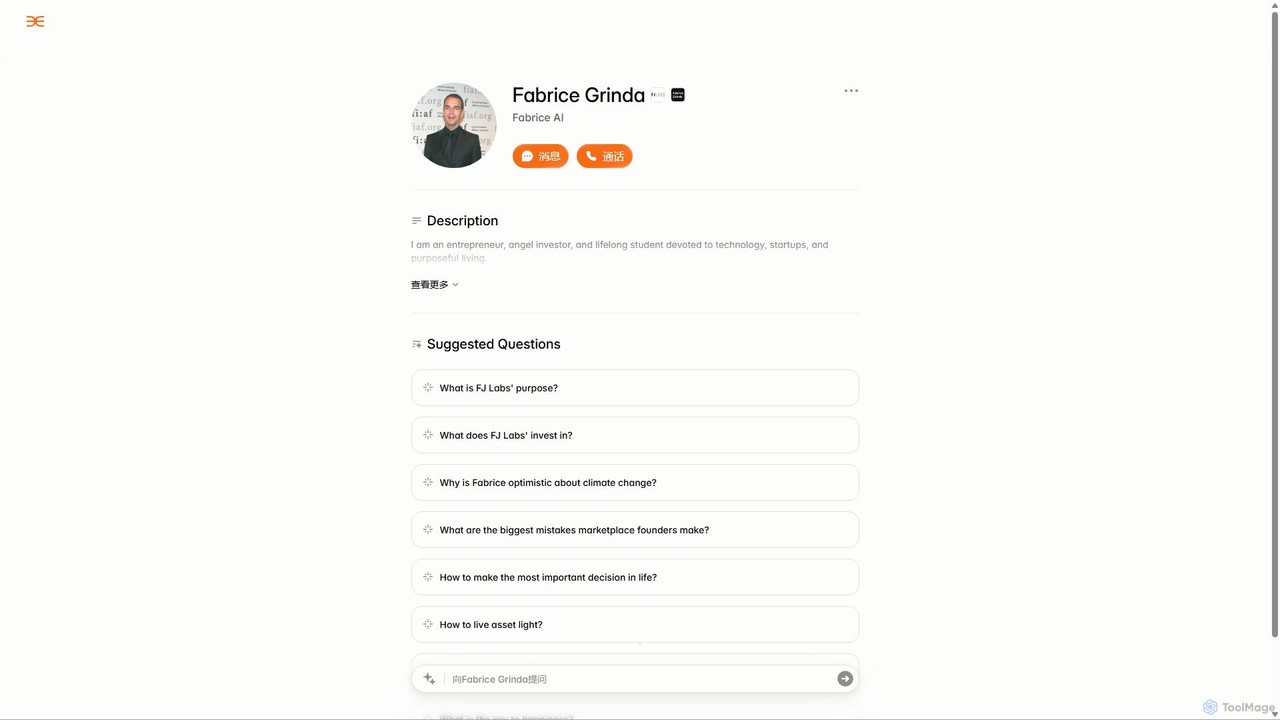
Fabrice AI

Fabrice AI

An AI-powered conversational assistant trained on the knowledge and insights of renowned entrepreneur and investor Fabrice Grinda. Ask …

3.3K

About Venture Capital

Venture Capital AI tools are specialized platforms that leverage artificial intelligence to optimize various stages of the venture capital investment process. These tools utilize advanced algorithms for data analysis, predictive modeling, and pattern recognition, enabling investors to make more informed and efficient decisions. They streamline operations from deal sourcing and due diligence to portfolio management, ultimately enhancing investment outcomes within the broader business landscape.

Core Features

  • Deal Sourcing & Screening: Automatically identifies and evaluates potential investment opportunities based on predefined criteria and market signals.
  • Automated Due Diligence: Accelerates the analysis of company financials, market data, team backgrounds, and legal documents.
  • Portfolio Performance Tracking: Provides real-time insights into portfolio company metrics, identifying growth trends and potential risks.
  • Predictive Market Analysis: Forecasts emerging industry trends, competitive landscapes, and potential market disruptions.
  • Investment Recommendation: Offers data-driven insights and recommendations to support critical investment decisions.

Applicable Scenarios

Venture Capital AI tools are indispensable for VC firms, angel investors, and corporate venture arms seeking to enhance their investment strategies. Startup founders also utilize these tools to identify suitable investors and understand market dynamics. Financial analysts and strategists leverage them for deep market insights and risk assessment across various business sectors.

How to Choose

When selecting Venture Capital AI tools, consider the breadth of data integration capabilities, ensuring compatibility with diverse data sources. Evaluate the accuracy and transparency of the AI models, especially for predictive analytics. Look for customization options to align with specific investment theses, robust security protocols for sensitive data, and an intuitive user interface for efficient workflow management.

Venture CapitalUse Cases

1

Automated Identification of High-Potential Startups

A venture capital firm's deal sourcing team uses AI tools to scan vast datasets of company registrations, news articles, patent filings, and social media trends. The AI identifies startups matching specific investment criteria, such as sector, growth stage, and technology stack, presenting a curated list of promising leads. This significantly reduces manual research time, allowing analysts to focus on deeper engagement with truly relevant opportunities and expanding the firm's deal flow pipeline.

2

Streamlining Due Diligence for Investment Analysts

An investment analyst leverages an AI-powered platform to conduct rapid due diligence on a potential target company. The tool ingests financial statements, legal documents, market reports, and competitor analyses, extracting key insights and flagging potential risks or inconsistencies. It can quickly summarize complex information, perform comparative analyses against industry benchmarks, and highlight critical data points, accelerating the decision-making process and ensuring thoroughness.

3

Proactive Portfolio Performance Monitoring

A fund manager utilizes AI tools to continuously monitor the performance of their portfolio companies. The system integrates with company data sources to track key performance indicators (KPIs), identify early warning signs of underperformance, or detect unexpected growth opportunities. It generates automated reports and alerts, allowing the manager to intervene proactively, provide strategic guidance, or reallocate resources effectively, optimizing overall fund returns.

4

Identifying Emerging Market Trends for Strategic Investment

A corporate venture arm employs AI to analyze global market data, academic research, and startup activity to identify nascent technologies and emerging market trends. The AI processes unstructured data from news, social media, and industry reports to detect patterns and predict future growth areas. This enables the corporate venture team to strategically position their investments in sectors poised for significant disruption, ensuring long-term competitive advantage.

5

Facilitating Startup-Investor Matching

A startup founder uses an AI-driven platform to find suitable venture capital investors. The tool analyzes the startup's business model, funding stage, sector, and traction, then matches it with VC firms whose investment thesis, portfolio, and stage preference align. It provides insights into investor preferences and contact strategies, significantly improving the efficiency of fundraising efforts and increasing the likelihood of securing capital.

6

Enhancing Risk Assessment for Early-Stage Investments

An angel investor or early-stage VC uses AI tools to assess the inherent risks of investing in pre-seed or seed-stage startups with limited historical data. The AI analyzes qualitative data such as team experience, market validation signals, and competitive landscape, combining it with available quantitative metrics. It provides a structured risk profile and highlights potential red flags, helping investors make more informed decisions despite data scarcity.

Venture CapitalFrequently Asked Questions