Papermark
Papermark is an open-source platform for secure document sharing, tracking, and virtual data rooms (VDR). It provides page-by-page …
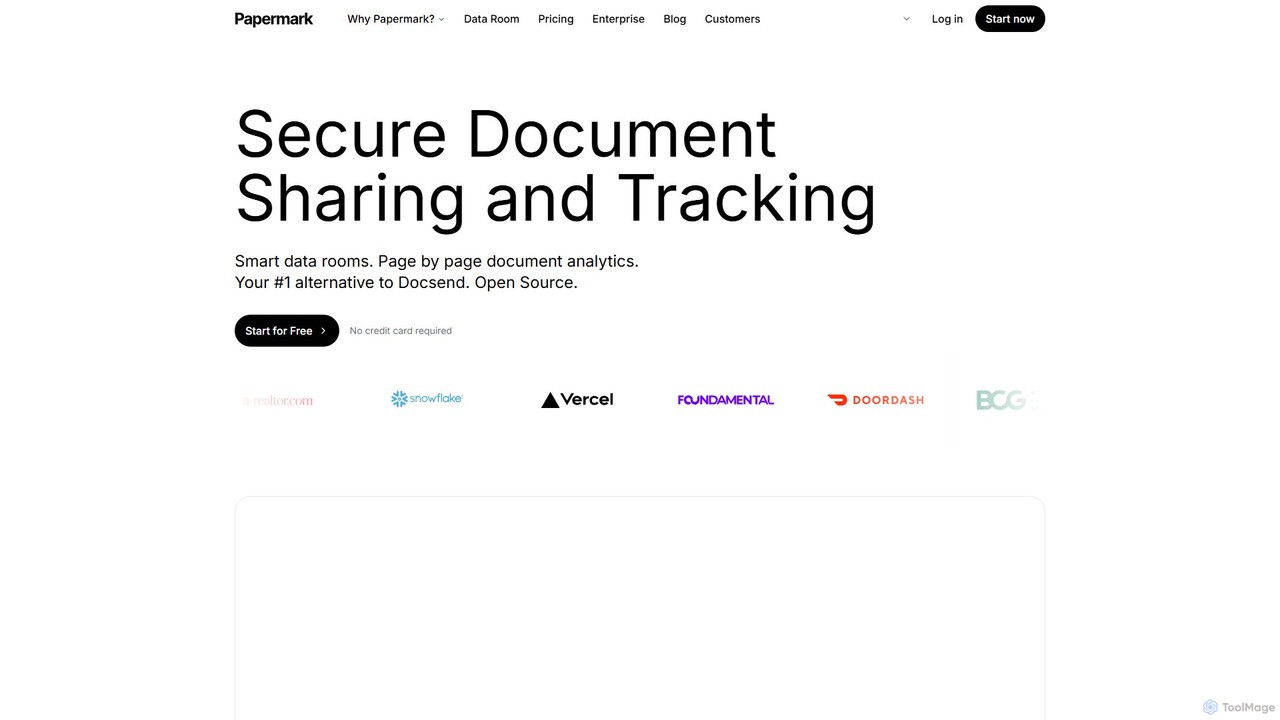
Papermark is an open-source platform for secure document sharing, tracking, and virtual data rooms (VDR). It provides page-by-page analytics, custom branding, and self-hosting options, making it an ideal alternative to DocSend. It's designed for startups, sales teams, and M&A professionals to manage sensitive documents, track engagement, and streamline deal-making processes with robust security features.
About Virtual Data Room
A Virtual Data Room (VDR) is a highly secure online repository designed for sharing confidential documents during critical business transactions. These specialized platforms leverage advanced encryption, granular access controls, and comprehensive audit trails to ensure the integrity and confidentiality of sensitive information. VDRs are primarily utilized to streamline complex processes like mergers and acquisitions, fundraising, and legal due diligence, providing a controlled environment for multiple parties to review and exchange documents efficiently and securely.
Core Features
- Granular Access Permissions: Define precise user roles and control who can view, print, download, or edit specific documents.
- Audit Trails and Reporting: Track every action taken within the data room, including document views, downloads, and user logins, providing a complete activity log.
- Secure Document Viewing: Features like dynamic watermarking, disable printing/downloading, and fence view prevent unauthorized sharing and protect intellectual property.
- Q&A Module: Facilitate structured communication between parties, allowing questions and answers to be managed and tracked efficiently.
- Advanced Search and Indexing: Quickly locate specific documents or information within large datasets using powerful search capabilities and automated indexing.
Applicable Scenarios
Virtual Data Rooms are indispensable for high-stakes business activities requiring stringent security and compliance. They are widely adopted in mergers and acquisitions for due diligence, enabling buyers to review target company financials and legal documents. Investment banks and startups use VDRs for fundraising rounds, securely sharing pitch decks, business plans, and financial models with potential investors. Legal firms also leverage VDRs for litigation support, managing discovery documents and sensitive case files with external counsel.
How to Choose
Selecting a Virtual Data Room requires careful consideration of several factors. Prioritize robust security features, including ISO 27001 certification, data encryption, and multi-factor authentication, to protect sensitive information. Evaluate the ease of use and user interface for all stakeholders, ensuring a smooth document review process. Consider the platform's scalability and storage capacity to accommodate future growth and large transaction volumes. Finally, assess customer support availability and responsiveness, as well as transparent pricing models that align with your project's scope and budget.

Virtual Data RoomUse Cases
Streamlining Mergers & Acquisitions Due Diligence
M&A teams utilize Virtual Data Rooms to manage the extensive due diligence process. Sellers upload all relevant financial, legal, operational, and HR documents into the VDR, granting controlled access to potential buyers. Buyers can securely review thousands of documents, ask questions via the Q&A module, and track progress, ensuring all sensitive information is protected while accelerating the transaction timeline.
Securing Fundraising and Investor Relations
Startups and companies seeking capital use VDRs to share confidential business plans, financial projections, pitch decks, and intellectual property with prospective investors. The VDR's access controls ensure that only authorized investors can view specific documents, and audit trails provide insights into investor engagement, helping to build trust and manage the fundraising process efficiently.
Managing Legal Proceedings and Litigation Documents
Law firms and corporate legal departments deploy Virtual Data Rooms for complex legal cases, including litigation, arbitration, and regulatory investigations. They securely store and share discovery documents, contracts, evidence, and expert reports with legal teams, external counsel, and regulatory bodies. Granular permissions and audit logs ensure compliance and maintain the chain of custody for all sensitive legal information.
Facilitating Real Estate Transactions and Property Sales
In commercial and high-value residential real estate, VDRs are essential for sharing property deeds, leases, financial statements, environmental reports, and architectural plans with multiple interested parties. Real estate agents, buyers, sellers, and legal advisors can access and review documents securely, ensuring transparency and efficiency throughout the property transaction lifecycle, from listing to closing.
Enhancing Board Communications and Corporate Governance
Corporate boards and executive teams use Virtual Data Rooms to securely distribute confidential board meeting minutes, strategic plans, financial reports, and governance documents to directors. This ensures that highly sensitive internal communications remain protected, with full auditability of who accessed what and when, supporting robust corporate governance and compliance requirements.
Conducting Audits and Ensuring Regulatory Compliance
Companies undergoing internal or external audits, or facing regulatory compliance checks, leverage VDRs to provide auditors with secure, controlled access to necessary financial records, operational policies, and compliance documentation. The VDR's audit trails demonstrate adherence to data access protocols, simplifying the audit process and ensuring sensitive data is handled according to regulations.