ToolMage
Sign in

Best 2 Onboarding AI tools for Client Management

Popular Onboarding AI tools in Client Management include Onboardly and Brifagoai, helping you work more efficiently.

Brifagoai
Freemium

Brifagoai

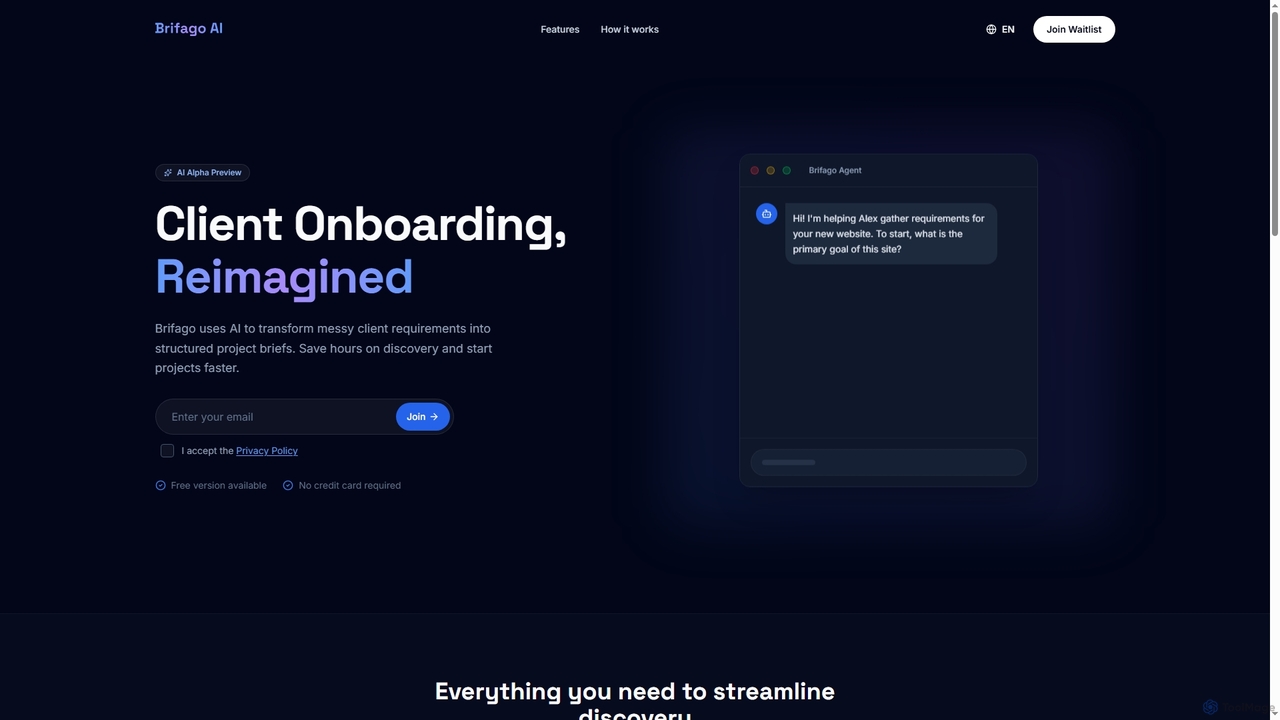
Brifagoai is an AI-powered client onboarding tool designed to streamline the requirement gathering process. It uses a conversational AI agent to interview clients, transforming unstructured requests into clear, structured project briefs. This saves agencies and freelancers hours of manual work, reduces back-and-forth communication, and helps prevent scope creep.

Onboarding
Visits 7.1KFavorites 129Likes 116
Onboardly
Paid

Onboardly

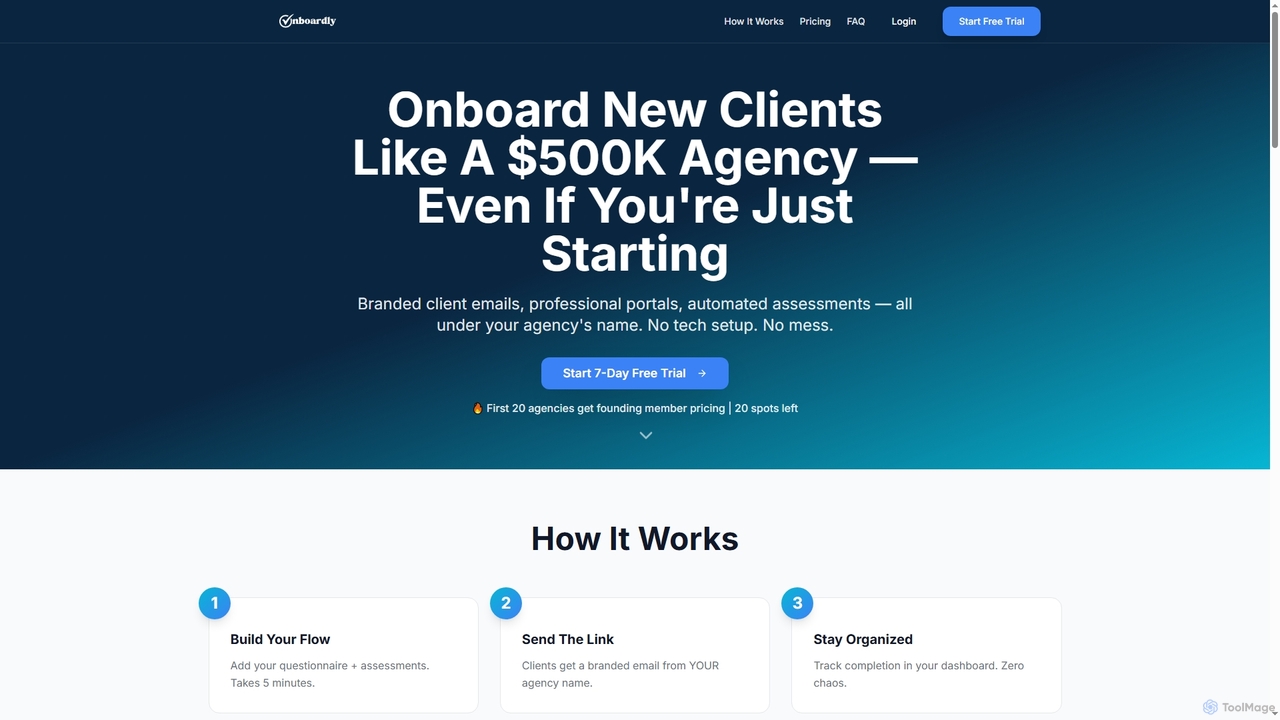
Onboardly is a client onboarding platform designed for agencies to streamline their processes. It enables the creation of branded client portals, automated assessments, and professional reports under the agency's own name, without requiring any technical setup.

Agency Tools
Visits 7.3KFavorites 165Likes 151

About Onboarding

Onboarding tools are AI-powered solutions designed to automate and personalize the process of introducing new users or clients to a product, service, or platform. These tools leverage artificial intelligence to understand individual user needs, provide tailored guidance, and streamline initial setup, significantly enhancing the first-time user experience. By optimizing the initial interaction, they help reduce churn and accelerate user adoption within the broader client management ecosystem.

Core Features

  • Personalized Walkthroughs: AI adapts tutorials and interactive guides based on user behavior, roles, and stated goals.
  • Automated Q&A and Support: AI chatbots provide instant answers to common setup questions and offer proactive assistance.
  • Progress Tracking & Analytics: Monitors user engagement during onboarding, identifying friction points and areas for improvement.
  • Content Recommendation: Suggests relevant features, resources, or next steps based on user interaction and profile.
  • Task Automation: Automates repetitive setup tasks, form filling, or data collection to simplify the initial process.

Applicable Scenarios

AI onboarding tools are crucial for SaaS companies guiding new subscribers through complex software, e-commerce platforms helping new customers navigate their first purchase, and HR departments streamlining new employee orientation. They are also invaluable for financial services firms onboarding new clients to digital banking platforms, ensuring compliance and ease of use.

How to Choose

When selecting an AI onboarding tool, consider its integration capabilities with your existing CRM, helpdesk, and product analytics systems. Evaluate its customization options for tailoring workflows and branding, and assess the depth of its analytics and reporting features to measure onboarding effectiveness. Finally, ensure it offers robust personalization to cater to diverse user segments and scales with your user growth.

Onboarding use cases

1

Streamlining SaaS Product Adoption for New Users

A SaaS company uses AI onboarding tools to guide new subscribers through their software's initial setup and core feature discovery. The AI analyzes user roles and stated goals to provide personalized interactive walkthroughs, highlighting relevant functionalities. This ensures users quickly understand the product's value, reducing the time to first successful use and improving long-term retention by up to 20%.

2

Automating New Employee Orientation and HR Processes

HR departments deploy AI onboarding solutions to automate the initial orientation for new hires. The AI chatbot answers common HR policy questions, guides employees through benefits enrollment, and provides access to relevant company resources. This reduces the administrative burden on HR staff by 30% and ensures new employees feel supported and informed from day one, accelerating their productivity.

3

Enhancing Customer Integration for E-commerce Platforms

An e-commerce platform utilizes AI onboarding to guide new customers through their first purchase journey. The AI identifies potential friction points, such as payment setup or shipping preferences, and proactively offers assistance via contextual pop-ups or a chatbot. This personalized guidance reduces cart abandonment rates by 15% and increases customer satisfaction, leading to higher conversion rates for new users.

4

Personalizing Financial Services Client Onboarding

Financial institutions leverage AI onboarding to guide new clients through complex account setup, regulatory compliance, and investment product selection. The AI assesses client risk profiles and financial goals to recommend suitable products and streamline document submission. This ensures a compliant and efficient onboarding process, building trust and reducing the time clients take to become fully active by up to 40%.

5

Improving User Experience in Healthcare Portals

Healthcare providers use AI onboarding to help new patients navigate online portals for appointment scheduling, medical record access, and prescription refills. The AI offers guided tours and answers FAQs about portal features and privacy policies. This reduces calls to administrative staff by 25% and empowers patients to manage their health information independently, improving overall patient satisfaction and engagement.

6

Accelerating Adoption of Complex Enterprise Software

Large enterprises deploy AI onboarding for new employees or departments adopting complex ERP or CRM systems. The AI provides role-specific training modules, answers system-specific queries, and guides users through initial data migration or configuration tasks. This significantly reduces the learning curve, accelerates system adoption by 35%, and minimizes the need for extensive in-person training, saving substantial operational costs.

Onboarding FAQ

What are AI Onboarding tools?

AI Onboarding tools are software solutions that use artificial intelligence to automate, personalize, and optimize the process of introducing new users or clients to a product, service, or platform. They go beyond traditional static guides by adapting to individual user needs, providing dynamic support, and streamlining initial setup tasks. Their core purpose is to enhance the first-time user experience, reduce early churn, and accelerate user adoption.

How do AI Onboarding tools enhance user experience?

AI Onboarding tools significantly enhance user experience by providing personalized, proactive, and efficient guidance. They analyze user data to offer tailored walkthroughs, answer questions instantly via chatbots, and anticipate potential issues before they arise. This reduces frustration, makes the initial learning curve smoother, and helps users quickly find value in the product or service, fostering a positive first impression and encouraging continued engagement.

What's the difference between AI Onboarding and traditional onboarding methods?

The primary difference lies in personalization and dynamism. Traditional onboarding often relies on static documents, generic videos, or manual human intervention, offering a one-size-fits-all approach. AI Onboarding, conversely, uses machine learning to adapt content and support in real-time based on individual user behavior, progress, and needs. This results in a more engaging, efficient, and tailored experience that significantly outperforms generic methods in user satisfaction and retention.

What features should I look for in an AI Onboarding solution?

When selecting an AI Onboarding solution, prioritize features like robust personalization capabilities that adapt to different user segments and roles. Look for comprehensive analytics and reporting to track user progress and identify drop-off points. Essential functionalities include interactive walkthroughs, AI-powered chatbots for instant support, and seamless integration with your existing CRM, helpdesk, and product analytics tools. Scalability and ease of customization are also key for long-term success.

Can AI Onboarding tools be integrated with existing CRM systems?

Yes, seamless integration with existing CRM (Customer Relationship Management) systems is a critical capability for most AI Onboarding tools. This allows for the exchange of user data, enabling the AI to personalize the onboarding experience based on existing customer information and update CRM records with onboarding progress. Such integration ensures a unified view of the customer journey, from initial contact through successful product adoption, optimizing overall client management strategies.