ToolMage
Sign in

Best 4 Client Management AI tools

Popular Client Management AI tools include Ersilia, Entrov, Brifagoai, and Onboardly, helping you work more efficiently.

Brifagoai
Freemium

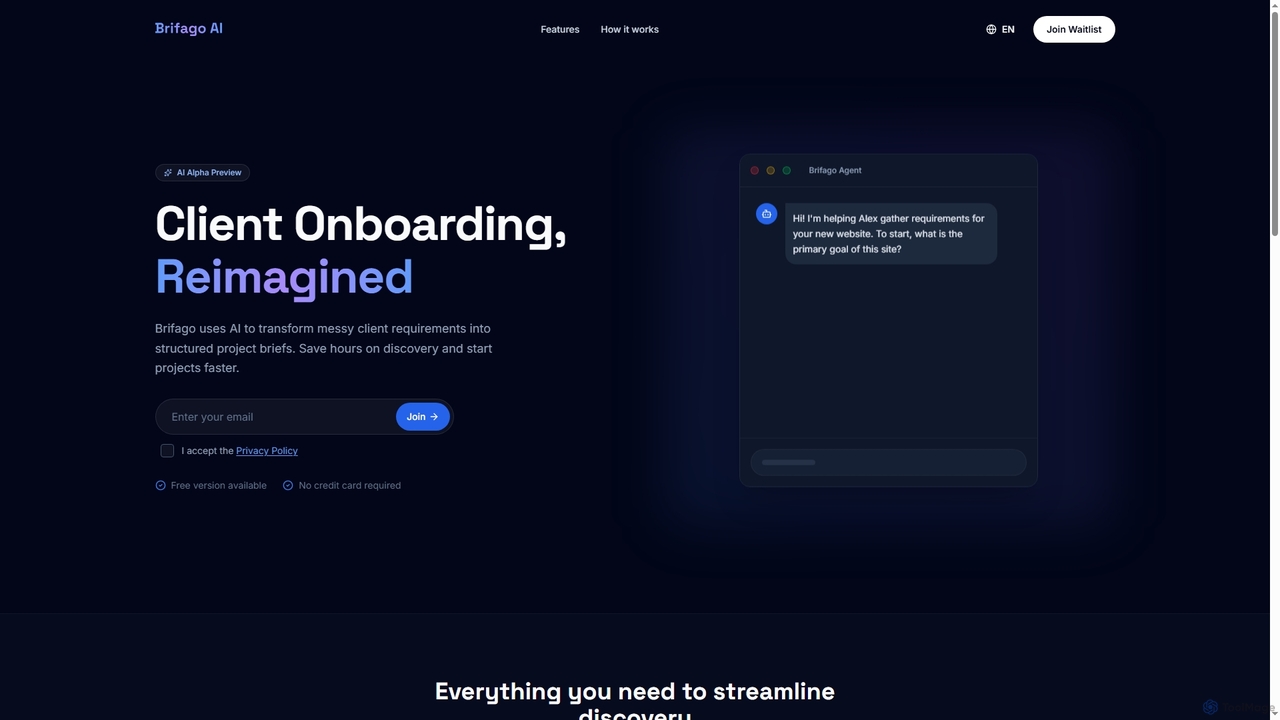
Brifagoai

Brifagoai is an AI-powered client onboarding tool designed to streamline the requirement gathering process. It uses a conversational AI agent to interview clients, transforming unstructured requests into clear, structured project briefs. This saves agencies and freelancers hours of manual work, reduces back-and-forth communication, and helps prevent scope creep.

Onboarding
Visits 3.4KFavorites 92Likes 86
Onboardly
Paid

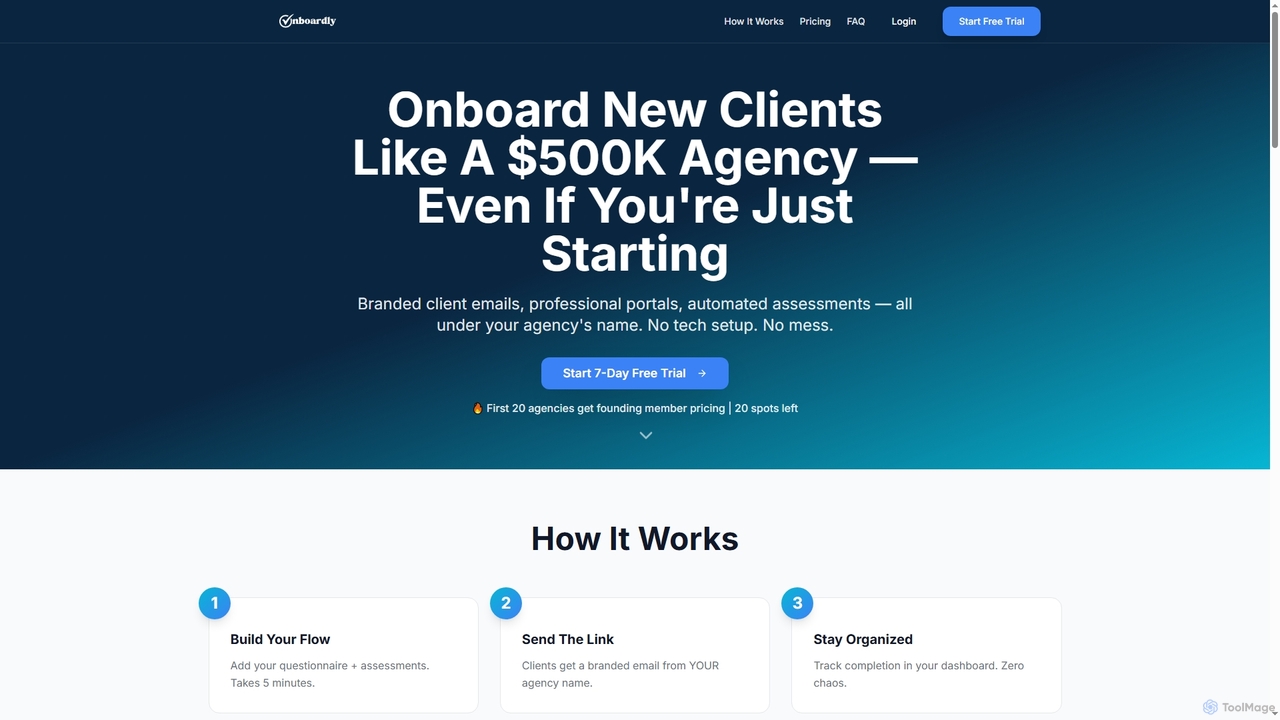
Onboardly

Onboardly is a client onboarding platform designed for agencies to streamline their processes. It enables the creation of branded client portals, automated assessments, and professional reports under the agency's own name, without requiring any technical setup.

Agency Tools
Visits 3.3KFavorites 129Likes 124
Ersilia
Paid

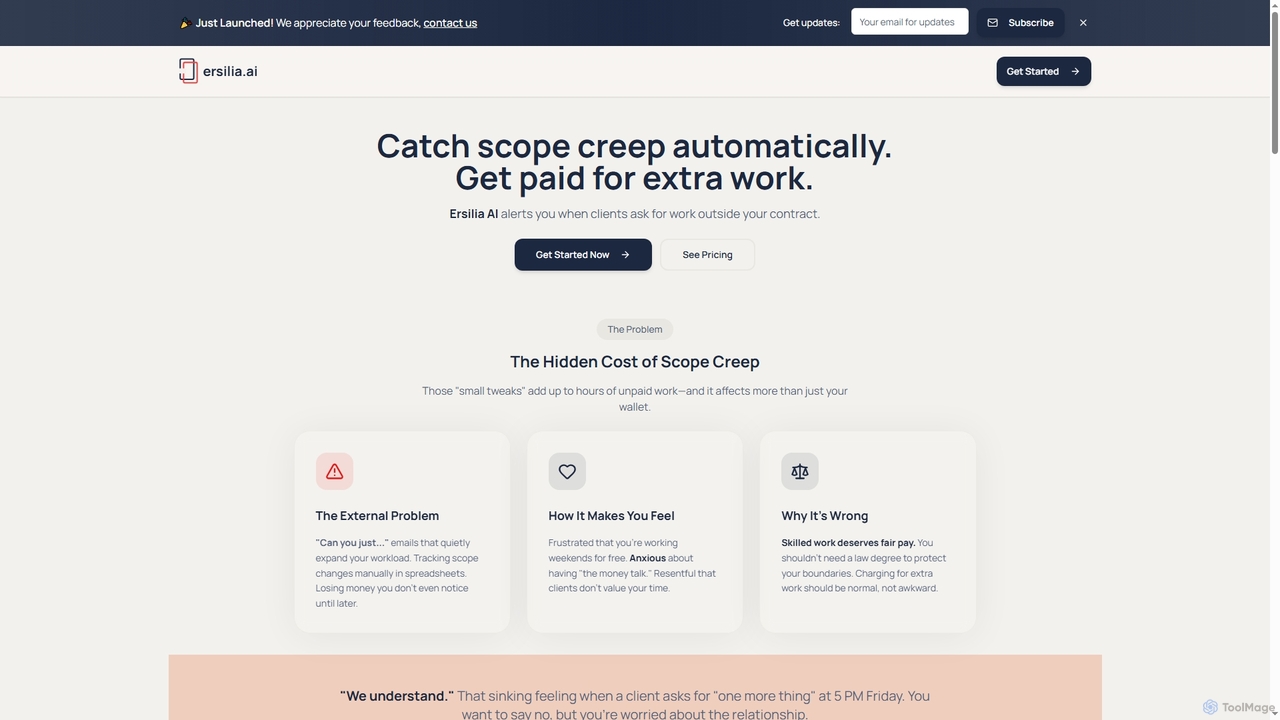
Ersilia

Ersilia is an AI-powered tool designed for freelancers and agencies to automatically detect scope creep in client communications. It helps users identify out-of-scope requests, provides professional response templates, and tracks recovered revenue, ensuring they get paid for all their work.

Communication
Visits 4.3KFavorites 118Likes 146
Entrov
Freemium

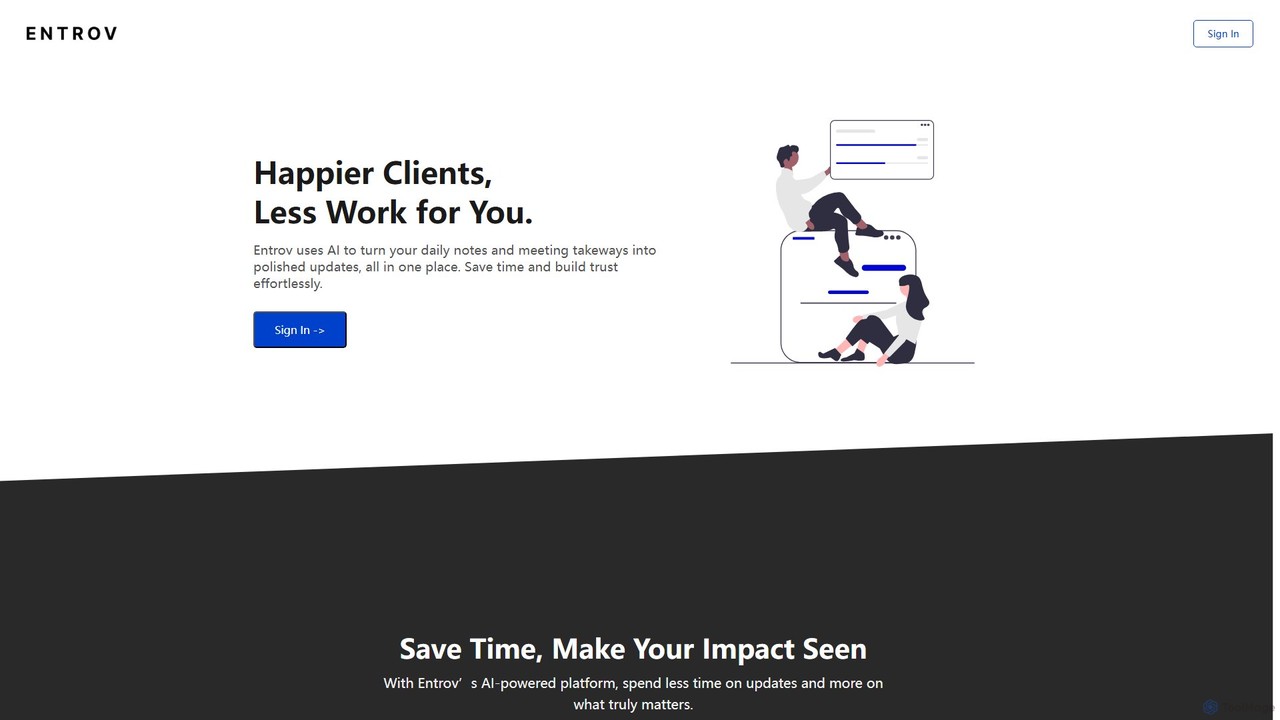
Entrov

Entrov is an AI-powered platform designed to streamline progress reporting. It allows users to quickly capture updates via text, voice, files, or screenshots, and then uses AI to automatically generate clear, professional summaries. This saves valuable time, enhances client communication, and ensures your impact is clearly seen, allowing you to focus more on your core work and less on writing updates.

Communication
Visits 3.4KFavorites 104Likes 106

About Client Management

Client Management AI tools are sophisticated platforms that leverage artificial intelligence to optimize and automate various aspects of client interactions and relationships. These tools integrate advanced machine learning, natural language processing, and data analytics to provide businesses with deeper insights into customer behavior and preferences. Their primary value lies in streamlining sales, marketing, and customer service processes, leading to improved customer satisfaction, increased retention, and enhanced operational efficiency. By offering proactive engagement and intelligent data-driven recommendations, they transform how companies acquire, serve, and retain their clientele.

Core Features

  • CRM Automation: Automates routine tasks like data entry, scheduling, and follow-ups within customer relationship management.
  • Personalized Communication: Generates tailored messages and content for individual clients across various channels based on their profiles and interactions.
  • Lead Scoring & Nurturing: Uses AI to evaluate lead quality and automate personalized nurturing sequences to guide prospects through the sales funnel.
  • Sentiment Analysis: Analyzes customer feedback and communications to gauge sentiment, identify pain points, and prioritize support needs.
  • Predictive Analytics: Forecasts future customer behavior, such as churn risk or purchase likelihood, enabling proactive strategies.

Use Cases

Businesses across various sectors, including sales, marketing, and customer service, utilize Client Management AI tools to enhance their operations. Sales teams leverage them for intelligent lead prioritization and automated outreach, while marketing departments use them for highly targeted campaign execution and personalized content delivery. Customer service operations benefit from AI-driven chatbots and sentiment analysis to provide faster, more relevant support and identify customer issues proactively.

How to Choose

When selecting a Client Management AI tool, consider its integration capabilities with existing CRM and business systems to ensure seamless data flow. Evaluate the breadth and depth of its AI features, such as predictive analytics or natural language processing, to match your specific needs. Scalability is crucial for growing businesses, as is the vendor's commitment to data security and compliance. Finally, assess user-friendliness and the availability of support to ensure smooth adoption and maximum utility for your team.

Featured tool rankings

Client Management use cases

1

Automated Lead Nurturing & Qualification

Sales and marketing teams can use AI Client Management tools to automatically qualify leads based on engagement data and demographic information. The AI then initiates personalized email sequences, chatbot conversations, or content recommendations tailored to each lead's stage in the buying journey. This ensures consistent, relevant communication, freeing up human agents to focus on high-priority prospects and significantly improving conversion rates by guiding leads efficiently through the sales funnel.

2

Personalized Customer Support & Service

Customer service departments deploy these tools to offer 24/7 personalized support. AI-powered chatbots handle routine inquiries, provide instant answers, and guide users to relevant resources, reducing response times and agent workload. For complex issues, the AI can analyze past interactions and customer profiles to provide human agents with context and suggested solutions, leading to faster resolution and a more satisfying customer experience.

3

Proactive Client Engagement & Retention

Account managers and customer success teams leverage AI to monitor client health and predict potential churn risks. The tools analyze usage patterns, sentiment from communications, and support tickets to identify clients who might be disengaging. This enables proactive outreach with personalized offers, educational content, or direct support interventions, strengthening client relationships and significantly improving retention rates before issues escalate.

4

Optimized Sales Forecasting & Opportunity Scoring

Sales leaders and managers utilize AI Client Management tools to gain more accurate sales forecasts and prioritize opportunities. The AI analyzes historical sales data, current pipeline status, and external market trends to predict future sales performance. It also scores individual opportunities based on their likelihood of closing, allowing sales teams to allocate resources more effectively, focus on the most promising deals, and achieve revenue targets more consistently.

5

Automated Feedback Collection & Sentiment Analysis

Product and marketing teams use these tools to automate the collection of customer feedback through surveys, reviews, and social media mentions. The AI then performs sentiment analysis on this data, identifying common themes, pain points, and areas of satisfaction. This provides actionable insights for product development, marketing messaging, and service improvements, ensuring that business decisions are directly informed by the voice of the customer.

6

Targeted Marketing Campaign Personalization

Marketing professionals employ AI Client Management tools to segment audiences with greater precision and personalize marketing campaigns at scale. The AI analyzes customer data to identify specific preferences, behaviors, and demographics, creating highly targeted segments. It then helps craft personalized ad copy, email content, and product recommendations for each segment, leading to higher engagement rates, better campaign ROI, and a more relevant experience for the customer.

Client Management FAQ

What are AI Client Management tools?

AI Client Management tools are software solutions that use artificial intelligence, including machine learning and natural language processing, to automate and enhance various aspects of managing customer relationships. They are designed to streamline interactions, analyze customer data, and provide intelligent insights to improve sales, marketing, and customer service efficiency. These tools go beyond traditional CRM by offering predictive capabilities and personalized automation.

How do AI Client Management tools benefit businesses?

Businesses benefit from AI Client Management tools in several ways. They significantly improve operational efficiency by automating routine tasks, allowing teams to focus on strategic activities. They enhance customer satisfaction through personalized communication and proactive support, leading to higher retention rates. Furthermore, these tools provide data-driven insights for better decision-making, optimize sales processes, and enable more effective, targeted marketing campaigns, ultimately boosting revenue growth.

What key features should I look for in an AI Client Management solution?

When choosing an AI Client Management solution, look for core features such as advanced CRM automation, personalized communication capabilities, and robust lead scoring and nurturing functionalities. Essential AI-driven features include sentiment analysis for understanding customer feedback and predictive analytics for forecasting behavior. Additionally, consider integration with existing systems, scalability, data security measures, and a user-friendly interface to ensure comprehensive utility.

How do AI Client Management tools differ from traditional CRM systems?

While traditional CRM systems primarily focus on organizing customer data and managing interactions, AI Client Management tools go a step further by actively using artificial intelligence to interpret that data and automate actions. Traditional CRMs are reactive, whereas AI tools are proactive, offering predictive insights, personalized recommendations, and intelligent automation of tasks like lead qualification, customer support, and targeted outreach. They transform data into actionable intelligence.

Can AI Client Management tools integrate with existing business systems?

Yes, most modern AI Client Management tools are designed with robust integration capabilities. They can typically connect with a wide range of existing business systems, including traditional CRM platforms, marketing automation software, enterprise resource planning (ERP) systems, customer support desks, and various communication channels. This ensures a unified view of customer data across the organization, enabling seamless workflows and maximizing the value of your technology stack.