
Cloud Computing Best in category 1 results Registry AI Tool

Popular AI tools in the Registry field of Cloud Computing include hiphops, etc., helping you quickly improve efficiency.

hiphops

hiphops

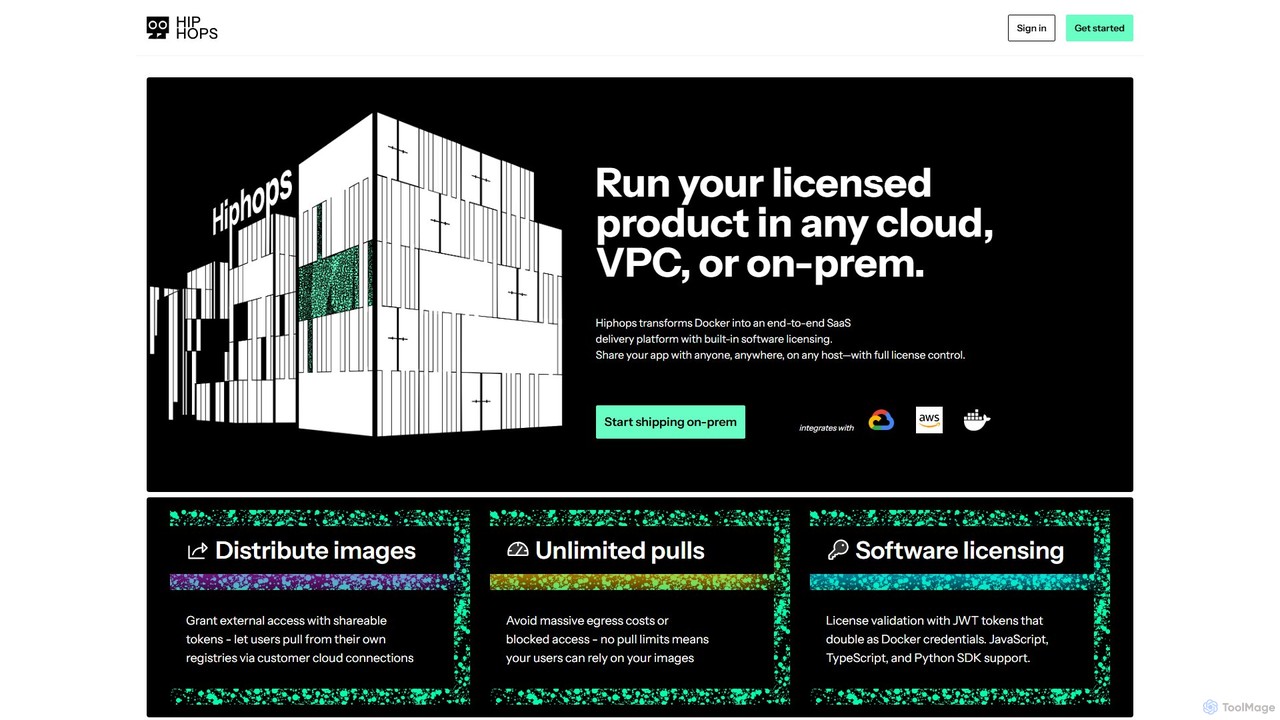
Hiphops is a private container registry platform with built-in software licensing. It transforms Docker into an end-to-end SaaS …

5.6K

About Registry

A Registry in cloud computing is a centralized storage and management service for software artifacts, primarily container images. These tools provide a secure and scalable repository to store, version, and distribute application components. They are fundamental to modern DevOps and CI/CD pipelines, enabling automated and reliable application deployments. Key features often include vulnerability scanning, granular access control, and deep integration with container orchestration platforms like Kubernetes.

Core Features

  • Artifact Storage & Versioning: Securely store and manage multiple versions of container images, Helm charts, and other packages.
  • Access Control & IAM Integration: Define granular permissions to control who can push, pull, or manage artifacts.
  • Automated Vulnerability Scanning: Scan images for known security vulnerabilities to enhance software supply chain security.
  • Geo-Replication: Replicate artifacts across multiple geographic regions for lower latency pulls and higher availability.
  • CI/CD Integration: Seamlessly connect with build and deployment pipelines using webhooks and APIs to automate workflows.

Use Cases

Registries are essential for organizations practicing DevOps and cloud-native development. They are used by software development teams to manage application builds, by operations teams to deploy services to Kubernetes or serverless platforms, and by security teams to enforce policies on software artifacts before deployment.

How to Choose

When selecting a registry, consider its integration with your cloud provider and CI/CD tools, its security features like vulnerability scanning and private networking, its performance and availability SLAs, and its pricing model, which is often based on storage and data transfer costs.

RegistryUse Cases

1

Automating CI/CD Pipelines

A DevOps engineer configures their CI/CD system, such as Jenkins or GitLab CI, to automatically build a container image upon a code commit. The image is then tagged with a version and pushed to a private registry. Triggered by this new image, the continuous delivery system pulls the specific version from the registry and deploys it to a staging environment for testing, ensuring a consistent and repeatable build-to-deploy workflow.

2

Managing Kubernetes Deployments

A platform engineering team manages a Kubernetes cluster for microservices. Each microservice's deployment manifest specifies the container image to use, pointing to a path in their cloud registry (e.g., `ecr.aws/my-repo/my-app:v1.2`). When a deployment is updated, Kubernetes automatically pulls the specified image version from the registry to create new pods, enabling seamless application updates and rollbacks.

3

Securing the Software Supply Chain

A security team enables automated vulnerability scanning within their container registry. Before any new image can be deployed to production, it is scanned against a database of known vulnerabilities. The registry integrates with the deployment pipeline to automatically block any image that fails the security check, preventing vulnerable code from reaching users and helping to enforce compliance policies across the organization.

4

Distributing Proprietary Software

An enterprise software company packages its applications as container images. They use a private registry to securely store these images and provide controlled access to their customers. Each customer is given unique credentials to pull the licensed software images into their own environments. This approach ensures secure and auditable distribution, simplifying the installation and update process for end-users compared to traditional software delivery methods.

5

Accelerating Global Deployments

A company with a global user base runs application instances in multiple cloud regions (e.g., US, Europe, Asia). They configure their registry for geo-replication. When a new image is pushed to the primary registry, it is automatically copied to replicas in other regions. This ensures that deployment systems in each region can pull the image from a local source, significantly reducing latency and improving deployment speed and reliability across the globe.

6

Developing Serverless Applications

A developer builds a function for a serverless platform like Google Cloud Run or AWS Fargate. They package the function and its dependencies into a lightweight container image, which is then pushed to a registry. When the serverless service is invoked, the platform quickly pulls this image from the registry to spin up an instance. This method combines the portability and dependency management of containers with the auto-scaling and pay-per-use benefits of serverless computing.

RegistryFrequently Asked Questions