
Frugal
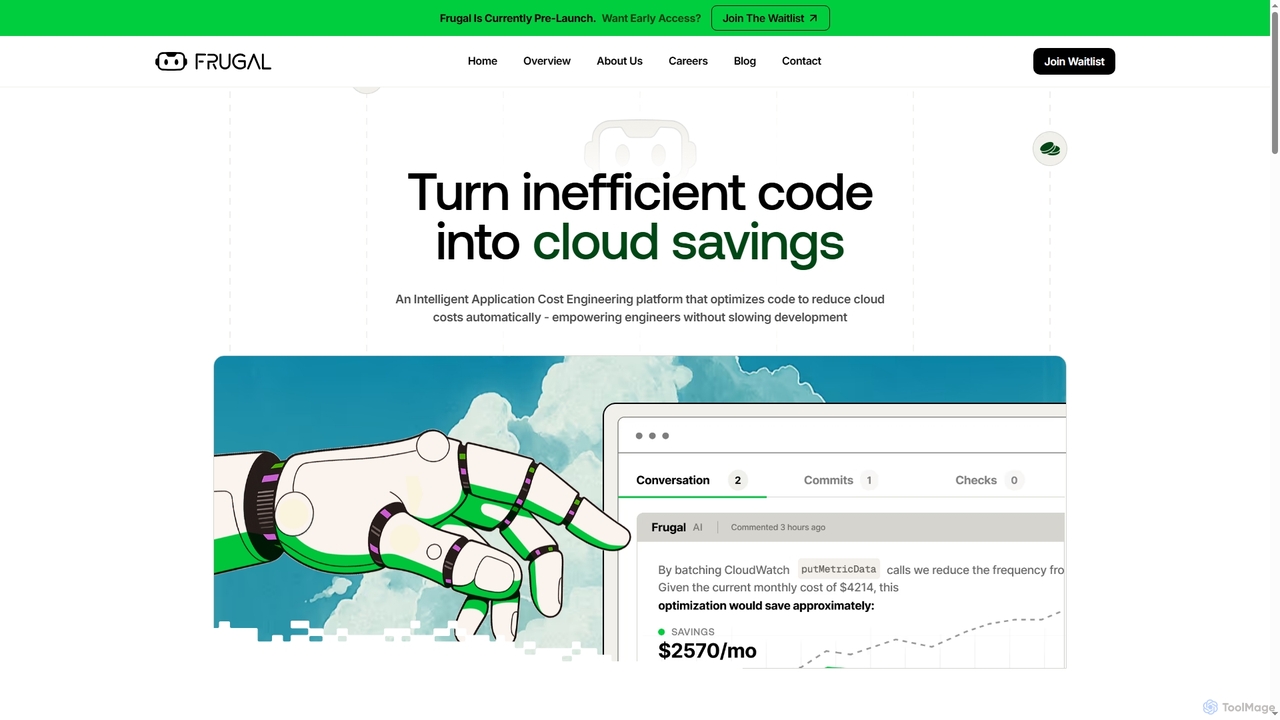
Frugal is an intelligent, AI-powered Application Cost Engineering platform designed for engineers to automatically optimize code and reduce …
Frugal is an intelligent, AI-powered Application Cost Engineering platform designed for engineers to automatically optimize code and reduce cloud costs. It aims to empower developers to eliminate waste at the source without compromising development speed, fostering collaboration between engineering and FinOps teams.
About Cost Optimization
Cost Optimization AI tools are designed to minimize cloud spending by intelligently analyzing resource usage and identifying inefficiencies. These tools leverage machine learning to predict consumption patterns, recommend right-sizing for virtual machines, and suggest optimal purchasing strategies like reserved instances or spot instances. Their primary value lies in automating the identification and resolution of costly cloud resource waste, ensuring businesses achieve maximum value from their cloud investments within the broader context of cloud management.
Core Features
- Usage Analysis & Anomaly Detection: Monitors cloud resource consumption in real-time, identifies underutilized assets, and flags unusual spending spikes.
- Right-Sizing Recommendations: Automatically suggests optimal instance types, storage tiers, and service configurations based on actual workload demands.
- Reserved Instance/Savings Plan Optimization: Analyzes historical usage to recommend the most cost-effective long-term commitment plans.
- Waste Identification & Remediation: Pinpoints idle resources, unattached volumes, or forgotten snapshots and provides actionable steps for their removal.
- Budget Forecasting & Alerting: Predicts future cloud costs based on current trends and sends alerts when spending approaches predefined thresholds.
Applicable Scenarios
Cloud-native startups and SMEs looking to control rapidly growing infrastructure costs without sacrificing performance. Large enterprises with complex multi-cloud environments needing centralized visibility and automated governance over spending. DevOps teams aiming to integrate cost awareness into their CI/CD pipelines and optimize resource provisioning.
How to Choose
Consider the tool's compatibility with your specific cloud providers (AWS, Azure, GCP) and services. Evaluate the depth of its analysis capabilities, including anomaly detection and granular resource recommendations. Assess its automation features for implementing cost-saving actions versus manual recommendations. Look for robust reporting and dashboarding features that provide clear insights into spending and savings.
Cost OptimizationUse Cases
Automating Cloud Resource Right-Sizing
For cloud architects and operations teams managing dynamic workloads, AI cost optimization tools continuously analyze CPU, memory, and network usage. They automatically recommend scaling down underutilized virtual machines or databases to smaller, more cost-effective instances, or scaling up during peak demand, ensuring optimal performance without overspending. This proactive adjustment can reduce compute costs by 20-40%.
Identifying and Eliminating Idle Cloud Resources
DevOps engineers often provision resources for testing or development that are later forgotten. Cost optimization AI scans for idle compute instances, unattached storage volumes, or unused load balancers that incur charges. It then generates reports and can even automate the termination or archiving of these resources, preventing unnecessary expenditure and cleaning up the cloud environment.
Optimizing Reserved Instance and Savings Plan Purchases
Finance and procurement teams struggle to predict long-term cloud commitments. AI tools analyze historical and projected usage patterns across an organization's cloud footprint to recommend the ideal quantity and type of Reserved Instances (RIs) or Savings Plans. This ensures maximum discount utilization, avoiding both over-commitment and missed savings opportunities, potentially saving 30-60% on eligible services.
Detecting and Alerting on Cloud Spending Anomalies
For cloud finance managers, unexpected cost spikes can be a major concern. AI cost optimization continuously monitors spending against historical baselines and predefined budgets. When a sudden, unusual increase in expenditure occurs—perhaps due to an accidental resource provisioning or a misconfigured service—the system immediately triggers alerts, allowing teams to investigate and rectify the issue before costs escalate significantly.
Implementing Cost-Aware Auto-Scaling Policies
Application developers and SREs can leverage cost optimization insights to refine their auto-scaling configurations. Instead of purely performance-driven scaling, AI tools provide data on the cost implications of different scaling thresholds and instance types. This enables the creation of more intelligent auto-scaling policies that balance performance needs with cost efficiency, ensuring applications remain responsive while minimizing infrastructure spend.
Optimizing Data Transfer and Storage Tiers
Data engineers and IT managers often face high costs related to data storage and transfer. AI cost optimization tools analyze data access patterns and recommend moving infrequently accessed data to cheaper archival storage tiers (e.g., AWS S3 Glacier, Azure Blob Archive). They also identify inefficient data transfer routes or redundant data copies, suggesting optimizations to reduce egress and storage costs.