ToolMage
Sign in

Best 2 File Management AI tools for Cloud Storage

Popular File Management AI tools in Cloud Storage include Quark and Media Vault AI, helping you work more efficiently.

Quark
Freemium

Quark

Quark is an all-in-one AI-powered suite from Alibaba, integrating a smart search engine, a fast browser, a massive cloud drive, and a suite of creative tools. It's designed to boost productivity for students and professionals with features like AI summarization, content generation, and seamless multi-device synchronization.

File Management
Visits 70.5MFavorites 114Likes 107
Media Vault AI
Paid

Media Vault AI

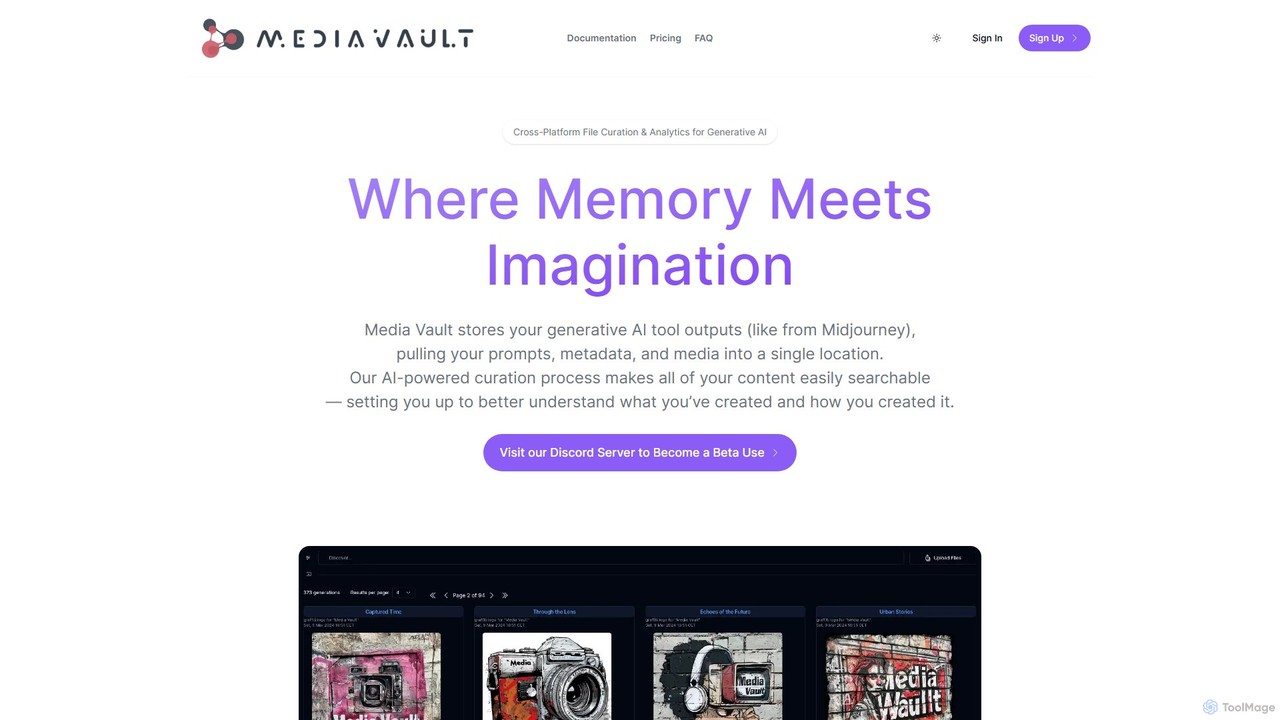
Media Vault AI is an intelligent cloud storage and curation platform designed for generative AI content. It automatically organizes your AI-generated media, prompts, and metadata from tools like Midjourney into a single, searchable library, providing powerful analytics to refine your creative process.

File Management
Visits 4.2KFavorites 100Likes 107

About File Management

AI-powered File Management tools are a specialized category within cloud storage solutions that leverage artificial intelligence to automate, optimize, and enhance the organization, retrieval, and security of digital files. These tools utilize machine learning algorithms for tasks such as intelligent categorization, automated tagging, and predictive analytics, transforming raw data into structured, easily accessible information. They significantly improve operational efficiency and data governance by reducing manual effort and minimizing human error in handling vast amounts of digital assets.

Core Features

  • Intelligent Categorization: Automatically sorts files into predefined or AI-suggested categories based on content, metadata, and usage patterns.
  • Automated Tagging & Metadata Extraction: Extracts key information and applies relevant tags, making files highly searchable and improving data discoverability.
  • Duplicate Detection & Deduplication: Identifies and helps eliminate redundant files, optimizing storage space and ensuring data integrity.
  • Smart Search & Retrieval: Enables natural language queries and context-aware search, allowing users to quickly find specific documents or information within large datasets.
  • Predictive Storage Optimization: Analyzes usage trends to suggest archiving, deletion, or relocation of files, enhancing storage efficiency and reducing costs.

Applicable Scenarios

AI File Management tools are invaluable for organizations and individuals dealing with large volumes of digital content. Legal firms use them for automated case document organization and e-discovery. Marketing teams leverage them for intelligent asset management, categorizing campaigns and media files. Research institutions benefit from smart data indexing and retrieval, streamlining access to vast research archives.

How to Choose

When selecting an AI File Management tool, consider its AI capabilities for automation (e.g., categorization accuracy, tagging intelligence), integration with existing cloud storage and enterprise systems, and scalability to handle growing data volumes. Evaluate security features, compliance certifications, and the user interface's intuitiveness. Finally, assess the pricing model based on storage, users, and AI feature usage.


Featured tool rankings

File Management use cases

1

Automated Legal Document Categorization

Legal professionals often manage thousands of case documents, contracts, and research papers. AI File Management tools can automatically categorize these documents by case number, client, document type, and relevant legal topics, using natural language processing. This significantly reduces the manual effort of filing and ensures quick retrieval during litigation or research, saving hundreds of hours per year and minimizing errors.

2

Intelligent Media Asset Tagging for Marketing

Marketing teams frequently work with a vast library of images, videos, and audio files for campaigns. An AI File Management system can automatically analyze the content of these media assets, applying descriptive tags (e.g., "product launch," "summer collection," "customer testimonial," "logo"). This enables marketers to quickly search for and locate specific assets, improving content reuse and accelerating campaign creation cycles.

3

Duplicate File Cleanup and Storage Optimization

IT administrators in large enterprises often face challenges with redundant files consuming valuable storage space and complicating data backups. AI File Management tools can intelligently identify exact and near-duplicate files across various storage locations. They can then suggest or automate the deletion or consolidation of these duplicates, leading to significant cost savings on storage and improved data management efficiency.

4

Smart Content Retrieval for Research & Development

R&D departments generate extensive reports, experimental data, and technical specifications. Researchers can use AI File Management to perform context-aware searches, asking questions in natural language rather than relying on exact keywords. The AI can understand the intent and retrieve relevant documents, even if the exact terms aren't present, drastically cutting down research time and fostering innovation.

5

Automated Compliance Tagging for Regulated Industries

Organizations in finance, healthcare, or government must adhere to strict regulatory compliance standards for document retention and access. AI File Management tools can automatically scan documents for sensitive information (e.g., PII, financial data) and apply appropriate compliance tags and access controls. This ensures that documents meet regulatory requirements without extensive manual review, reducing audit risks.

6

Predictive Archiving for Data Lifecycle Management

Enterprises accumulate vast amounts of data, much of which becomes inactive over time but must be retained. AI File Management systems can analyze file access patterns and predict when files are no longer actively used. They can then automatically move these files to more cost-effective archival storage tiers, optimizing the overall data lifecycle management strategy and reducing operational expenses.

File Management FAQ

What are AI File Management tools?

AI File Management tools are software solutions that use artificial intelligence, primarily machine learning and natural language processing, to automate and enhance the organization, search, and security of digital files. Unlike traditional file systems, they can intelligently categorize content, extract metadata, detect duplicates, and offer smart search capabilities, significantly streamlining data handling and improving accessibility.

How do AI File Management tools differ from standard cloud storage?

While standard cloud storage provides a place to store files, AI File Management tools add an intelligent layer on top. Cloud storage focuses on accessibility and basic organization (folders). AI File Management, however, actively processes and understands file content, automating tasks like tagging, categorization, and deduplication. It transforms passive storage into an active, intelligent data management system, offering deeper insights and automation beyond simple storage.

What are the main benefits of using AI File Management?

The primary benefits include vastly improved efficiency in file organization and retrieval, significant time savings from automating manual tasks like tagging and sorting, and enhanced data accuracy due to reduced human error. Users also gain better insights into their data, optimize storage costs through intelligent deduplication and archiving, and bolster compliance efforts with automated sensitive data identification and access controls.

What features should I look for in an AI File Management solution?

Key features to prioritize include robust intelligent categorization and automated tagging capabilities, advanced smart search with natural language processing, and efficient duplicate detection and deduplication. Also consider integration options with your existing cloud storage and enterprise applications, strong security protocols, scalability for future growth, and an intuitive user interface for ease of adoption.

Can AI File Management tools improve data security and compliance?

Yes, significantly. AI File Management tools can automatically identify and tag sensitive information within documents, enabling the enforcement of granular access controls and data retention policies. This automation helps ensure compliance with regulations like GDPR, HIPAA, or CCPA by minimizing the risk of human error in handling confidential data. They also provide audit trails and can flag unusual access patterns, enhancing overall data security posture.