ToolMage
Sign in

Best 1 Cms AI tools

Popular Cms AI tools include Starbase, helping you work more efficiently.

Starbase

Starbase

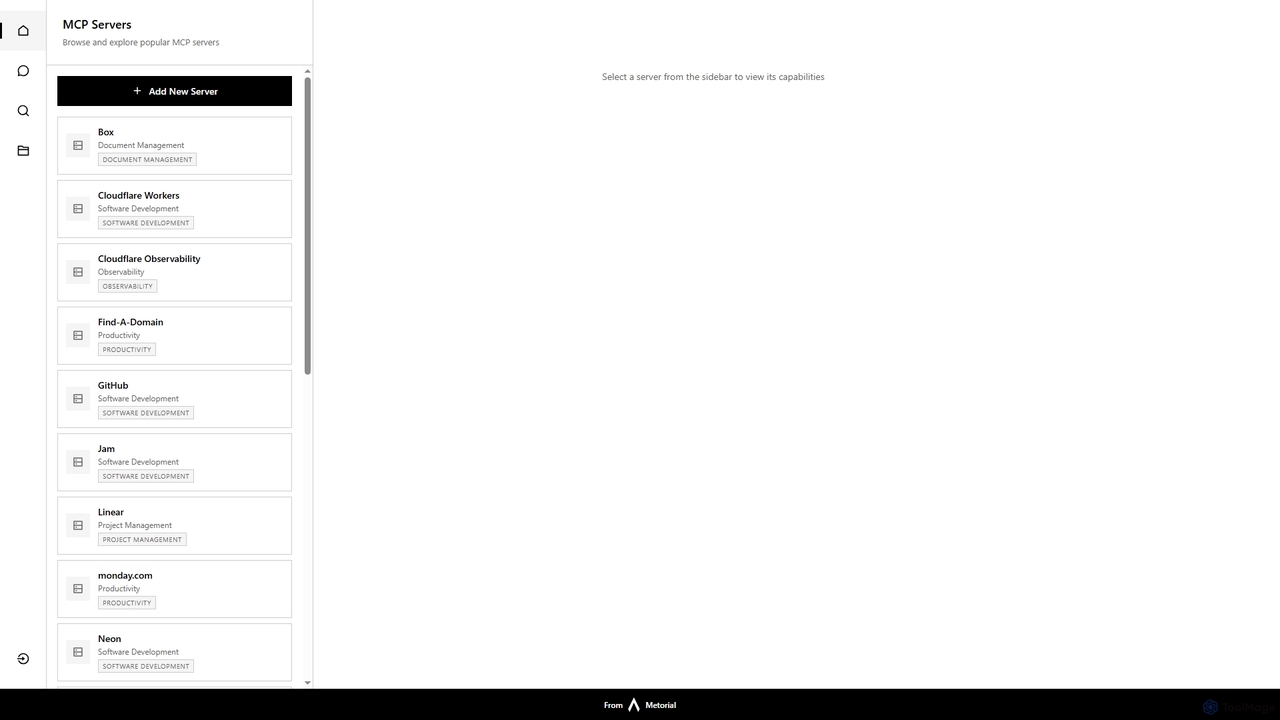
Starbase by Metorial is a comprehensive platform designed to centralize the browsing, exploration, and management of various popular software services. It integrates a wide array of tools across software development, project management, productivity, and infrastructure, offering a unified dashboard to view and interact with their capabilities.

Security
Visits 4.1KFavorites 121Likes 123

About Cms

AI Content Management Systems (CMS) are platforms that leverage artificial intelligence to automate and enhance the creation, management, personalization, and analysis of digital content. These systems integrate machine learning models to perform tasks like generating text, automatically tagging articles, and optimizing content for search engines. The primary value of an AI CMS lies in its ability to streamline content workflows, deliver highly personalized experiences to users, and provide data-driven insights for content strategy. They move beyond simple content storage to become intelligent hubs for digital engagement.

Core Features

  • AI Content Generation: Automatically create drafts, headlines, product descriptions, and social media posts from simple prompts.
  • Automated Tagging & Metadata: Uses Natural Language Processing (NLP) to analyze content and apply relevant tags, categories, and metadata for improved organization and searchability.
  • Personalization Engine: Dynamically adapts website content, layouts, and recommendations for individual users based on their behavior and profile data.
  • Intelligent SEO Suggestions: Provides real-time feedback and recommendations on keyword usage, readability, internal linking, and meta descriptions to improve search rankings.
  • Content Performance Analytics: Employs predictive analytics to forecast content engagement, identify performance trends, and suggest topics with high potential.

Use Cases

AI CMS platforms are widely used by marketing teams to scale content production, e-commerce businesses to enhance product discovery, and large media publishers to manage vast archives and personalize news delivery. They are also valuable for corporate enterprises looking to improve knowledge management and internal communications.

How to Choose

When selecting an AI CMS, evaluate the depth of its AI capabilities—whether it offers generative features, personalization, or just analytics. Consider its integration potential with your existing marketing stack (CRM, analytics tools). Also, assess the user interface for ease of use by non-technical content creators and check its scalability to support future growth.

Featured tool rankings

Cms use cases

1

Automate Blog Post Creation for Marketing

A content marketing manager for a tech startup needs to increase blog output without hiring more writers. Using an AI CMS, they input a target keyword and a brief outline. The AI generates a complete, well-structured draft, including an introduction, main body paragraphs, and a conclusion. The manager then spends about 20% of the usual time editing and refining the draft, allowing the team to triple its weekly article publication rate and boost organic traffic.

2

Personalize E-commerce Homepage Content

An e-commerce store manager wants to increase conversion rates by showing more relevant products. The AI CMS analyzes a visitor's browsing history, past purchases, and real-time behavior. It then automatically populates the homepage banner and featured product sections with items tailored to that specific user. This dynamic personalization leads to a higher click-through rate and a measurable increase in average order value without manual intervention.

3

Streamline Content Tagging for a Media Archive

A large news organization has an archive of over one million articles with inconsistent tagging. A digital asset manager uses the AI CMS to process the entire archive. The system's NLP capabilities read each article, identify key topics, entities, and sentiment, and apply a standardized set of tags automatically. This makes the archive fully searchable and enables the website to surface relevant historical content alongside new articles, increasing user engagement.

4

Optimize Landing Pages with AI A/B Testing

A digital marketer is tasked with improving the conversion rate of a key product landing page. Instead of manually creating variants, they use the AI CMS's generative features to produce five different headlines and two call-to-action button texts. The system then automatically runs a multi-variant test, directing traffic to different combinations and identifying the highest-performing version. This accelerates the optimization cycle from weeks to days.

5

Automate Image Alt-Text for SEO and Accessibility

A website administrator for a large university needs to ensure their site complies with accessibility standards (WCAG). Manually writing alt-text for thousands of images is unfeasible. They utilize the AI CMS, which employs computer vision to analyze each image and generate accurate, descriptive alt-text. This not only makes the site accessible to users with screen readers but also significantly improves image SEO ranking.

6

Generate Multilingual Product Descriptions

A global retail brand is expanding into three new markets. Their localization team uses an AI CMS to accelerate the creation of product descriptions. They provide the base English description, and the AI generates localized versions for Spanish, French, and German, adapting tone and cultural nuances. The team reviews and approves the AI-generated text, reducing the translation and content creation timeline by over 70% and ensuring a consistent brand voice across regions.

Cms FAQ

What is an AI Content Management System (CMS)?

An AI Content Management System is a platform for creating and managing digital content that is enhanced with artificial intelligence features. Unlike traditional CMSs that primarily store and display content, an AI CMS actively assists in the content lifecycle. Key capabilities include generating text and images, automatically tagging and organizing content, personalizing user experiences, and providing data-driven SEO recommendations.

How does an AI CMS differ from a traditional CMS like WordPress?

The main difference lies in automation and intelligence. A traditional CMS like WordPress provides a framework for you to manually create, manage, and publish content. An AI CMS builds on that foundation by adding a layer of intelligence. For example, instead of you manually finding a keyword, an AI CMS can suggest one. Instead of you writing all the text, it can generate a draft. It focuses on augmenting the creator's abilities and automating repetitive tasks.

What are the key features to look for in an AI CMS?

When evaluating an AI CMS, look for these core features:

  • Generative AI Capabilities: The ability to create text, images, or code from prompts.
  • Personalization Engine: Tools to tailor content delivery to individual users.
  • Intelligent SEO Tools: Real-time analysis and suggestions for improving search performance.
  • Automated Tagging: NLP-based features for automatic content categorization and metadata generation.
  • Analytics and Insights: Dashboards that go beyond page views to offer predictive insights on content performance.

Who can benefit from using an AI CMS?

A wide range of users can benefit from an AI CMS. Marketing teams can scale content creation and personalize campaigns. E-commerce businesses can improve product discovery and increase sales. Large publishers and media companies can manage vast content libraries more efficiently. Even individual creators and small businesses can use it to save time on content production and SEO optimization, allowing them to compete more effectively.

How does AI help with SEO in a CMS?

AI significantly enhances SEO within a CMS in several ways. It can perform keyword research and suggest relevant topics with high traffic potential. During content creation, it provides real-time feedback on keyword density, readability, and internal linking opportunities. Furthermore, AI can automatically generate SEO-critical elements like meta descriptions and image alt-text, ensuring technical SEO best practices are consistently applied across the entire site.