StartupSpotlight
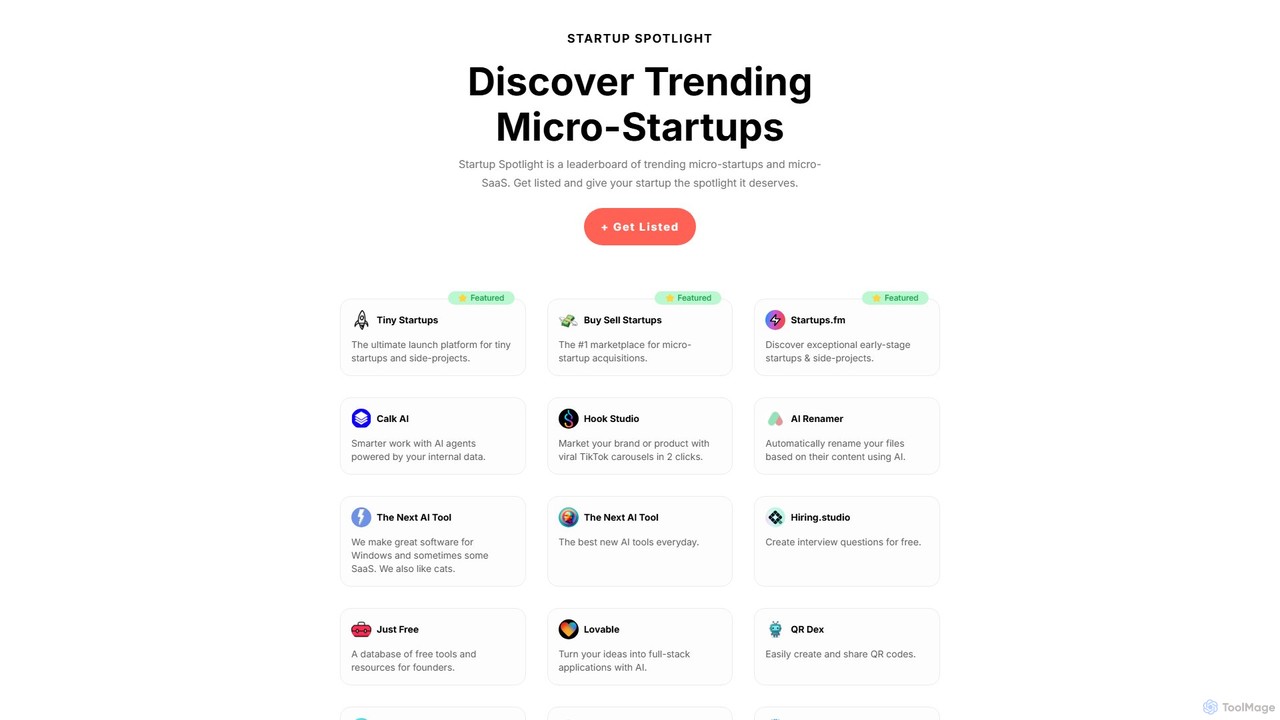
StartupSpotlight is a premier discovery platform dedicated to showcasing trending micro-startups and micro-SaaS products. It serves as a …
StartupSpotlight is a premier discovery platform dedicated to showcasing trending micro-startups and micro-SaaS products. It serves as a curated directory and launchpad for indie hackers and entrepreneurs, helping them gain visibility and attract early adopters. For tech enthusiasts and investors, it's a go-to resource for finding innovative new tools, side projects, and potential acquisition opportunities in the vibrant startup ecosystem.
About Indie Hacker
Indie Hacker communities are specialized online platforms for independent entrepreneurs, developers, and creators building their own digital products. These spaces are centered around the ethos of 'building in public,' facilitating peer-to-peer support, knowledge sharing, and idea validation. Members share progress, revenue metrics, and challenges to receive actionable feedback from a community of peers on similar journeys. Unlike general business forums, these communities provide a focused environment for navigating the unique challenges of bootstrapping a business, from choosing a tech stack to finding the first customers.
Core Features
- Build in Public Feeds: Members can post regular updates on their progress, including milestones, revenue, and user metrics.
- Niche Discussion Channels: Dedicated spaces for topics like SaaS, marketing, development, and design tailored to solo founders.
- Peer Feedback & Validation: A platform to share new ideas, minimum viable products (MVPs), and landing pages for constructive criticism.
- Knowledge Sharing: Access to case studies, guides, and discussions on practical, low-cost growth strategies.
- Accountability Groups: Features to connect with other members for mutual motivation and progress tracking.
Use Cases
These communities are ideal for solo founders, bootstrapped entrepreneurs, developers turning a side project into a business, and small, lean startup teams. For instance, a developer can validate a SaaS idea before writing a single line of code, or a founder can share their growth journey to build an audience of early adopters. They are also a valuable resource for non-technical founders seeking marketing and sales strategies that don't require a large budget.
How to Choose
When selecting an Indie Hacker community, consider the platform's primary focus—some are more technical, while others are marketing-oriented. Evaluate the quality of discussions and the activity level to ensure it's a vibrant space. Also, consider the membership model (free, freemium, or paid), as paid communities often offer more curated content and a higher level of engagement. Finally, look for features that match your goals, such as dedicated accountability groups or private messaging.

Indie HackerUse Cases
Validating a New SaaS Idea Before Building
A developer has an idea for a niche project management tool for creative agencies. Before investing months in development, they post a detailed concept in an Indie Hacker community. The post outlines the target audience, the specific problem it solves, and a mockup of the core features. Within days, they receive valuable feedback from other SaaS founders and agency owners, helping them refine the feature set, identify potential competitors, and confirm that there is a genuine market need for the product, saving significant time and resources.
Finding Early Adopters by Building in Public
A solo founder is creating a new analytics tool. From day one, she shares her journey publicly in a community forum. She posts weekly updates about development progress, design decisions, and even her revenue goals. This transparency attracts a following of data analysts and marketers interested in her product. When she launches the beta version, she already has a waitlist of over 200 engaged users who have been following her story, providing a crucial initial user base for feedback and testimonials.
Solving a Specific Technical Challenge
A solo developer is building a mobile app and encounters a performance issue with a specific database query. After spending hours trying to debug it alone, they post the problematic code snippet and a description of the issue in a technical channel of an Indie Hacker community. Within an hour, two experienced developers provide suggestions, one of whom points out an inefficient indexing strategy. By implementing the advice, the developer resolves the performance bottleneck, a task that might have taken days to solve independently.
Crowdsourcing a Low-Budget Marketing Strategy
A founder with a strong technical background has launched a B2B SaaS product but struggles with marketing. With a minimal budget, traditional advertising is not an option. They post a question in the community asking for proven, low-cost customer acquisition strategies. Members share their own successful experiences with content marketing, targeted SEO for niche keywords, cold outreach templates that convert, and strategies for getting featured on relevant blogs. This provides a practical, actionable marketing playbook tailored to a bootstrapped startup.
Finding an Accountability Partner to Stay Motivated
Working alone can be isolating and lead to procrastination. A freelance designer decides to turn her collection of UI kits into a full-fledged product. To stay on track, she posts in an 'accountability' section of a community, looking for a partner. She connects with a developer from another country working on his own project. They schedule brief weekly video calls to share what they accomplished, what they struggled with, and their goals for the next week. This simple routine provides the structure and motivation needed to consistently make progress.
Sharing Growth Milestones to Build Authority
After 18 months of hard work, a founder's micro-SaaS product reaches $5,000 in Monthly Recurring Revenue (MRR). He writes a detailed post in the community, breaking down the entire journey. He shares his initial idea, the tech stack he chose, the marketing channels that worked (and those that didn't), and key lessons learned. This transparent and valuable content not only helps other aspiring founders but also establishes his authority in the space, driving traffic to his product and opening up networking opportunities with other successful entrepreneurs.