Faindly
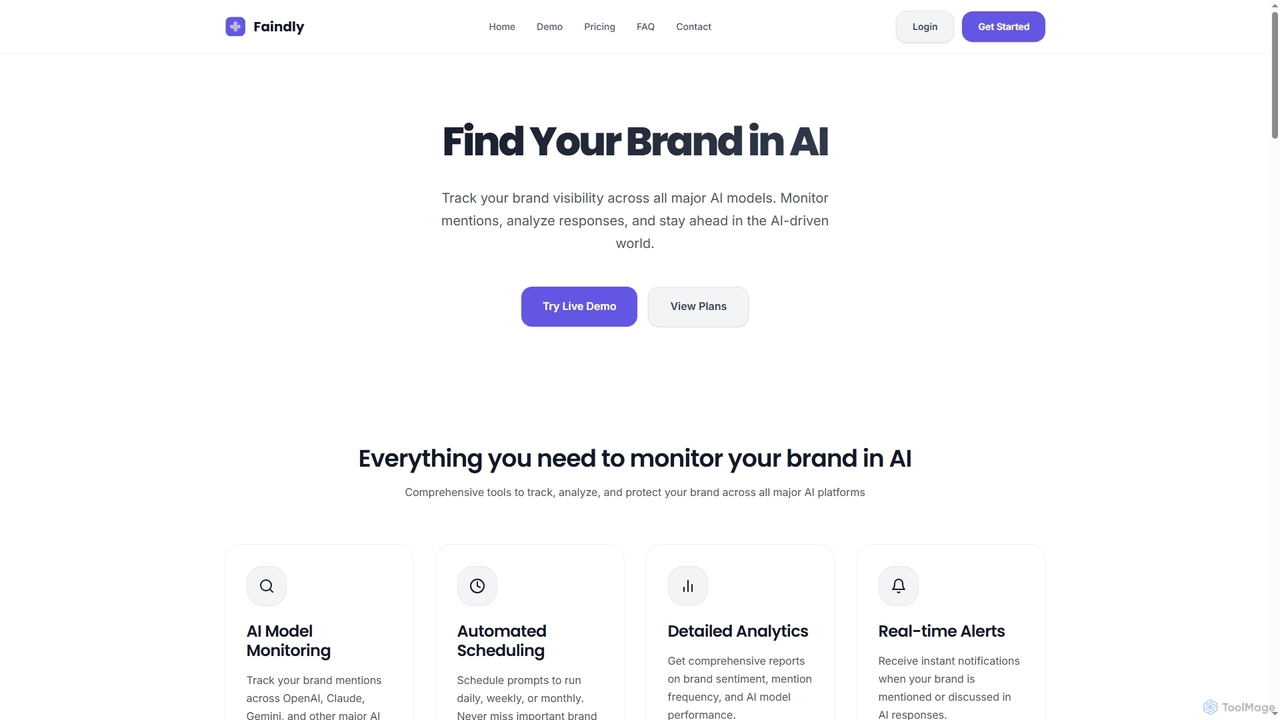
Faindly is an AI visibility tracker that monitors your brand's presence across major AI models like ChatGPT, Claude, …
Faindly is an AI visibility tracker that monitors your brand's presence across major AI models like ChatGPT, Claude, and Gemini. It provides real-time alerts, detailed analytics on sentiment and mention frequency, and automated scheduling for prompts, helping businesses protect their reputation and identify growth opportunities in the AI-driven landscape.
About Competitive Intelligence
Competitive Intelligence tools are AI-powered platforms designed to automatically gather, analyze, and synthesize public data about competitors, markets, and customers. They leverage machine learning and natural language processing (NLP) to monitor a vast range of sources, including websites, social media, news articles, and customer reviews. These tools transform unstructured data into structured, actionable insights, enabling businesses to track competitor strategies, identify market trends, and understand customer sentiment in real-time. This provides a dynamic and comprehensive view of the competitive landscape, supporting data-driven decision-making.
Core Features
- Automated Data Collection: Gathers information from websites, social media, news outlets, forums, and review sites without manual intervention.
- Competitor Monitoring: Tracks competitors' product launches, pricing changes, marketing campaigns, and hiring activities in real-time.
- Market Trend Analysis: Identifies emerging industry trends, consumer behavior shifts, and technological disruptions from public discourse.
- Sentiment Analysis: Measures public perception and sentiment towards brands, products, or specific topics across the web.
- Content & SEO Analysis: Deconstructs competitors' content strategies and SEO performance to uncover keyword gaps and opportunities.
Use Cases
These tools are widely used by marketing teams for campaign planning, product managers for feature benchmarking, and sales teams for identifying strategic opportunities. Corporate strategists also rely on them for market entry analysis, M&A research, and understanding industry-wide shifts. They are valuable in fast-moving sectors like e-commerce, SaaS, and consumer technology.
How to Choose
When selecting a Competitive Intelligence tool, consider the breadth and depth of its data sources. Evaluate its analytical capabilities, such as the accuracy of its sentiment analysis and trend detection. Assess the user-friendliness of its dashboard and reporting features. Finally, check for integration options with your existing workflow tools, like CRM or business intelligence platforms, to ensure seamless data flow.
Competitive IntelligenceUse Cases
Track Competitor Marketing Campaigns
A marketing manager planning a new product launch can use a competitive intelligence tool to monitor rivals' recent advertising strategies. By analyzing their ad creatives, social media messaging, and promotional offers across different channels, the manager can identify which tactics generate the most engagement. This data reveals competitors' successful approaches and potential weaknesses, enabling the development of a more effective campaign strategy with a unique positioning angle that resonates better with the target audience.
Benchmark Product Features and Pricing
A product manager can leverage a competitive intelligence tool to inform their product roadmap. The tool aggregates and analyzes competitor product descriptions, user reviews from various platforms, and pricing pages. This process helps identify feature gaps in the market, common customer complaints about rival products, and different pricing structures. Armed with these insights, the product manager can prioritize features that address unmet market needs and devise a pricing strategy that is both competitive and profitable.
Monitor Brand Reputation and Customer Sentiment
A public relations or brand manager is tasked with maintaining a positive brand image. They can set up real-time alerts within a competitive intelligence tool for any mention of their brand across news sites, forums, and social media. The tool's sentiment analysis feature automatically categorizes mentions as positive, negative, or neutral. This allows the manager to quickly identify and respond to negative feedback or potential PR crises, proactively managing the brand's reputation and engaging with the community effectively.
Identify Emerging Market Trends
A business strategist or market analyst needs to stay ahead of industry shifts. Using a competitive intelligence tool, they can analyze broad conversations across industry news, academic papers, and social media to spot emerging trends. The AI can detect patterns and shifts in consumer behavior, new technologies gaining traction, or regulatory changes being discussed. This data-driven approach provides early warnings and identifies new growth opportunities, allowing the company to make strategic decisions, such as entering a new market or investing in new technology, before the competition does.
Optimize SEO and Content Strategy
An SEO specialist aims to improve organic search visibility. They can use a competitive intelligence tool to analyze competitors' top-ranking keywords, backlink profiles, and most successful content formats. The tool can identify 'keyword gaps'—terms for which competitors rank but their own company does not. This analysis provides a clear, data-informed roadmap for creating content that targets high-opportunity keywords, building a stronger backlink profile, and ultimately outperforming competitors in search engine results pages.
Enhance Sales Enablement and Lead Generation
A sales team lead can use competitive intelligence to find better-qualified leads and improve pitch effectiveness. The tool can monitor target accounts for buying signals, such as announcements of new funding, hiring for specific roles, or online complaints about a current provider (a competitor). This information allows the sales team to personalize their outreach with timely and relevant insights. They can also use intelligence on competitor weaknesses as powerful talking points to handle objections and demonstrate superior value, ultimately increasing their close rate.