ToolMage
Sign in

Best 3 Brand Monitoring AI tools for Marketing

Popular Brand Monitoring AI tools in Marketing include Kommi, LeakLake, and Faindly, helping you work more efficiently.

LeakLake
Freemium

LeakLake

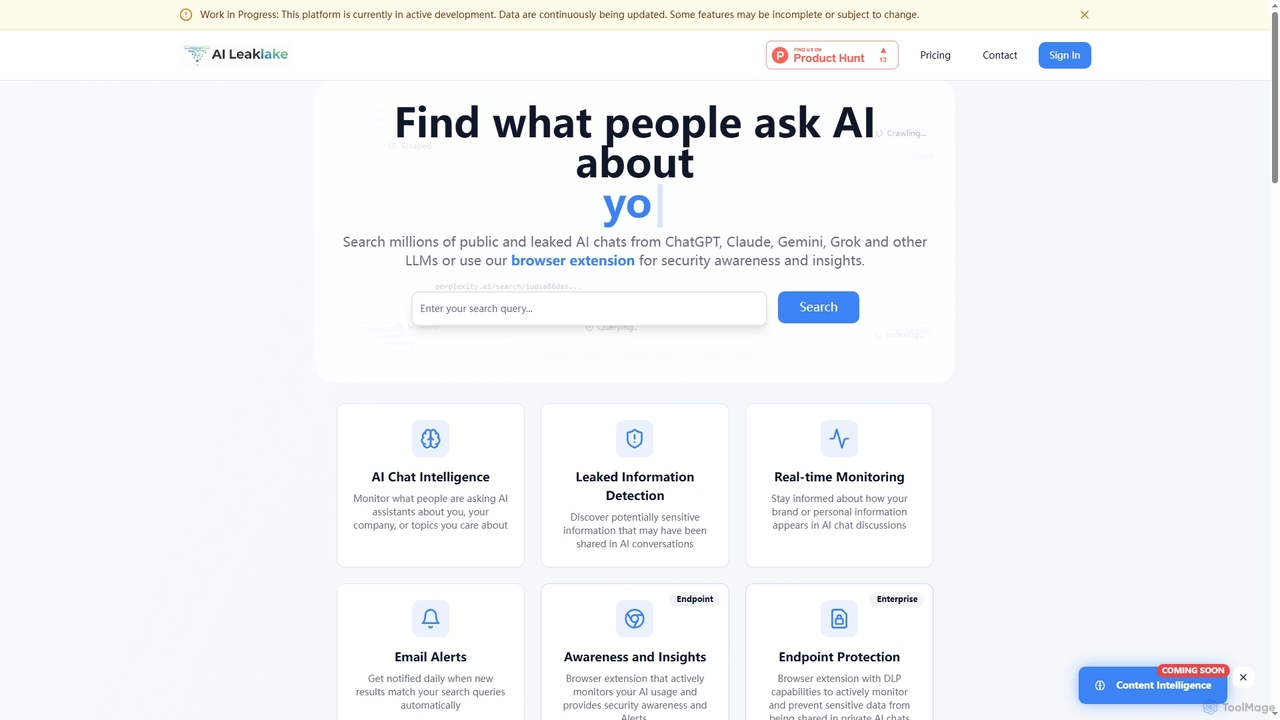
LeakLake is a specialized search engine for public and leaked AI conversations from platforms like ChatGPT, Claude, and Gemini. It helps users monitor brand reputation, detect sensitive data exposure, and gain insights into public AI usage through a web platform, browser extension, and API.

Api
Visits 7.1KFavorites 97Likes 108
Kommi
Freemium

Kommi

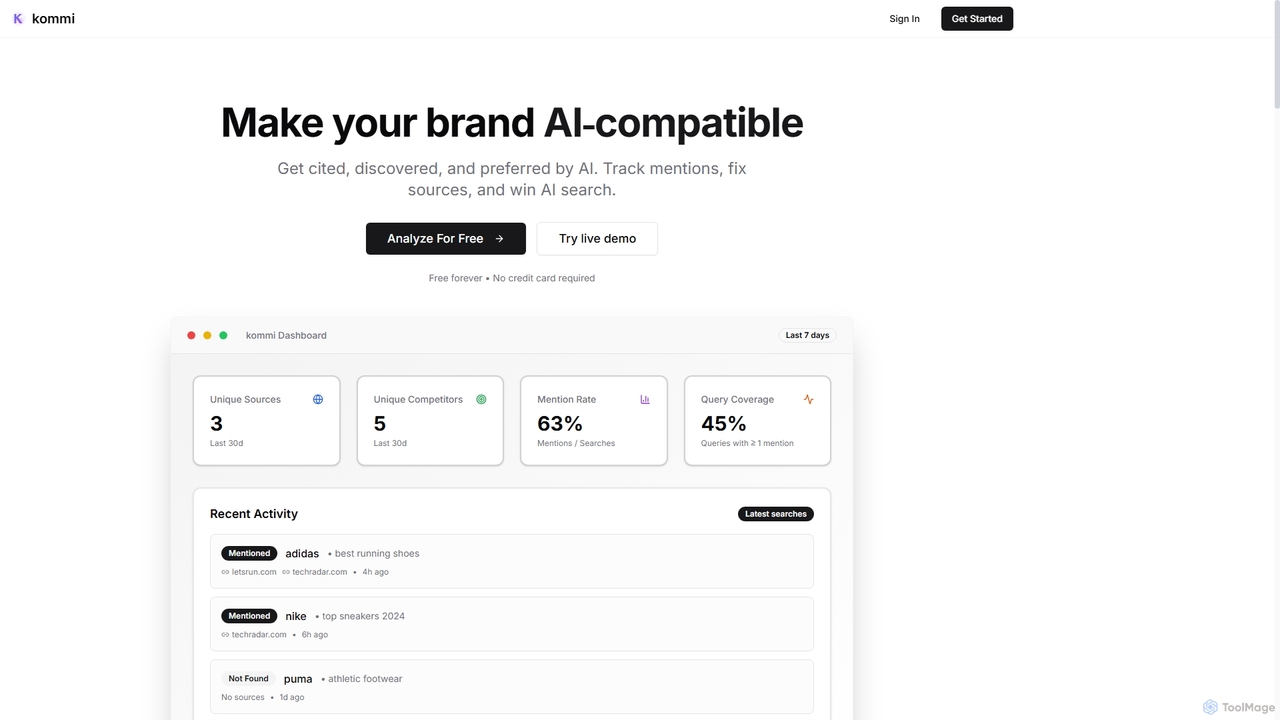
Kommi is an AI-powered brand visibility and reputation management tool that helps businesses track how often their brand is mentioned and cited by major AI models like ChatGPT, Claude, and Gemini. It provides comprehensive analytics, competitive insights, and source identification to optimize brand presence in AI-driven search results.

Competitive Intelligence
Visits 8.8KFavorites 126Likes 99
Faindly
Paid

Faindly

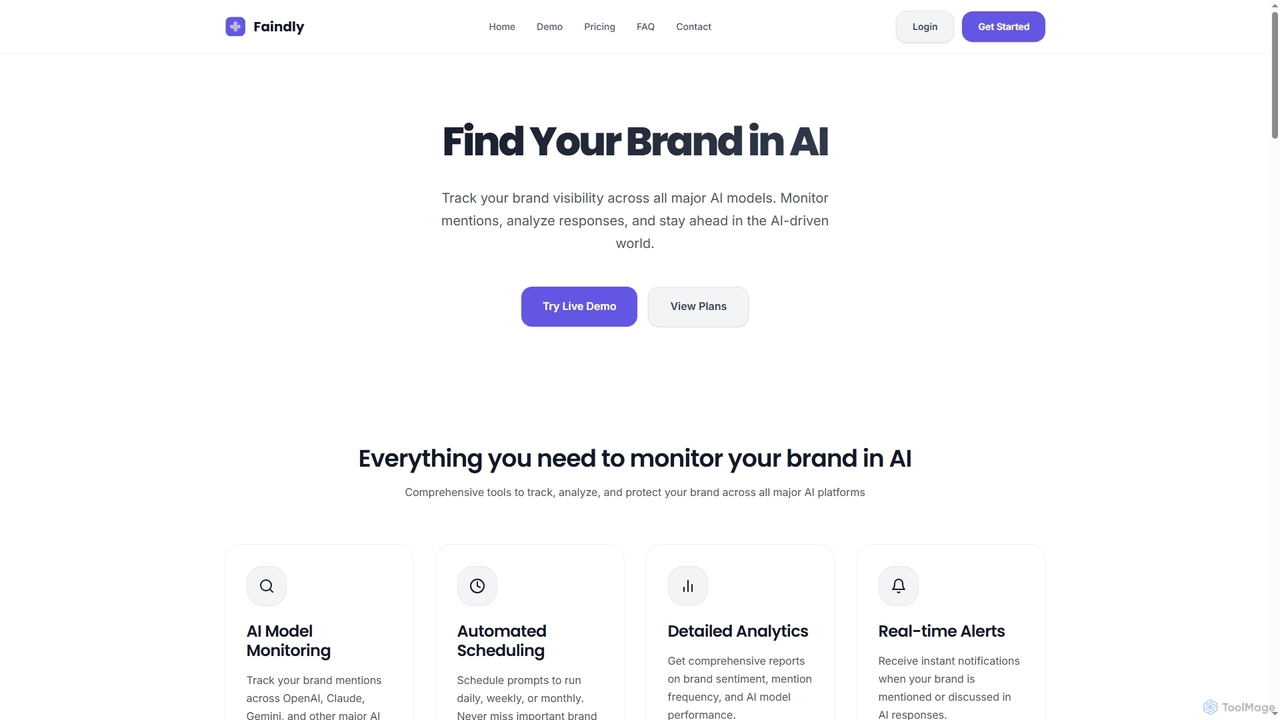
Faindly is an AI visibility tracker that monitors your brand's presence across major AI models like ChatGPT, Claude, and Gemini. It provides real-time alerts, detailed analytics on sentiment and mention frequency, and automated scheduling for prompts, helping businesses protect their reputation and identify growth opportunities in the AI-driven landscape.

Sentiment Analysis
Visits 6.1KFavorites 127Likes 139

About Brand Monitoring

Brand Monitoring tools are AI-powered solutions designed to track and analyze mentions of a brand, product, or service across various online channels. These tools leverage natural language processing (NLP) and machine learning to identify sentiment, trends, and key conversations in real-time. By continuously scanning social media, news sites, blogs, forums, and review platforms, they provide businesses with critical insights into public perception and market dynamics. This enables proactive reputation management, competitive analysis, and informed strategic decision-making within the broader marketing landscape.

Core Features

  • Real-time Alerts: Instantly notifies users of new mentions or significant shifts in sentiment.
  • Sentiment Analysis: Automatically categorizes mentions as positive, negative, or neutral to gauge public opinion.
  • Competitor Tracking: Monitors competitor activities and public perception to identify market opportunities and threats.
  • Influencer Identification: Pinpoints key voices and opinion leaders discussing the brand or industry.
  • Reporting & Analytics: Generates comprehensive reports on mention volume, sentiment trends, and source distribution.

Use Cases

Businesses across various sectors utilize Brand Monitoring tools to maintain a pulse on their market presence. Marketing teams use them for campaign performance tracking, while PR professionals leverage them for crisis management and reputation safeguarding. Customer service departments can also identify and address customer issues proactively, ensuring timely responses and improved satisfaction.

How to Choose

When selecting a Brand Monitoring tool, consider its coverage (which platforms it monitors), the accuracy of its sentiment analysis, and its real-time alert capabilities. Evaluate the depth of its analytics and reporting features, as well as its integration options with existing marketing or CRM systems. Scalability, ease of use, and pricing models are also crucial factors to ensure it aligns with your business needs and budget.

Brand Monitoring use cases

1

Proactive Reputation Crisis Management

Public relations teams use Brand Monitoring AI tools to detect sudden spikes in negative mentions or critical discussions about their brand. By receiving real-time alerts, they can quickly assess the situation, identify the source, and formulate a rapid response strategy to mitigate potential damage before it escalates, protecting brand image and trust.

2

Gaining Competitor Intelligence

Marketing analysts employ Brand Monitoring tools to track competitor mentions, product launches, and customer feedback across the web. This allows them to understand competitor strengths and weaknesses, identify market gaps, and benchmark their own performance against rivals. Insights gained inform strategic positioning and product development.

3

Measuring Marketing Campaign Performance

Marketing managers utilize Brand Monitoring AI to track the volume and sentiment of discussions related to specific campaigns or product launches. They can see which messages resonate, identify key influencers amplifying their content, and measure overall brand buzz. This data helps optimize ongoing campaigns and refine future marketing strategies for better ROI.

4

Capturing Customer Feedback for Product Improvement

Product development teams and customer experience managers use Brand Monitoring to aggregate unsolicited customer feedback from reviews, forums, and social media. By analyzing sentiment and common themes, they can identify pain points, popular features, and emerging needs, directly informing product updates and service enhancements.

5

Identifying Influencers and Partnership Opportunities

Social media strategists leverage Brand Monitoring tools to discover influential voices and communities discussing their industry or brand. These tools help identify potential brand ambassadors, content creators, or strategic partners whose audience aligns with their target market, facilitating authentic collaborations and expanding reach.

6

Spotting Emerging Market Trends

Business strategists and market researchers use Brand Monitoring to identify nascent trends, shifts in consumer preferences, and new industry topics. By analyzing discussions and keywords over time, they can anticipate market changes, discover unmet needs, and position their brand to capitalize on future opportunities, staying ahead of the curve.

Brand Monitoring FAQ

What are Brand Monitoring AI tools?

Brand Monitoring AI tools are software solutions that use artificial intelligence, primarily natural language processing (NLP) and machine learning, to automatically track and analyze mentions of a brand, product, or keyword across the internet. They scan social media, news sites, blogs, forums, and review platforms to provide insights into public perception, sentiment, and discussion trends, helping businesses manage their online reputation and understand market dynamics.

How do Brand Monitoring tools differ from Social Listening tools?

While often used interchangeably, Brand Monitoring primarily focuses on tracking specific mentions of a brand, product, or predefined keywords to manage reputation and measure direct impact. Social Listening, on the other hand, is broader; it involves analyzing conversations around topics, industries, and competitors to uncover deeper insights, identify trends, and understand consumer behavior. Brand Monitoring is reactive and specific, while Social Listening is proactive and exploratory, though many modern tools offer capabilities for both.

What key features should I look for in a Brand Monitoring tool?

When choosing a Brand Monitoring tool, prioritize features like comprehensive coverage across various online channels (social media, news, blogs, forums), accurate real-time alerts for immediate notification of mentions, and robust sentiment analysis to gauge public opinion. Additionally, look for strong reporting and analytics capabilities, competitor tracking, and the ability to identify key influencers. User-friendliness and integration with other marketing platforms are also crucial.

Who benefits most from using Brand Monitoring AI tools?

Brand Monitoring AI tools are highly beneficial for a wide range of professionals and organizations. Public relations teams use them for crisis management and reputation protection, while marketing departments leverage them for campaign tracking and competitive analysis. Customer service teams can proactively address customer issues, and product development teams gain valuable feedback for improvements. Essentially, any business or individual concerned with their online presence and public perception can benefit.

Can Brand Monitoring tools help with SEO?

Yes, Brand Monitoring tools can indirectly support SEO efforts. By identifying where your brand is mentioned online, you can discover potential backlink opportunities from reputable sources. Monitoring competitor mentions can reveal their link-building strategies. Furthermore, understanding public sentiment and trending topics related to your brand helps in creating relevant, high-quality content that ranks well and attracts organic traffic, improving your overall online visibility and authority.