PageTest.AI
PageTest.AI is an AI-powered platform for no-code A/B and multivariate testing. It helps marketers, bloggers, and businesses optimize …
PageTest.AI is an AI-powered platform for no-code A/B and multivariate testing. It helps marketers, bloggers, and businesses optimize website content like headlines and CTAs to improve engagement and conversion rates. Using a simple Chrome extension, you can select elements, get AI-generated variations, and track performance with data-backed insights.
Delineate
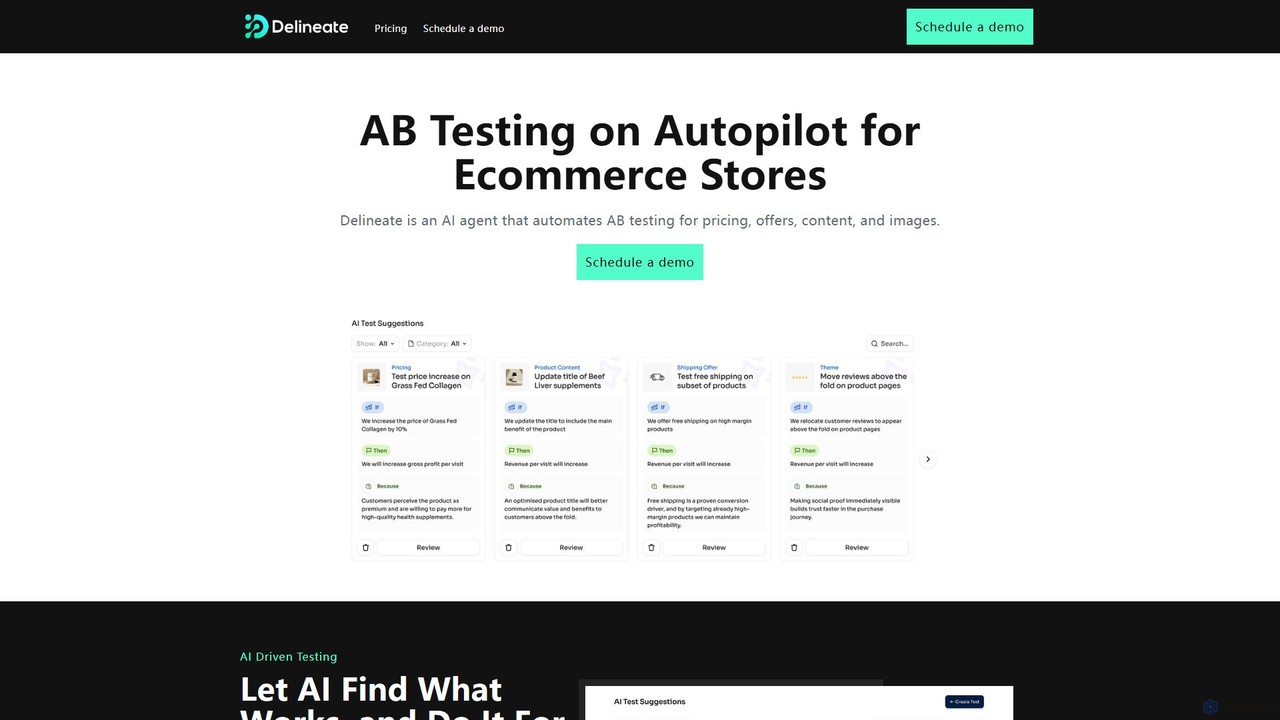
Delineate is an AI-powered agent for e-commerce stores that automates A/B testing for pricing, content, and images. It …
Delineate is an AI-powered agent for e-commerce stores that automates A/B testing for pricing, content, and images. It provides deep profit and LTV analytics to help businesses optimize for conversion rates, revenue, and overall profitability on autopilot.
Choosier
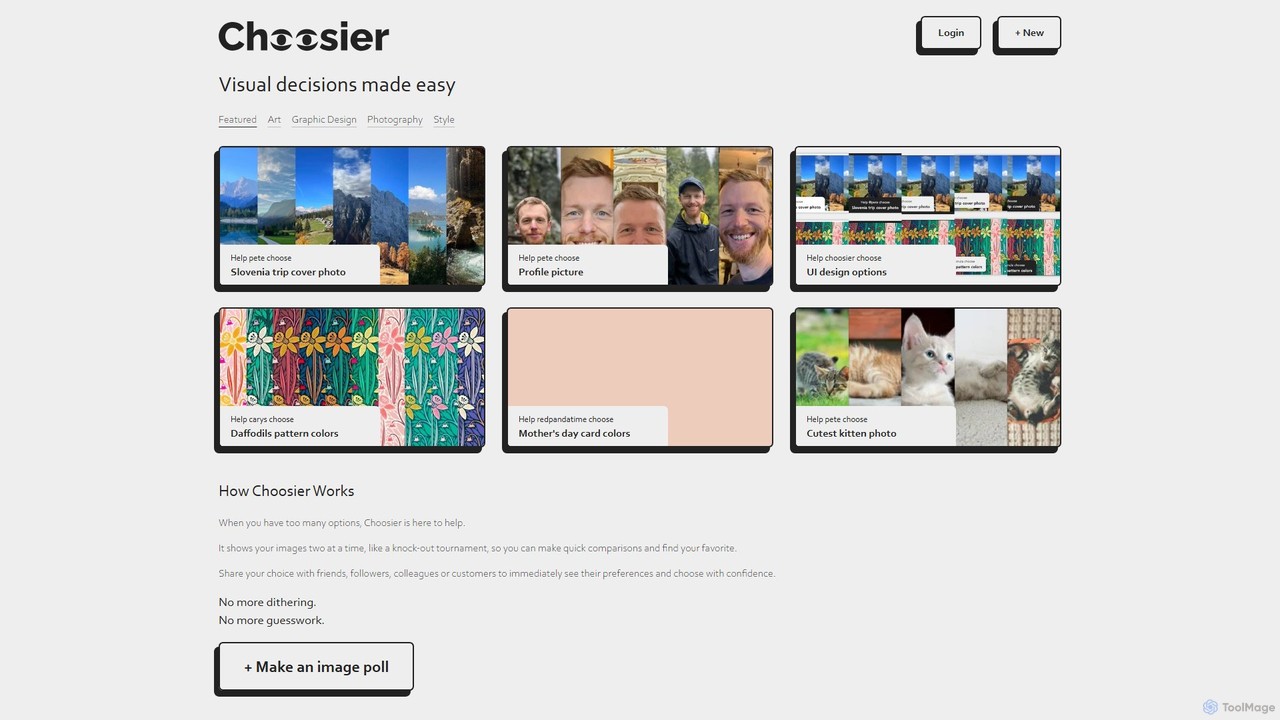
Choosier is a simple and intuitive online tool for creating image polls. It helps you make visual decisions …
Choosier is a simple and intuitive online tool for creating image polls. It helps you make visual decisions quickly by presenting options in a head-to-head, tournament-style format. Share your poll with a link and gather feedback from friends, colleagues, or customers to choose with confidence.
1Price
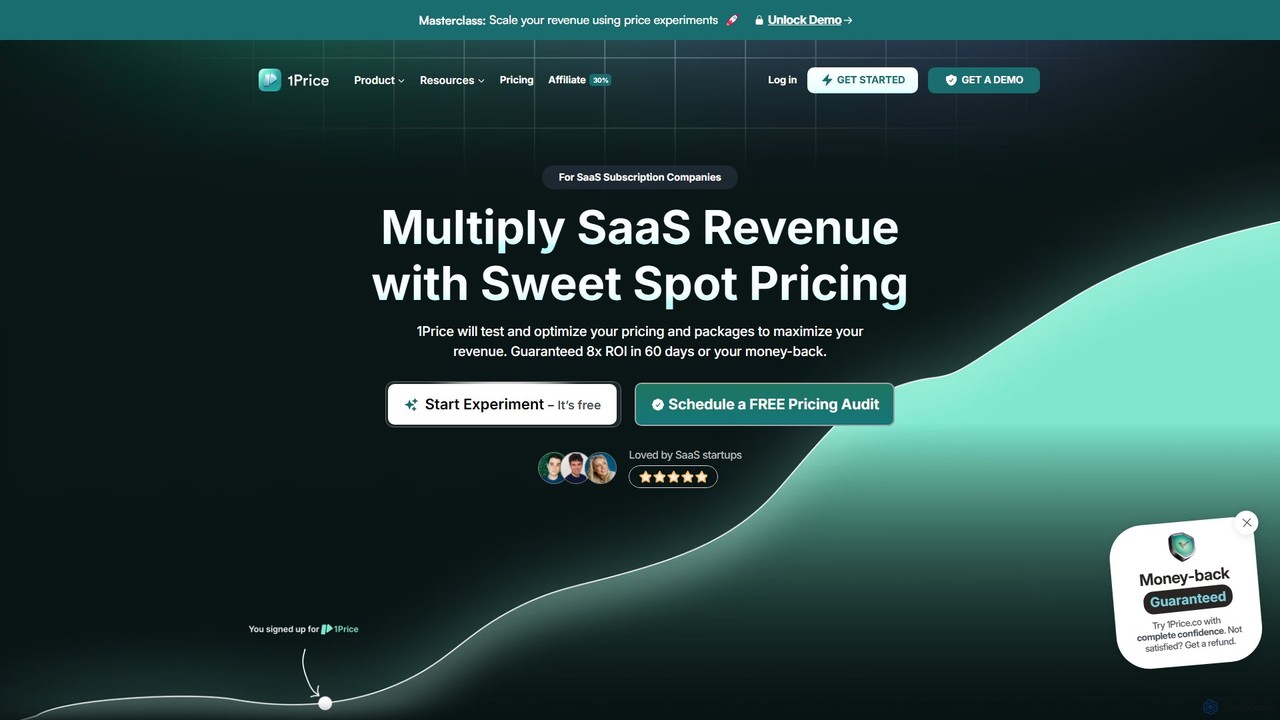
1Price is an automated price optimization platform for SaaS companies. It enables businesses to run various price experiments, …
1Price is an automated price optimization platform for SaaS companies. It enables businesses to run various price experiments, such as dynamic, localized, and tiered pricing, to discover the optimal price points that maximize revenue, LTV, and customer retention. With a guaranteed 8x ROI and seamless Stripe integration, 1Price helps you stop guessing and start making data-driven pricing decisions.
Webyn
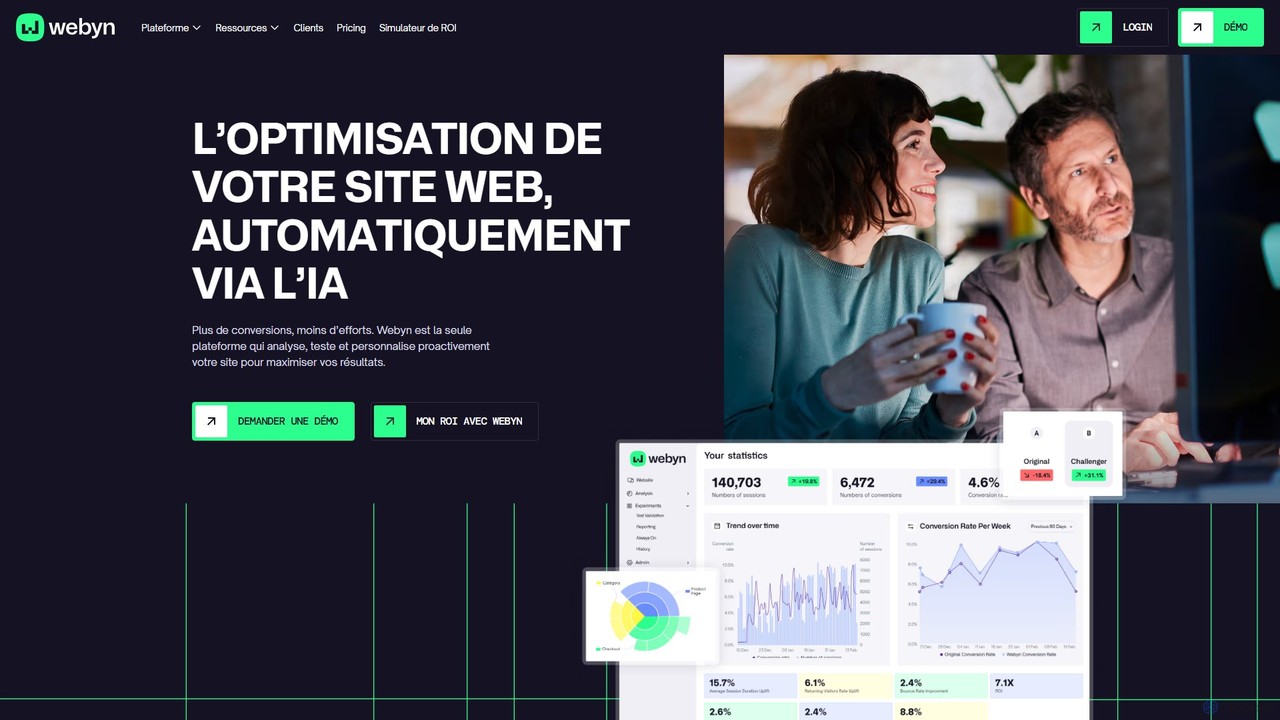
Webyn is an AI-powered platform for automated A/B testing, real-time personalization, and conversion rate optimization (CRO). It analyzes …
Webyn is an AI-powered platform for automated A/B testing, real-time personalization, and conversion rate optimization (CRO). It analyzes user behavior to identify conversion barriers and delivers tailored website experiences to boost engagement, increase conversions, and maximize ROI for e-commerce and digital businesses.
About A
AI Influencer Marketing Platforms are specialized tools that use artificial intelligence to discover, manage, and measure influencer marketing campaigns. These platforms leverage machine learning algorithms to analyze vast amounts of data, identifying ideal influencers based on audience demographics, engagement metrics, and brand affinity. They streamline the entire campaign workflow, from initial outreach to final performance reporting, enabling brands to build more effective, data-driven partnerships. This approach helps maximize ROI by connecting with authentic creators and predicting campaign outcomes with greater accuracy.
Core Features
- AI-Powered Discovery: Identifies relevant influencers by analyzing content, audience data, and performance history, going beyond simple keyword searches.
- Audience Authenticity Analysis: Detects fake followers, bots, and engagement pods to ensure an influencer's audience is genuine and engaged.
- Predictive Performance Analytics: Forecasts potential campaign reach, engagement rates, and conversion metrics before committing budget.
- Automated Campaign Management: Streamlines workflows for contracts, content approvals, payment processing, and compliance tracking.
- Real-time ROI Measurement: Tracks key performance indicators (KPIs) and provides comprehensive reports to measure the true impact of campaigns.
Use Cases
These platforms are widely used by direct-to-consumer (D2C) brands in sectors like fashion, beauty, and gaming to scale their outreach. Marketing agencies utilize them to manage multiple client campaigns efficiently, providing data-backed insights. E-commerce businesses also rely on these tools to find micro-influencers who can drive authentic product recommendations and sales.
How to Choose
When selecting a platform, consider the size and quality of its influencer database and its geographical coverage. Evaluate the accuracy of its predictive analytics and audience verification features. Check for integration capabilities with e-commerce platforms and social media channels like Instagram, TikTok, and YouTube. Finally, compare pricing models, such as monthly subscriptions, per-campaign fees, or commission-based structures, to find one that aligns with your budget and campaign frequency.

AUse Cases
Discover Niche Micro-Influencers for a Startup
A new sustainable fashion startup needs to build brand awareness with a limited budget. The marketing manager uses an AI platform to find micro-influencers whose audience shows a high affinity for terms like 'eco-friendly,' 'ethical fashion,' and 'slow fashion.' The AI analyzes influencer content and audience comments to identify creators with genuine passion, not just high follower counts. This allows the startup to partner with 20 highly-aligned micro-influencers, resulting in an engagement rate 3x higher than the industry average for their first campaign.
Vet Influencers for a Major Product Launch
A global electronics company is launching a new flagship smartphone and plans to collaborate with high-tier tech influencers. Before signing contracts, their marketing team uses an AI platform's audience authenticity analysis feature. The tool scans the followers of potential influencers, flagging accounts with unusually high percentages of inactive users or bot-like activity. By filtering out two influencers with over 30% suspicious followers, the company saves over $100,000 in potential wasted budget and ensures their message reaches a real, engaged audience.
Predict Campaign ROI for a Seasonal Promotion
A beverage company is planning a summer campaign and has a shortlist of 50 influencers. To optimize their selections, they use an AI platform's predictive analytics. They input their campaign goals (e.g., 1 million impressions, 5% engagement rate) and budget. The AI models the potential outcomes for different combinations of influencers, predicting the estimated reach, engagement, and even potential sales lift based on historical data. The platform recommends a portfolio of 15 influencers that is projected to exceed the goals by 20% while staying under budget, allowing for a data-driven selection process.
Automate Campaign Tracking for a Marketing Agency
A marketing agency manages influencer campaigns for 10 different clients simultaneously. Manually tracking every post, story, and mention is time-consuming and prone to error. They adopt an AI platform that automatically aggregates all campaign content in real-time. The platform uses image recognition to detect logos in posts and natural language processing to analyze sentiment in comments. This provides a unified dashboard where account managers can view performance across all clients, generate customized reports in minutes, and demonstrate clear ROI without spending hours on manual data collection.
Analyze Competitor Influencer Strategy
A beauty brand notices a competitor's rapid growth on TikTok. To understand their strategy, the brand's analyst uses an AI platform to track all influencer collaborations associated with the competitor. The AI identifies the types of influencers they partner with (e.g., makeup artists vs. lifestyle creators), the average engagement of their sponsored content, and the sentiment of audience comments. The analysis reveals the competitor is successfully leveraging nano-influencers for authentic reviews. This insight allows the brand to adjust its own strategy to engage a similar, untapped segment of creators, effectively countering the competitor's momentum.
Ensure FTC Compliance and Content Approval
A large CPG brand works with hundreds of influencers annually and must ensure strict adherence to FTC disclosure guidelines. They use an AI platform's campaign management module to create standardized workflows. The workflow requires influencers to submit content for approval, where an AI tool automatically scans captions for required hashtags like ad or sponsored. If a disclosure is missing, the post is flagged and cannot be published until corrected. This automates a critical compliance step, reduces legal risk, and creates a clear, auditable trail for every piece of sponsored content.