ToolMage
Sign in

Best 2 Ab Testing AI tools for Marketing

Popular Ab Testing AI tools in Marketing include Intellimize and Fibr, helping you work more efficiently.

Fibr
Freemium

Fibr

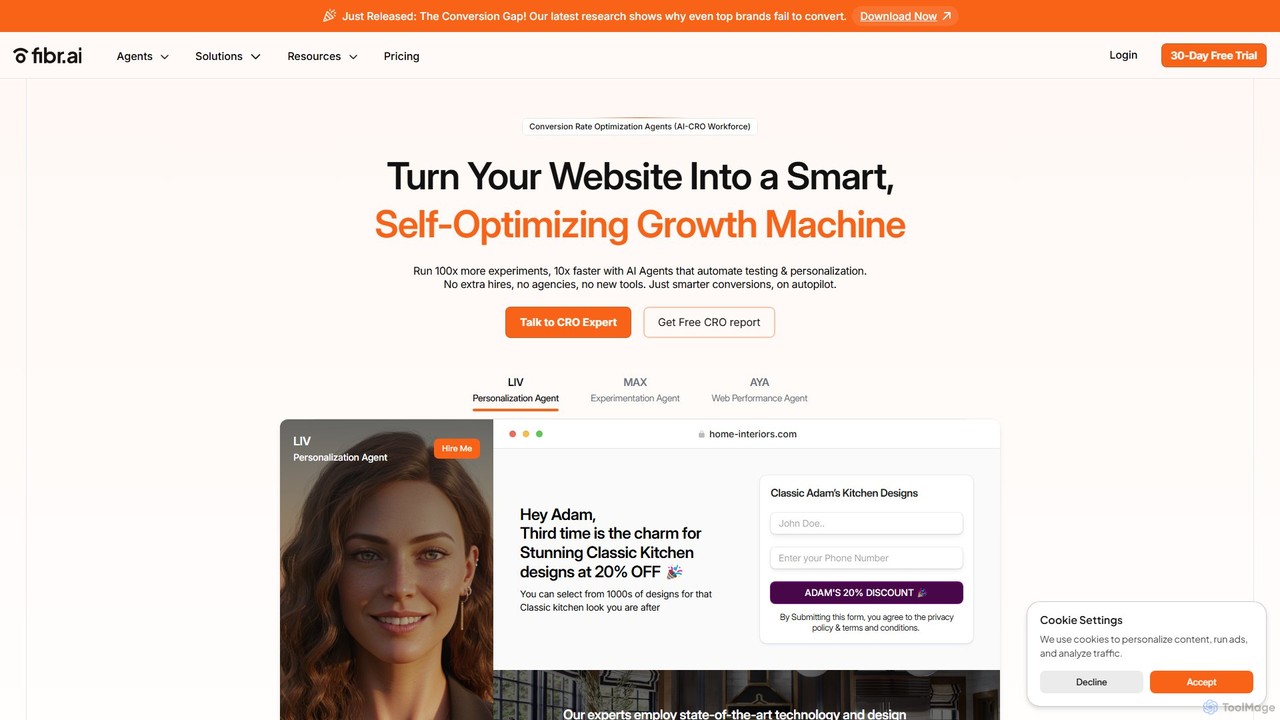
Fibr is an AI-powered Conversion Rate Optimization (CRO) platform that acts as a dedicated workforce for marketers. It utilizes a suite of AI agents—LIV for personalization, MAX for A/B testing, and AYA for performance monitoring—to automate website optimization, run experiments at scale, and deliver personalized user experiences. This helps businesses boost conversions and reduce customer acquisition costs without needing additional staff or complex tools.

Website Monitoring
Visits 45.2KFavorites 157Likes 140
Intellimize
Paid

Intellimize

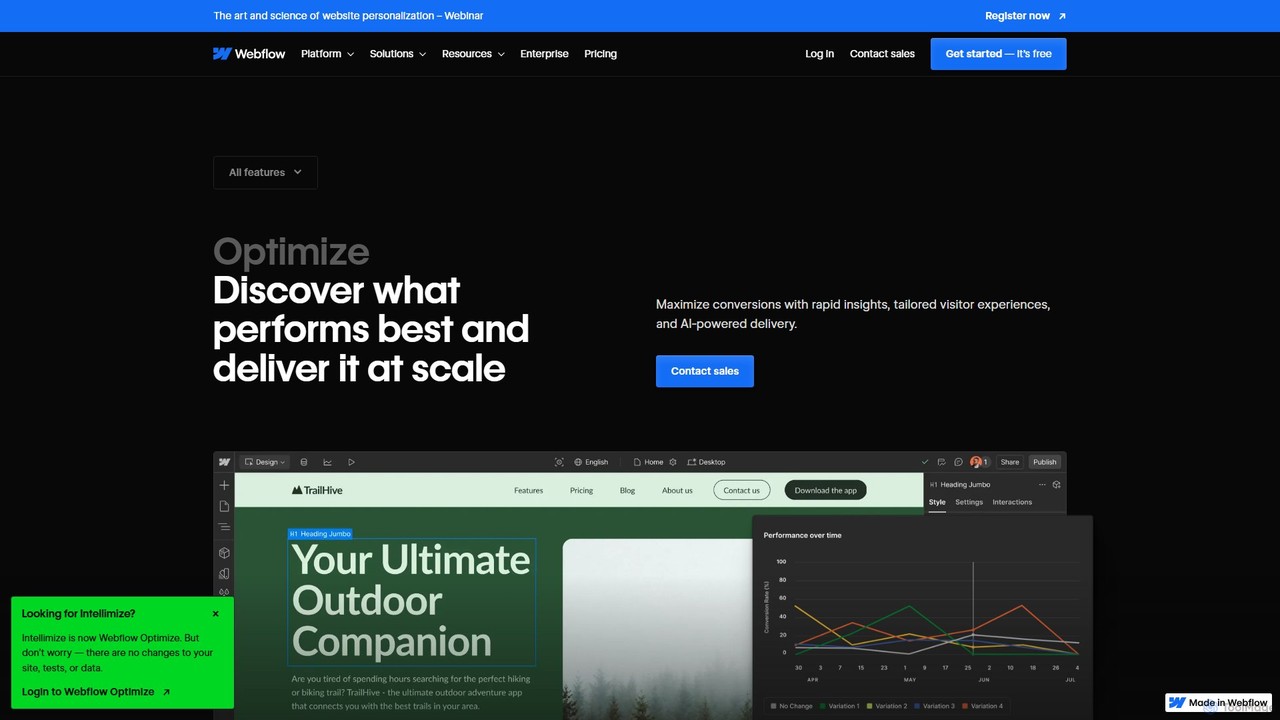
Intellimize is an AI-powered website optimization and personalization platform designed to maximize conversions. It uses machine learning to automatically test variations of website content, headlines, and CTAs, delivering personalized experiences to each visitor in real-time. This intelligent approach accelerates testing and drives significant revenue growth.

Website Analytics
Visits 6.7MFavorites 112Likes 113

About Ab Testing

A/B Testing tools are a category of AI-powered solutions designed to compare two versions of a digital asset, such as a webpage or email, to determine which performs better. These tools leverage AI to automate hypothesis generation, experiment setup, and sophisticated data analysis, providing actionable insights for optimization. They enable businesses to make data-driven decisions, significantly improving conversion rates, user engagement, and overall marketing effectiveness. By continuously testing and learning, organizations can refine their strategies and enhance user experience.

Core Features

  • Automated Hypothesis Generation: AI algorithms suggest optimal test variations based on historical data and user behavior patterns.
  • Experiment Design & Setup: Streamlines the creation of A/B tests, including variant creation, traffic splitting, and goal tracking.
  • Real-time Performance Monitoring: Provides live dashboards to track key metrics and identify winning variations quickly.
  • Statistical Significance Analysis: Automatically calculates the statistical validity of test results, preventing premature conclusions.
  • Personalization & Dynamic Content: AI can dynamically serve winning variations or personalized content segments to different user groups.

Use Cases

Businesses across various sectors utilize A/B testing to refine their digital presence. E-commerce sites test product page layouts to boost sales, content creators optimize headlines for higher click-through rates, and SaaS companies experiment with onboarding flows to reduce churn. These tools are essential for anyone aiming to improve specific metrics through iterative, data-backed changes.

How to Choose

When selecting an A/B testing tool, consider its integration capabilities with existing marketing stacks (CRM, analytics), the complexity of tests it supports (simple A/B vs. multivariate), its reporting and visualization features, and the level of AI automation offered. Also, evaluate the user interface's ease of use and the pricing model based on your traffic volume and testing frequency.

Featured tool rankings

Ab Testing use cases

1

Optimizing E-commerce Product Pages

E-commerce managers use A/B testing to compare different product image placements, call-to-action buttons, or pricing displays. By testing variations, they can identify the elements that lead to higher conversion rates and increased sales, directly impacting revenue.

2

Improving Website Landing Page Conversions

Digital marketers deploy A/B tests on landing pages to evaluate headline variations, form field layouts, or hero image designs. This helps determine which version resonates most with visitors, driving more sign-ups, downloads, or lead generations.

3

Enhancing Email Campaign Open Rates

Marketing teams conduct A/B tests on email subject lines, sender names, or preview text to discover what encourages recipients to open. This iterative process refines email strategies, leading to improved engagement and campaign performance.

4

Refining User Onboarding Flows in Apps

Product managers in SaaS or mobile app companies use A/B testing to compare different onboarding sequences or tutorial steps. The goal is to identify the most effective flow that reduces user drop-off and increases feature adoption.

5

Testing Ad Copy and Creatives for Campaigns

Advertising specialists utilize A/B testing to compare different versions of ad copy, visual creatives, or calls-to-action across various platforms. This ensures ad spend is optimized by running the most effective combinations that yield higher click-through rates and conversions.

6

Personalizing Website Content for Different Segments

Webmasters and content strategists employ A/B testing to serve different content blocks or promotional offers to distinct user segments based on their behavior or demographics. This allows for a more personalized user experience, potentially increasing engagement and conversion for each segment.

Ab Testing FAQ

What are AI A/B Testing tools?

AI A/B Testing tools are software solutions that automate and enhance the traditional A/B testing process using artificial intelligence. They go beyond simple comparison by leveraging AI for tasks like generating intelligent test hypotheses, identifying optimal variations, analyzing complex data patterns, and even dynamically serving winning content. Their core purpose is to help businesses make data-driven decisions to optimize digital assets and improve key performance indicators.

How do AI A/B Testing tools differ from traditional A/B testing?

Traditional A/B testing requires manual setup, hypothesis generation, and often complex statistical analysis. AI A/B Testing tools automate many of these steps. AI can suggest test ideas based on predictive analytics, dynamically allocate traffic to winning variations (multi-armed bandit approach), and provide deeper insights into why one version performs better, significantly accelerating the optimization process and reducing manual effort.

What are the key benefits of using AI in A/B testing?

Integrating AI into A/B testing offers several benefits, including faster results due to automated analysis and dynamic traffic allocation, more intelligent hypothesis generation based on vast datasets, and the ability to run more complex multivariate tests with ease. AI also helps in identifying subtle patterns and segment-specific insights that might be missed by manual analysis, leading to more impactful optimizations and a better return on investment.

Who can benefit most from using A/B Testing tools?

A/B Testing tools are highly beneficial for anyone involved in digital product development, marketing, or user experience design. This includes digital marketers aiming to improve campaign performance, e-commerce managers optimizing conversion funnels, product managers enhancing user onboarding, and content creators seeking higher engagement. Essentially, any role focused on data-driven optimization of digital assets will find these tools invaluable.

What metrics can be optimized using A/B Testing tools?

A/B Testing tools can optimize a wide range of metrics depending on the goal. Common metrics include conversion rates (e.g., purchases, sign-ups, downloads), click-through rates (CTR) for ads or emails, user engagement (e.g., time on page, bounce rate), average order value (AOV), lead generation, and customer retention. By testing different elements, businesses can directly impact these crucial performance indicators.