Compliance Best in category 1 results Information Security AI Tool

Popular AI tools in the Information Security field of Compliance include RiskRegister, etc., helping you quickly improve efficiency.

RiskRegister

RiskRegister

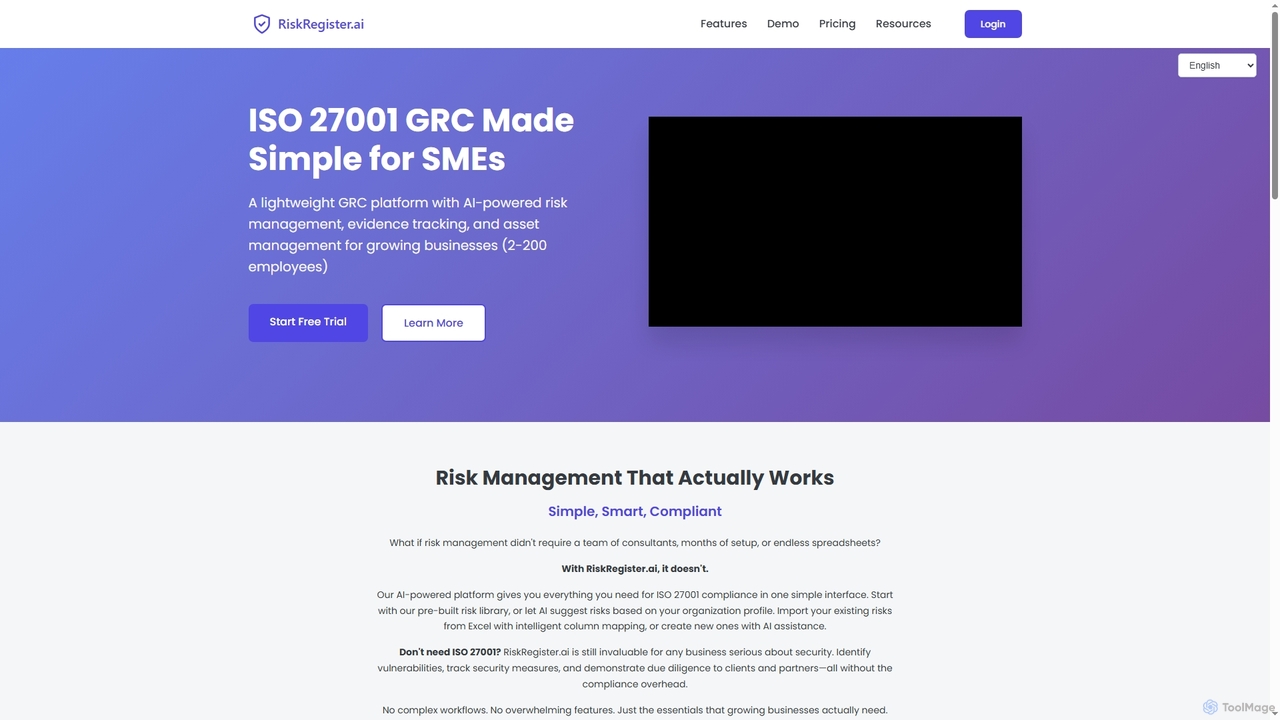
RiskRegister is an AI-powered GRC platform designed for SMEs to simplify ISO 27001 compliance and risk management. It …

2.9K

About Information Security

Information Security AI tools are advanced solutions that leverage artificial intelligence to protect digital assets, data, and systems from a wide range of cyber threats. These tools employ machine learning algorithms, natural language processing, and behavioral analytics to identify anomalies, detect sophisticated attacks, and automate response mechanisms. They are crucial for organizations seeking to enhance their cybersecurity posture, reduce manual effort in threat management, and maintain data integrity and confidentiality in an increasingly complex digital landscape, often operating within the broader context of regulatory compliance.

Core Features

  • AI-Powered Threat Detection: Automatically identifies and flags suspicious activities, malware, and advanced persistent threats (APTs) using behavioral analysis and anomaly detection.
  • Vulnerability Management: Scans systems and applications for security weaknesses, prioritizes risks, and suggests remediation steps based on predictive analytics.
  • Automated Incident Response: Initiates predefined actions, such as isolating compromised systems or blocking malicious IPs, to mitigate the impact of security incidents in real-time.
  • Predictive Security Analytics: Analyzes historical data and current threat intelligence to foresee potential future attacks and proactively strengthen defenses.
  • Data Loss Prevention (DLP): Monitors and controls data in motion, at rest, and in use to prevent sensitive information from leaving secure environments.

Use Cases

These tools are vital for IT security teams, compliance officers, and risk managers across various industries. They are deployed to continuously monitor network traffic for anomalies, automate the identification of zero-day exploits, and streamline the process of responding to security breaches, thereby reducing the window of vulnerability and ensuring business continuity.

How to Choose

When selecting Information Security AI tools, consider the scope of protection (network, endpoint, cloud), integration capabilities with existing security infrastructure, the accuracy of threat detection, and the level of automation offered for incident response. Evaluate the tool's ability to adapt to evolving threats, its compliance reporting features, and the vendor's support and update frequency to ensure long-term effectiveness.

Information SecurityUse Cases

1

Real-time Anomaly Detection in Network Traffic

A large enterprise's security operations center (SOC) uses AI-powered tools to continuously monitor vast amounts of network data. The AI identifies unusual data flows, access patterns, or communication with known malicious IPs that human analysts might miss, flagging potential intrusions or insider threats instantly. This proactive detection significantly reduces the time to identify and contain breaches.

2

Automated Vulnerability Prioritization and Remediation

A software development company integrates AI security tools into its CI/CD pipeline. The AI automatically scans new code and deployed applications for vulnerabilities, cross-referencing with threat intelligence databases. It then prioritizes critical vulnerabilities based on exploitability and potential impact, guiding developers to address the most pressing issues first, streamlining secure development practices.

3

Predictive Threat Intelligence for Proactive Defense

A financial institution employs AI to analyze global cyber threat intelligence feeds, historical attack data, and its own network logs. The AI predicts emerging attack vectors and potential targets specific to the institution's infrastructure, allowing the security team to implement preventative measures, update firewall rules, and patch systems before specific threats materialize.

4

Enhanced Phishing and Malware Detection in Email

An organization utilizes AI-driven email security gateways to combat sophisticated phishing and malware campaigns. The AI analyzes email content, sender behavior, and embedded links for subtle indicators of malicious intent that bypass traditional filters, such as polymorphic malware or highly personalized spear-phishing attempts, protecting employees from social engineering attacks.

5

Automated Incident Response and Containment

Upon detecting a ransomware attack, an AI-powered incident response system automatically isolates affected endpoints, blocks communication with command-and-control servers, and initiates data backup procedures. This rapid, automated containment minimizes the spread and impact of the attack, allowing human analysts to focus on recovery and forensic analysis rather than initial mitigation.

6

Insider Threat Detection and Behavioral Analytics

A government contractor uses AI to monitor user behavior across its network and applications. The AI establishes baseline behaviors for each employee and flags deviations, such as unusual access to sensitive files, attempts to exfiltrate data, or login from atypical locations. This helps identify potential insider threats, whether malicious or accidental, before significant damage occurs.

Information SecurityFrequently Asked Questions