Aequitas
Aequitas is an advanced AI governance platform that transforms opaque "black-box" AI algorithms into transparent, auditable, and legally …
Aequitas is an advanced AI governance platform that transforms opaque "black-box" AI algorithms into transparent, auditable, and legally defensible "Glass Box" decisions. It provides provable trust for AI decisions by offering complete audit trails, traceable conclusions, and verifiable outcomes, ensuring regulatory compliance and enhanced decision quality across various industries.
Pyrinas
Pyrinas offers Sovereign AI products and consulting services, providing secure, private, and offline artificial intelligence computing. Its flagship …
Pyrinas offers Sovereign AI products and consulting services, providing secure, private, and offline artificial intelligence computing. Its flagship TAi suite enables professionals to maintain full control over their data and AI, ensuring confidentiality and compliance with standards like HIPAA and GDPR, without reliance on cloud infrastructure.
Gamma.AI
Gamma.AI is an AI-powered Cloud Data Loss Prevention (DLP) platform designed for modern SaaS applications. It proactively detects …
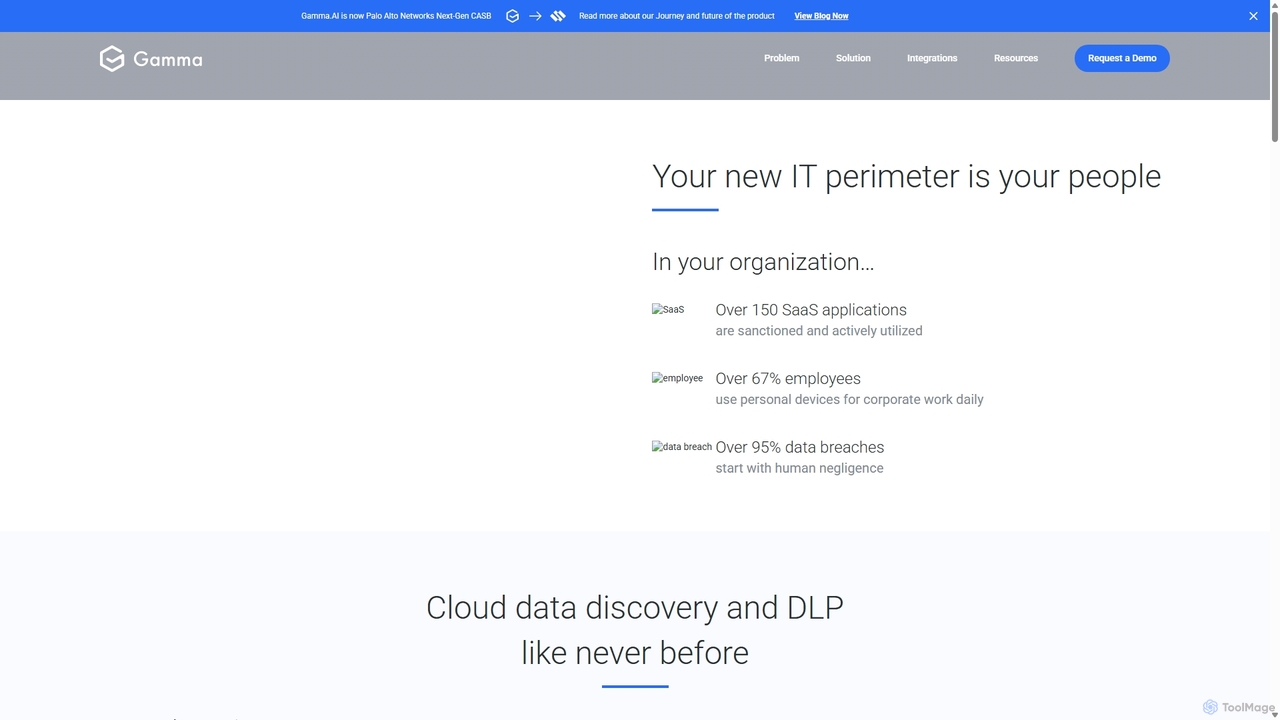
Gamma.AI is an AI-powered Cloud Data Loss Prevention (DLP) platform designed for modern SaaS applications. It proactively detects and prevents data breaches originating from insider threats, whether malicious or accidental. By monitoring user activity in real-time across platforms like Google Workspace, Slack, and Salesforce, Gamma.AI provides instant coaching and alerts to foster a strong security culture and ensure compliance.
About Regulatory Technology
Regulatory Technology (RegTech) is a class of AI-powered tools designed to automate and enhance regulatory compliance processes. These solutions leverage technologies like machine learning and natural language processing to monitor transactions, manage regulatory changes, and generate reports with high accuracy and efficiency. RegTech helps organizations in highly regulated industries, such as finance and healthcare, to navigate complex legal frameworks, reduce compliance costs, and mitigate risks. By transforming manual compliance tasks into automated workflows, these tools enable real-time risk management and more robust governance.
Core Features
- Automated Reporting: Automatically generates and submits regulatory reports (e.g., AML, MiFID II) to authorities, ensuring timeliness and accuracy.
- Real-time Transaction Monitoring: Continuously analyzes financial transactions to detect suspicious activities like money laundering or fraud in real-time.
- Regulatory Change Management: Tracks updates from regulatory bodies, interprets new rules, and maps them to internal policies and controls.
- Digital Identity Verification (KYC/AML): Streamlines customer onboarding by automating identity checks, document verification, and risk screening.
- Risk and Compliance Analytics: Uses predictive models to identify, assess, and score potential compliance risks across the organization.
Applicable Scenarios
RegTech is predominantly used in the financial services sector, including banking, insurance, and investment management. It is essential for compliance officers, risk managers, and legal teams responsible for adhering to strict regulations. For example, a bank uses RegTech to monitor millions of daily transactions for anti-money laundering (AML) compliance, while an investment firm uses it to surveil communications for market abuse.
Selection Criteria
When choosing a RegTech tool, consider its specific regulatory coverage—does it support the jurisdictions and regulations relevant to your business (e.g., GDPR, CCPA, PSD2)? Evaluate its integration capabilities with your existing systems, such as CRM or core banking platforms. Also, assess the sophistication of its AI models, its scalability to handle your data volume, and the level of data security and privacy it provides.

Regulatory TechnologyUse Cases
Automate AML Transaction Monitoring
A compliance team at a large bank is tasked with monitoring millions of daily transactions for signs of money laundering. Using a RegTech platform, they automate this process. The AI algorithm analyzes transaction patterns in real-time, flagging complex and unusual activities that deviate from normal customer behavior. This significantly reduces false positives compared to rule-based systems, allowing the team to focus their investigations on high-risk alerts. The result is a more efficient AML program that can scale with transaction volume while improving detection accuracy.
Streamline Customer Onboarding with Digital KYC
A fintech company needs to onboard new customers quickly while adhering to strict Know Your Customer (KYC) regulations. They implement a RegTech solution that digitizes the entire process. New users upload their ID documents via a mobile app, and the tool uses AI-powered optical character recognition (OCR) and facial recognition to verify the identity in seconds. It also automatically screens applicants against global watchlists. This reduces the onboarding time from days to minutes, improves the customer experience, and ensures a consistent and auditable compliance trail.
Manage Regulatory Changes Proactively
A global insurance company operates in dozens of countries, each with its own evolving regulatory landscape. Their legal team uses a RegTech platform to monitor regulatory updates from sources worldwide. The AI scans new legislation and official notices, identifies relevant changes, and automatically maps them to the company's internal policies. It provides an impact analysis, highlighting which business units and processes are affected. This allows the team to proactively adapt to new rules, avoiding non-compliance penalties and reducing the manual effort of legal research by over 70%.
Conduct Automated Communications Surveillance
An investment firm is required to monitor employee communications (emails, chat messages) to prevent market abuse and insider trading. They deploy a RegTech tool with Natural Language Processing (NLP) capabilities. The system analyzes conversations for risky language, suspicious patterns, and policy violations in multiple languages. Instead of manually sampling a small fraction of communications, the firm can now achieve 100% coverage. The AI provides context-aware alerts to compliance officers, who can quickly review and escalate potential issues, strengthening the firm's internal controls.
Automate ESG Data Collection and Reporting
A multinational corporation faces increasing pressure from investors and regulators to provide accurate Environmental, Social, and Governance (ESG) reports. Their sustainability team uses a RegTech platform to automate the collection of ESG data from various internal systems and external sources. The tool standardizes the data, calculates key performance indicators (KPIs), and generates reports compliant with multiple frameworks like GRI and SASB. This ensures data consistency, reduces the risk of manual errors, and provides an auditable trail for ESG disclosures, building trust with stakeholders.
Perform AI-Powered Risk Assessments
A risk management department at a financial institution needs to conduct regular compliance risk assessments. They use a RegTech tool that leverages AI to analyze vast datasets, including historical compliance breaches, transaction data, and regulatory changes. The model identifies emerging risk patterns and predicts the likelihood of future compliance issues in different business areas. This provides a forward-looking view of risk, allowing the institution to allocate compliance resources more effectively and implement preventative controls before issues escalate, moving from a reactive to a proactive risk management posture.