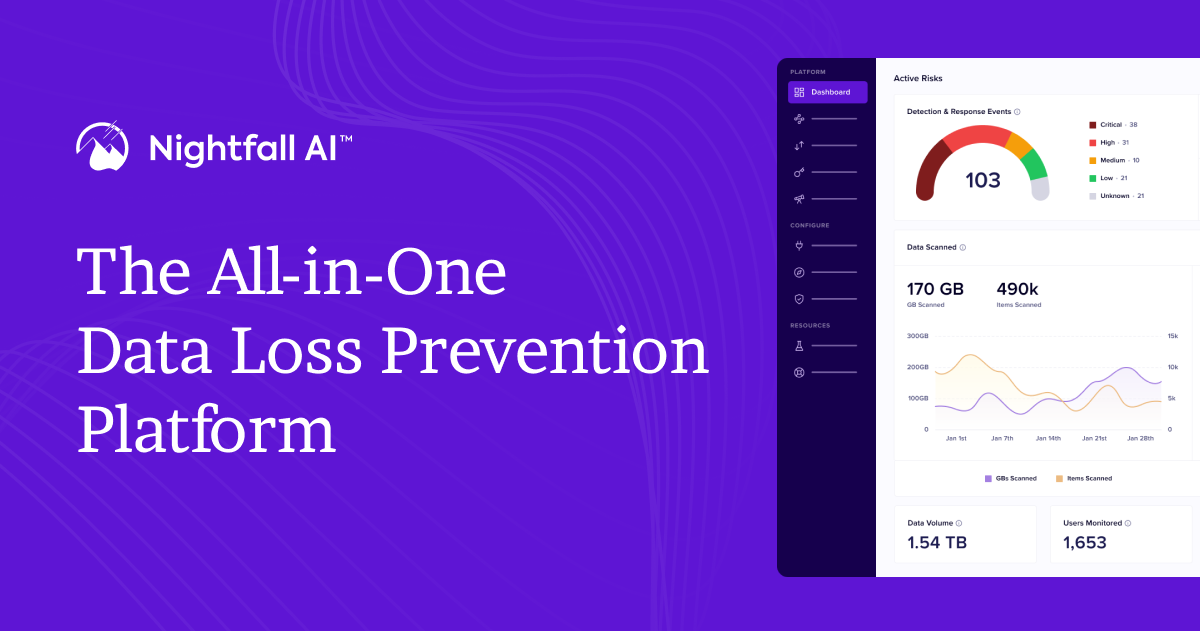
Data Loss Prevention (DLP) tools are a specialized category of security solutions that use AI to identify, monitor, and protect sensitive data from unauthorized access, exfiltration, or leakage. These tools leverage machine learning and natural language processing (NLP) to understand the context and content of data, classifying it in real-time across endpoints, networks, and cloud services. This proactive approach helps organizations prevent data breaches, comply with regulations like GDPR and CCPA, and safeguard intellectual property. Unlike traditional firewalls that block traffic, AI-powered DLP focuses on the data itself, offering more granular control and reducing false positives.
Core Features
- AI-Powered Data Classification: Automatically identifies and tags sensitive information such as PII, financial data, and intellectual property based on content and context.
- Real-time Monitoring & Alerting: Continuously scans data in motion (network), at rest (storage), and in use (endpoints), triggering immediate alerts for policy violations.
- Automated Policy Enforcement: Blocks unauthorized data transfers, encrypts files, quarantines sensitive information, or notifies users to prevent leaks before they happen.
- User Behavior Analytics (UBA): Detects anomalous user activities that may indicate an insider threat or a compromised account by establishing baseline behaviors.
- Forensic Analysis & Reporting: Provides detailed logs and comprehensive reports for incident investigation, risk assessment, and compliance audits.
Use Cases
DLP tools are critical in regulated industries like finance, healthcare, and government to meet compliance mandates (e.g., HIPAA, PCI DSS). IT security administrators and compliance officers use them to protect customer data, secure source code, prevent insider threats, and control data sharing on collaboration platforms.
How to Choose
When selecting a DLP tool, consider its coverage across all channels (email, cloud, endpoints, web). Evaluate the accuracy of its AI model to minimize false positives. Check for seamless integration with your existing security infrastructure, such as SIEM and identity management systems. Finally, ensure the solution is scalable to support your organization's growth and evolving IT environment.