Security Best in category 1 results Access Management AI Tool

Popular AI tools in the Access Management field of Security include Hoop.dev, etc., helping you quickly improve efficiency.

Hoop.dev

Hoop.dev

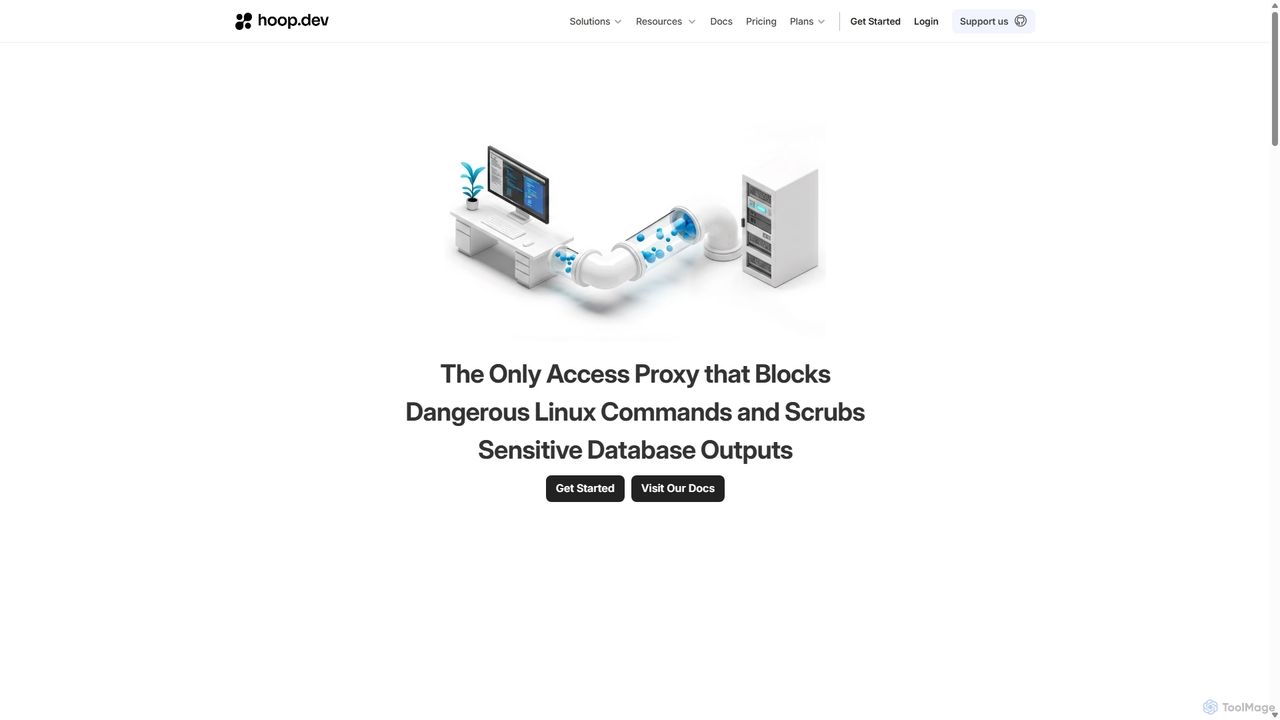
Hoop.dev is an AI-powered access gateway providing developers with invisible security and admins with command-line control. It offers …

93.8K

About Access Management

Access Management tools leverage AI to automate, optimize, and secure the process of granting or denying users, systems, and applications access to digital resources. These tools utilize machine learning to analyze user behavior, identify anomalous patterns, and intelligently enforce access policies. Their primary goal is to enhance an organization's security posture, streamline compliance processes, and provide a seamless yet secure access experience for users. In today's increasingly complex digital landscape, AI-driven access management has become an indispensable component for protecting sensitive data and critical systems within the broader cybersecurity framework.

Core Features

  • Intelligent Authentication: Employs AI techniques like biometrics and behavioral analysis for multi-factor and passwordless login, significantly boosting security.
  • Adaptive Access Control: Dynamically adjusts access permissions based on user role, device, location, and behavioral risk levels, enabling granular management.
  • Anomaly Detection: Continuously monitors access activities, using machine learning algorithms to identify and alert on suspicious or unauthorized access attempts.
  • Privilege Lifecycle Management: Automates the creation, modification, disabling, and deletion of user accounts and their associated permissions, ensuring synchronization.
  • Compliance Auditing & Reporting: Automatically generates detailed access logs and audit reports, assisting organizations in meeting various regulatory requirements.

Use Cases

Organizations utilize AI Access Management tools across various departments to enhance security and efficiency. IT departments automate employee onboarding and offboarding permission allocation, ensuring compliance. Financial institutions deploy adaptive access control to dynamically adjust permissions based on transaction risk, preventing fraud. Cloud service providers use intelligent authentication to offer secure and convenient login experiences while protecting cloud resources.

How to Choose

When selecting an AI Access Management solution, consider its comprehensive functionality, including authentication, authorization, auditing, and privilege lifecycle management. Evaluate the depth of its AI capabilities in behavioral analysis and risk assessment. Assess its integration and compatibility with existing IT infrastructure, cloud services, and third-party applications. Ensure scalability to accommodate growth and robust performance, and verify support for industry-specific compliance standards like GDPR or HIPAA.

Access ManagementUse Cases

1

Automating New Employee Access Provisioning

For HR and IT administrators, managing access for new hires can be time-consuming and prone to errors. AI Access Management tools automatically provision system and application access based on predefined role templates for new employees. This eliminates manual intervention, significantly reducing onboarding time, ensuring accurate and timely permission allocation, and minimizing human error and associated security risks.

2

Real-time Detection and Blocking of Anomalous Logins

Security Operations Center (SOC) analysts face the constant threat of compromised employee accounts or unauthorized internal access attempts. AI systems continuously monitor all login and access requests, using machine learning to identify patterns inconsistent with a user's historical behavior, geographical location, or device. Upon detection, the system can automatically trigger stronger multi-factor authentication or immediately block the suspicious access, effectively preventing credential theft and insider threats.

3

Providing Secure Adaptive Access for Remote Workers

Remote employees often access corporate resources from various locations and devices, posing unique security challenges. AI Access Management dynamically assesses risk based on device health, network environment, location, and the sensitivity of the resource being accessed. For instance, it might require stronger authentication when accessing sensitive data from an unsecured network. This ensures flexibility for remote work while maintaining robust security boundaries and balancing user experience with critical security needs.

4

Streamlining Customer Identity Verification and Single Sign-On

Customers often need to access multiple online services or applications provided by an organization, leading to repetitive login processes. An AI-driven identity management platform offers a unified authentication portal, supporting convenient methods like social logins and biometrics, enabling seamless Single Sign-On (SSO) across various applications. This significantly enhances the customer experience by reducing login friction, while powerful backend AI analysis ensures the security of identity verification.

5

Automating Privileged Account Access Management

IT operations engineers frequently require temporary, elevated access to critical servers or databases, which must be strictly controlled and audited. AI Access Management tools automate the granting of time-bound, scope-limited privileged access based on approved tickets or workflows. Upon session completion, permissions are automatically revoked, and all actions are meticulously logged. This minimizes the risk of privilege abuse, secures critical systems, and meets stringent compliance audit requirements.

6

Securing Third-Party Vendor Access to Enterprise Resources

External vendors or partners often need access to specific internal systems or data, but their permissions must be strictly limited and easily manageable. An AI Access Management platform provides a dedicated identity and access management portal for external users. It enforces granular policies controlling accessible resources, operational permissions, and access duration, with continuous monitoring. This reduces security risks associated with third-party access, simplifies external collaboration, and ensures data isolation and compliance.

Access ManagementFrequently Asked Questions