
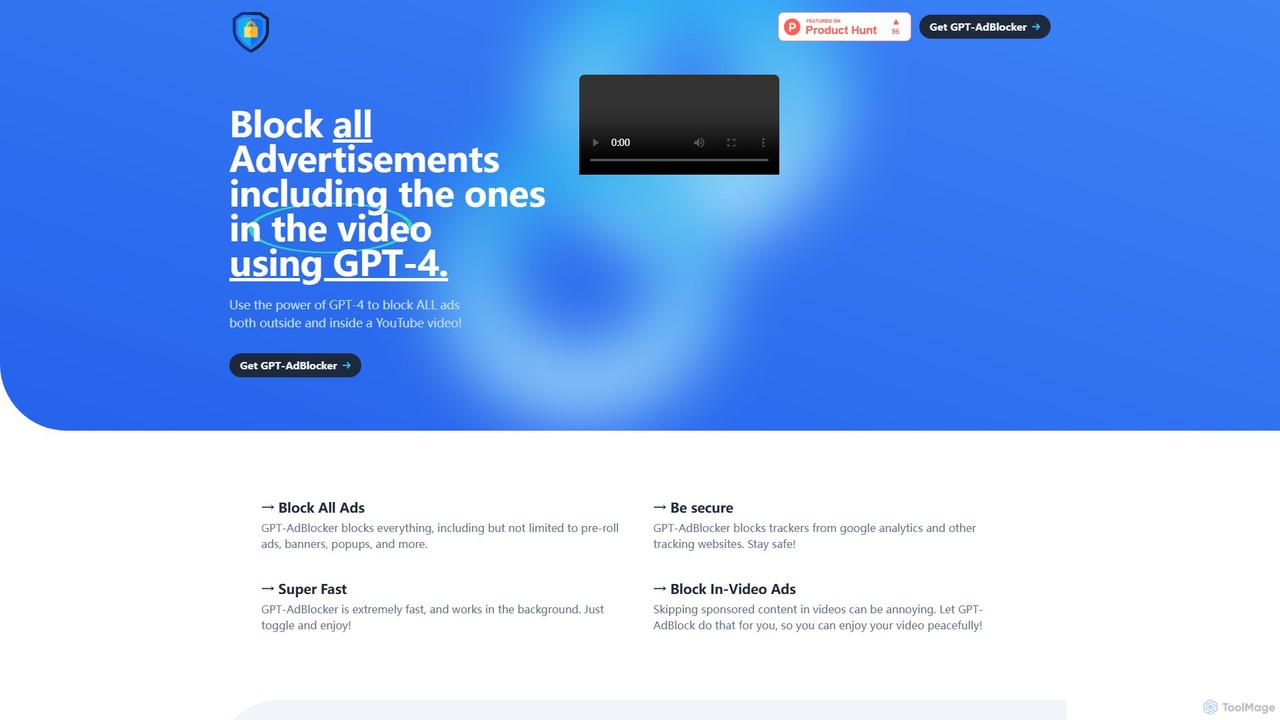
GPT-AdBlocker
GPT-AdBlocker is an advanced browser extension that leverages the power of GPT-4 to provide a comprehensive ad-blocking experience. …
GPT-AdBlocker is an advanced browser extension that leverages the power of GPT-4 to provide a comprehensive ad-blocking experience. It not only blocks traditional ads like banners and pop-ups but also intelligently identifies and skips sponsored segments within YouTube videos. With built-in tracker blocking and a future-proof architecture, it offers a faster, safer, and more seamless browsing and viewing experience, all from a single, lightweight extension.
About Ad Blockers
Ad Blockers are applications or browser extensions designed to remove or alter advertising content on web pages and in applications. They operate by referencing extensive filter lists to identify and block requests to ad-serving domains, preventing banners, pop-ups, and video ads from loading. This process not only creates a cleaner, less distracting user interface but also significantly enhances online security and privacy. By blocking ad-related scripts, these tools can improve page load times and reduce mobile data consumption.
Core Features
- Ad Filtering: Blocks various ad formats, including display ads, pop-ups, and pre-roll video ads, based on community-maintained filter lists.
- Tracker Blocking: Prevents third-party tracking scripts from monitoring your online behavior across different websites.
- Malvertising Protection: Enhances security by blocking ads from known malicious domains that could deliver malware.
- Customizable Whitelists: Allows users to permit ads on specific websites to support content creators.
- Performance Enhancement: Speeds up page loading and reduces bandwidth usage by preventing heavy ad content from being downloaded.
Use Cases
Ad Blockers are widely used by individuals for daily web browsing to achieve a faster and cleaner online experience. Privacy-conscious users leverage them to prevent companies from tracking their digital footprint. In a business context, they can be deployed to protect corporate networks from malvertising threats. They are also valuable for mobile users seeking to conserve data plans and improve battery life.
How to Choose
When selecting an Ad Blocker, consider its effectiveness in blocking a wide range of ads and trackers. Evaluate its impact on system performance, as some blockers are more lightweight than others. Look for customization options, such as the ability to whitelist trusted sites. Crucially, review the tool's privacy policy to ensure it does not collect or sell your browsing data. Finally, check for compatibility with your preferred browsers and devices.
Ad BlockersUse Cases
Enhancing Daily Web Browsing Experience
For the average internet user, intrusive ads, auto-playing videos, and pop-ups can make browsing slow and frustrating. An Ad Blocker runs quietly in the background of a web browser, automatically filtering out this unwanted content. By using filter lists that are constantly updated, it ensures most ads are blocked before they even load. The result is a significantly faster, cleaner, and more enjoyable browsing experience, allowing users to focus on the actual content of websites without constant interruptions.
Protecting Privacy from Online Trackers
Privacy-conscious individuals are often concerned about how third-party companies track their activity across websites to build detailed user profiles for targeted advertising. Ad Blockers address this by specifically targeting and blocking tracking scripts. This prevents data brokers and advertising networks from collecting information about browsing habits, search history, and personal interests. By using an ad blocker, users can significantly reduce their digital footprint and regain control over their personal data, making their online activities more private and secure.
Securing Networks Against Malvertising Threats
For businesses and security-conscious users, malvertising—the use of online ads to distribute malware—is a significant threat. Attackers can inject malicious code into legitimate ad networks, which then serves harmful ads on trusted websites. An Ad Blocker acts as a crucial first line of defense. By blocking the ad delivery mechanism itself, it prevents the malicious payload from ever reaching the user's browser or device. This proactive security measure helps protect against ransomware, spyware, and other malware infections without requiring any direct user action, securing both individual devices and entire corporate networks.
Improving Mobile Data Efficiency and Battery Life
Mobile users with limited data plans or those in areas with slow connectivity benefit greatly from ad blockers. Modern ads, especially video ads, consume a significant amount of data. An ad blocker for mobile browsers or a system-wide blocker prevents this data from being downloaded, which can lead to substantial savings on a monthly data plan. Furthermore, by reducing the amount of content and scripts the device's processor and network radio have to handle, ad blockers can also contribute to longer battery life, allowing users to stay connected for longer periods.
Creating a Distraction-Free Reading Environment
For students, researchers, and avid readers, visual clutter from ads can disrupt concentration and make it difficult to focus on written content. Ad blockers are essential for creating a clean, minimalist reading environment. By removing sidebars, banners, and auto-playing video ads, they allow the main text of an article or blog post to take center stage. This is particularly useful for academic research or long-form reading, where sustained focus is critical. The result is a more immersive and productive reading experience, free from visual noise and interruptions.
Supporting Creators by Whitelisting Favorite Websites
While blocking ads is beneficial, many users understand that ads are a primary source of revenue for content creators and online publishers. Responsible ad blocker usage involves supporting these creators. Most ad blockers feature a 'whitelist' or 'allowlist' function. A user can add their favorite news sites, blogs, or YouTube channels to this list, which disables the ad blocker for those specific domains. This allows users to enjoy an ad-free experience across the majority of the web while still contributing to the sustainability of the content they value most.