QuickCount
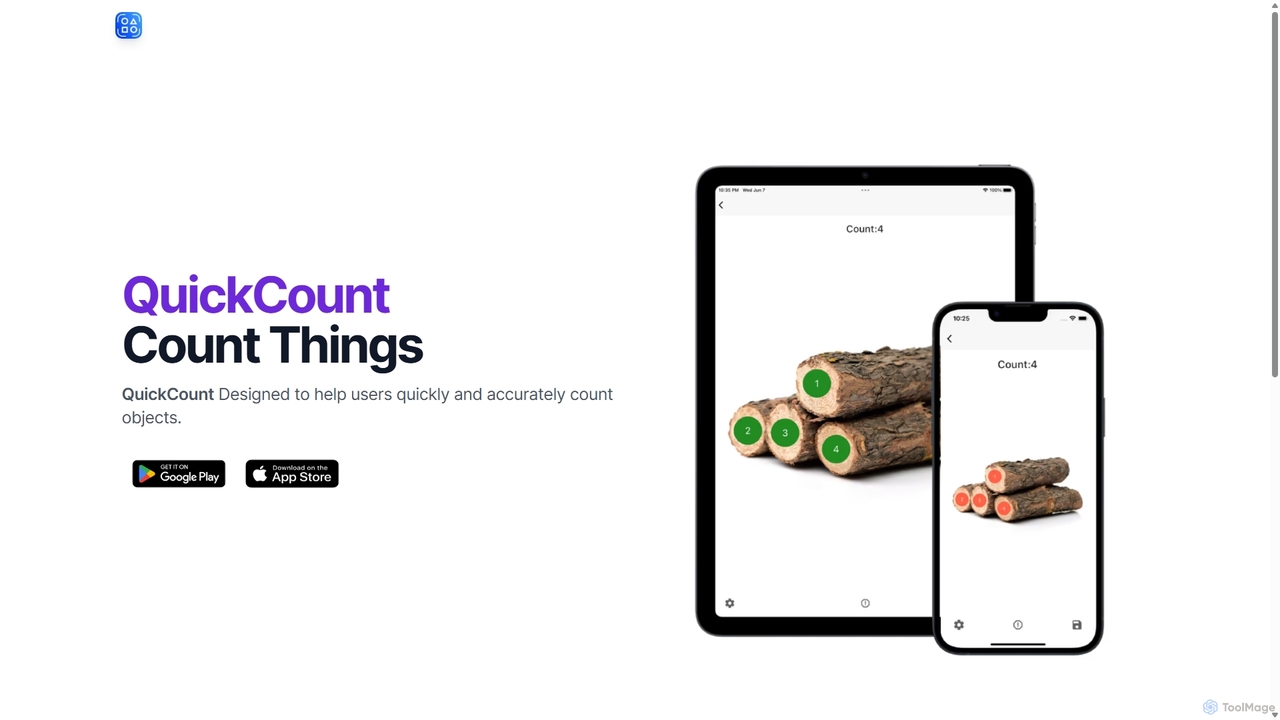
An AI-powered computer vision tool designed for instantly and accurately counting various objects from images. Ideal for inventory, …
An AI-powered computer vision tool designed for instantly and accurately counting various objects from images. Ideal for inventory, construction, agriculture, and research, it saves time and eliminates manual counting errors.
About Computer Vision
Computer Vision tools are AI-powered solutions that enable computers to interpret and understand visual information from the world, much like human eyes and brains. These tools leverage advanced machine learning algorithms, including deep learning, to process and analyze images and videos. They are invaluable for tasks ranging from object detection and facial recognition to autonomous navigation and quality control, transforming industries by automating visual inspection and data extraction. By converting visual data into actionable insights, Computer Vision enhances efficiency and accuracy across diverse applications.
Core Features
- Object Detection & Recognition: Identifies and locates specific objects within images or video streams.
- Image Segmentation: Divides an image into multiple segments or objects, often pixel by pixel.
- Facial Recognition & Analysis: Detects and identifies human faces, analyzing expressions or attributes.
- Optical Character Recognition (OCR): Extracts text from images, converting it into machine-readable format.
- Motion Tracking & Analysis: Monitors and analyzes the movement of objects or individuals over time.
Use Cases
Computer Vision tools are widely adopted across various sectors. In manufacturing, they automate quality control by detecting defects on production lines. Autonomous vehicles rely on Computer Vision for real-time environment perception, including lane keeping and pedestrian detection. Healthcare professionals use these tools for analyzing medical images like X-rays and MRIs, assisting in disease diagnosis and treatment planning.
How to Choose
When selecting Computer Vision tools, prioritize accuracy and robustness for reliable performance in diverse conditions. Consider scalability to handle varying data volumes and processing speeds. Evaluate integration capabilities with existing systems and platforms. Finally, assess the ease of use, including API documentation and available pre-trained models, to ensure efficient implementation and development.
Computer VisionUse Cases
Automated Defect Detection in Manufacturing
Manufacturing engineers use Computer Vision to automatically inspect products on assembly lines, identifying flaws like scratches, misalignments, or missing components. This reduces manual inspection time by up to 90% and ensures consistent product quality, preventing defective items from reaching consumers.
Customer Behavior Analysis in Retail Stores
Retail managers deploy Computer Vision systems to analyze customer traffic patterns, dwell times in specific areas, and product interactions. This data helps optimize store layouts, product placement, and staffing levels, leading to improved sales strategies and enhanced shopping experiences.
Real-time Environmental Perception for Autonomous Vehicles
Autonomous vehicle developers integrate Computer Vision to enable cars to "see" and understand their surroundings. The tools detect pedestrians, other vehicles, traffic signs, and lane markings, providing critical data for navigation, collision avoidance, and safe operation in complex environments.
Assisting Medical Image Analysis and Diagnosis
Radiologists and medical researchers utilize Computer Vision to analyze complex medical images such as X-rays, MRIs, and CT scans. These tools can highlight anomalies, detect early signs of diseases like tumors, and quantify changes over time, significantly aiding in faster and more accurate diagnoses.
Enhanced Security Monitoring and Anomaly Detection
Security personnel use Computer Vision for intelligent surveillance systems. These tools can automatically detect unusual activities, identify unauthorized access, or track suspicious individuals in real-time across large areas, improving response times and overall safety in public or private spaces.
Precision Agriculture for Crop Health and Yield Optimization
Farmers and agronomists employ Computer Vision to monitor crop health, detect diseases, and assess nutrient deficiencies from drone or satellite imagery. This allows for targeted interventions, optimizing pesticide and fertilizer use, and ultimately increasing crop yields and sustainability.