Consumer Tools Best in category 1 results Information Access AI Tool

Popular AI tools in the Information Access field of Consumer Tools include CleanTableAI, etc., helping you quickly improve efficiency.

CleanTableAI

CleanTableAI

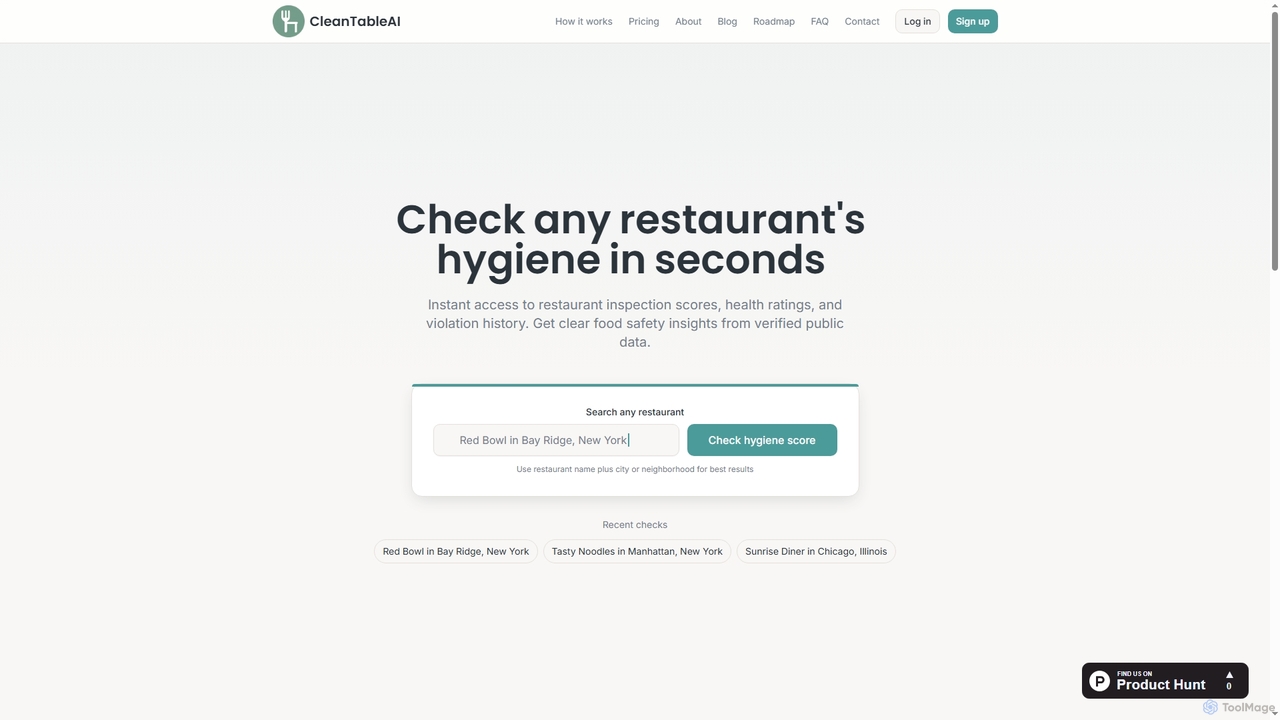
CleanTableAI is an AI-powered tool providing instant access to restaurant hygiene inspection scores, health ratings, and violation history. …

2.5K

About Information Access

Information Access tools are AI-powered applications designed to revolutionize how individuals discover, process, and comprehend digital information. As a key component within consumer tools, they leverage advanced natural language processing (NLP) and machine learning to go beyond traditional keyword-based search, offering intelligent filtering, content summarization, and personalized insights. These innovative AI tools empower users to efficiently navigate vast amounts of data, extract key information, and organize knowledge, significantly enhancing personal productivity, learning, and decision-making in daily life.

Core Features

  • Intelligent Search & Filtering: Utilizes AI algorithms to quickly locate highly relevant information across diverse sources, filtering out noise and irrelevant content.
  • Content Summarization: Automatically condenses long articles, reports, web pages, or documents into concise, easy-to-digest summaries, saving significant reading time.
  • Knowledge Organization: Provides robust features for structuring, tagging, and cross-referencing collected information, helping users build a personal or team knowledge base for easy retrieval.
  • Multi-modal Information Processing: Offers the ability to extract insights and information from various formats, including text, audio transcripts, and even video content, broadening data comprehension.
  • Personalized Insights & Recommendations: Tailors information delivery and suggests relevant content based on user preferences, search history, and past interactions, creating a more intuitive and efficient experience.

Applicable Scenarios

These AI-driven tools are invaluable for a wide range of users, from students conducting in-depth academic research and professionals needing to stay updated with complex industry trends, to content creators gathering source material and individuals managing extensive personal knowledge bases. They streamline the often time-consuming process of gathering, understanding, and organizing complex information, making learning, content creation, and informed decision-making more efficient and accessible for everyday consumers.

How to Choose

When selecting an Information Access tool, consider its accuracy and reliability in processing and summarizing information, the breadth of data types it supports (e.g., web pages, PDFs, audio files, emails), and its integration capabilities with your existing workflows and other consumer tools (e.g., note-taking apps, browsers, cloud storage). Evaluate its ease of use, the intuitiveness of its interface, and crucially, its data privacy and security features to ensure your personal information is protected. Comparing pricing models and available features will also help in finding the best fit for your specific information needs.

Information AccessUse Cases

1

Academic Research & Literature Review

Students and researchers can utilize AI Information Access tools to quickly scan and summarize hundreds of academic papers, journals, and reports. By inputting specific research questions or keywords, the tools identify relevant sections, extract key findings, and generate concise summaries, significantly reducing the time spent on literature reviews and helping to pinpoint critical information for their studies.

2

Rapidly Summarize Research Papers for Academic Study

University students and researchers often face overwhelming amounts of academic literature. An Information Access tool allows them to upload or link to multiple research papers and instantly generate concise summaries, extracting key findings, methodologies, and conclusions. This significantly reduces reading time, enabling quicker comprehension and more efficient literature reviews for thesis writing or project development.

3

Accelerating Research & Literature Review

Academic researchers and R&D professionals can utilize AI Information Access tools to rapidly scan and summarize thousands of scientific papers, patents, and reports. By inputting research questions, the tool identifies relevant studies, extracts key methodologies and findings, and generates concise summaries, drastically reducing the time spent on literature reviews from weeks to hours and ensuring comprehensive coverage.

4

Streamlining Academic Research

Students and researchers can use Information Access tools to quickly find, summarize, and synthesize information from numerous academic papers, journals, and online resources. By inputting research questions or keywords, the AI can identify relevant studies, extract key findings, and even generate concise summaries of complex articles, significantly reducing the time spent on literature review and helping to formulate arguments more effectively for essays and dissertations.

5

Market Trend & Competitor Monitoring

Business professionals and marketing teams employ these tools to continuously track industry news, emerging market trends, and competitor activities. The AI can monitor various online sources, social media, and news outlets, providing real-time alerts and summarized reports on product launches, strategic shifts, and public sentiment, enabling proactive decision-making.

6

Instantly Answer Complex Questions from Extensive Knowledge Bases

Customer service representatives or internal support teams can leverage these tools to provide immediate, accurate answers to user queries. By integrating with a company's vast internal knowledge base or product documentation, the AI can quickly pinpoint relevant information, synthesize it, and present it in an understandable format, drastically cutting down response times and improving service quality.

7

Enhancing Customer Support & Self-Service

Customer service agents and end-users benefit from instant access to precise answers within extensive knowledge bases, FAQs, and product manuals. AI tools can understand natural language queries from customers, automatically retrieve the most relevant information, and even generate direct answers or suggest troubleshooting steps, leading to faster resolution times and improved customer satisfaction without extensive agent training.

8

Staying Updated with Industry Trends

Professionals across various sectors can leverage these tools to monitor and digest the latest industry news, market reports, and competitor analyses. Instead of manually sifting through countless articles, an Information Access tool can provide daily or weekly digests, highlight critical developments, and even identify emerging trends, ensuring users remain informed and competitive without overwhelming their schedules. This is particularly useful for busy executives and analysts.

9

Personalized News & Content Curation

Individuals seeking to stay informed without information overload can use AI Information Access tools to curate highly personalized news feeds. Based on their interests, reading habits, and preferred topics, the AI filters out irrelevant content and presents a streamlined digest of articles, blogs, and updates, ensuring they receive only the most pertinent information.

10

Efficiently Digest Daily News and Industry Reports

Professionals in fast-paced industries, such as finance or technology, need to stay updated without spending hours reading. Information Access tools can monitor news feeds and industry reports, then provide daily digests or summaries of critical developments. This ensures users are well-informed about market trends, competitor activities, and regulatory changes, aiding strategic decision-making.

11

Competitive Intelligence & Market Analysis

Marketing and business intelligence teams can leverage these tools to monitor industry news, competitor activities, and market trends across countless online sources and proprietary reports. The AI synthesizes vast amounts of unstructured data, identifies emerging patterns, and provides actionable insights, enabling businesses to react quickly to market shifts and maintain a competitive edge.

12

Efficient Content Curation for Creators

Content creators, bloggers, and marketers often need to gather extensive information for their articles, videos, or social media posts. Information Access tools can automate the process of finding relevant facts, statistics, and background information across the web. They can help identify credible sources, summarize key points from multiple articles on a topic, and even suggest related content ideas, significantly speeding up the research phase and enabling creators to produce high-quality, well-informed content more consistently.

13

Internal Knowledge Base Query for Support

Customer support agents in large organizations leverage these tools to quickly find answers within extensive internal knowledge bases, manuals, and FAQs. Instead of manual searching, the AI understands natural language queries from agents and instantly retrieves the most accurate and relevant information, improving response times and customer satisfaction.

14

Personalize Learning by Accessing Tailored Educational Content

Lifelong learners and self-educators can use these tools to explore new subjects. By inputting a topic or learning goal, the AI can curate relevant articles, videos, and tutorials from across the web, often summarizing key concepts or explaining complex ideas in simpler terms. This personalized approach makes learning more engaging and efficient, adapting to individual pace and understanding.

15

Internal Knowledge Management & Employee Onboarding

Large organizations can deploy Information Access tools to create intelligent internal knowledge hubs. New employees can quickly find answers to common questions about company policies, procedures, or project details without relying on colleagues. This streamlines onboarding, reduces interruptions for experienced staff, and ensures consistent access to up-to-date corporate knowledge.

16

Personal Knowledge Management & Organization

Individuals seeking to build and maintain a personal knowledge base can use these AI tools to capture, categorize, and retrieve information more effectively. Whether it's notes from meetings, interesting articles, or personal research, the tools can automatically tag content, link related ideas, and create searchable databases. This transforms scattered information into an organized, easily accessible resource, fostering continuous learning and better recall of important details for personal and professional growth.

17

Legal Document Analysis & Discovery

Legal professionals, such as lawyers and paralegals, utilize AI Information Access for e-discovery and analyzing vast volumes of legal documents. The tools can identify key clauses, precedents, and relevant case law, summarize complex contracts, and highlight discrepancies, drastically accelerating the review process and enhancing accuracy in legal research.

18

Streamline Data Retrieval for Business Intelligence and Market Research

Market analysts and business strategists require quick access to vast amounts of market data, consumer trends, and competitor analysis. Information Access tools can sift through public databases, news archives, and social media to extract specific data points, identify patterns, and generate reports. This accelerates the research process, providing timely insights for strategic planning.

19

Personalized Content Discovery & Learning

Individual users and students can employ these tools to discover personalized content tailored to their interests and learning goals. Instead of sifting through generic search results, the AI learns user preferences over time, recommending articles, videos, and courses that are most relevant, thereby enriching their learning experience and making information discovery more efficient and enjoyable.

20

Quick Market Trend Analysis for Small Businesses

Small business owners and entrepreneurs can utilize Information Access tools to perform rapid market trend analysis without needing dedicated market research teams. By feeding the AI with industry news, competitor reports, and customer feedback, these tools can identify emerging patterns, consumer sentiment, and competitive landscapes. This enables agile decision-making, helping businesses adapt strategies, identify new opportunities, and stay ahead in dynamic markets with limited resources.

21

Competitive Intelligence Gathering

Sales and strategy teams use these tools to gather in-depth competitive intelligence. By monitoring public filings, news releases, and industry reports, the AI can identify competitor strengths, weaknesses, pricing strategies, and market positioning. This provides actionable insights for developing more effective sales pitches and strategic business plans.

22

Organize and Search Personal Digital Archives

Individuals with extensive digital files, emails, and notes often struggle to find specific information. These tools can index personal documents, cloud storage, and email accounts, allowing users to perform natural language searches across all their data. This transforms disorganized digital clutter into a searchable personal knowledge base, making it easy to retrieve forgotten details or past conversations.

23

Legal Document Review & Compliance

Legal professionals can use AI Information Access tools to expedite the review of large volumes of legal documents, contracts, and case files. The tools can quickly identify specific clauses, precedents, or compliance risks by understanding legal jargon and context, significantly reducing manual review time and improving accuracy in due diligence processes and litigation preparation.

24

Consolidating Travel Planning Information

For personal use, individuals planning trips can use Information Access tools to consolidate details from various sources like flight confirmations, hotel bookings, restaurant reviews, and attraction information. The AI can process emails, web pages, and documents to create a single, organized itinerary, highlight important dates, and even suggest local activities or transportation options. This significantly reduces the stress of travel planning by keeping all essential information readily accessible and organized.

Information AccessFrequently Asked Questions