ToolMage
Sign in

Best 1 Content Planning AI tools for Content Management

Popular Content Planning AI tools in Content Management include Infrasity, helping you work more efficiently.

Infrasity
Freemium

Infrasity

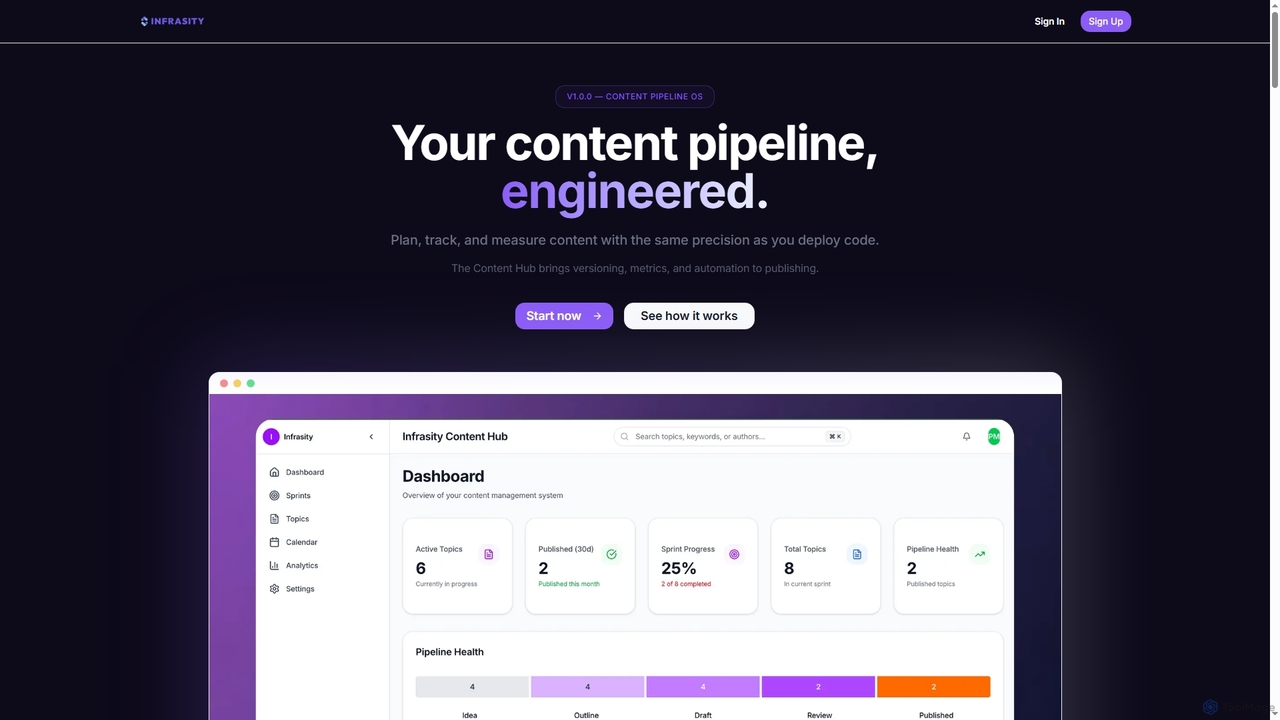
Infrasity is an AI-powered content pipeline operating system designed for technical teams to plan, track, and measure content with engineering precision. It integrates versioning, metrics, and automation to streamline the entire publishing workflow, from topic ideation to performance analysis, ensuring consistent delivery and optimized SEO outcomes.

Content Performance
Visits 4.9KFavorites 120Likes 118

About Content Planning

Content Planning tools are AI-powered platforms designed to streamline and optimize the initial stages of content creation within the broader field of Content Management. These sophisticated tools leverage artificial intelligence to assist with comprehensive ideation, in-depth keyword research, precise audience analysis, and efficient editorial calendar management. They empower marketing teams, content creators, and businesses to develop data-driven content strategies that not only resonate deeply with target audiences but also consistently achieve specific business objectives, ensuring content efforts are always aligned with strategic goals.

Core Features

  • Topic Generation: AI suggests relevant, trending, and high-potential content topics based on extensive industry analysis, audience interests, and real-time search data, helping to fill content gaps.
  • Keyword Research & Optimization: Identifies high-ranking, low-competition keywords and seamlessly integrates them into content outlines and briefs, significantly improving potential SEO performance and organic visibility.
  • Audience Insight Analysis: Analyzes demographic, psychographic, and behavioral data to create detailed audience personas, enabling content to be precisely tailored for maximum engagement and conversion.
  • Editorial Calendar Management: Provides robust tools for automating scheduling, assigning tasks to team members, and tracking content progress across various publishing platforms, ensuring timely delivery.
  • Performance Prediction: Utilizes predictive analytics to estimate the potential reach, engagement rates, and SEO impact of planned content before publication, allowing for proactive adjustments and optimization.

Use Cases

Content Planning tools are invaluable for diverse professionals, including marketing agencies managing multiple client campaigns, in-house marketing teams aiming to significantly boost organic traffic and lead generation, and individual content creators seeking to professionalize and scale their content strategy. They help ensure a consistent, high-quality content flow, align every piece of content with overarching business goals, and maximize return on investment by focusing resources on high-impact topics and formats that truly matter.

How to Choose

When selecting an AI Content Planning tool, it's crucial to consider its integration capabilities with your existing content management systems (CMS), CRM, or social media platforms to ensure a seamless workflow. Evaluate the sophistication of its AI for generating accurate insights and reliable predictions, as well as its collaboration features that support efficient team workflows and communication. Additionally, assess the depth and accuracy of its keyword research functionalities, the flexibility and customizability of its editorial calendar management, and its scalability to accommodate your future content needs. User-friendliness, comprehensive reporting, and transparent pricing models are also crucial factors for long-term adoption and success.

Content Planning use cases

1

Generate SEO-Optimized Blog Post Ideas

For content marketers and bloggers, AI content planning tools can analyze current search trends, competitor content, and target audience queries to suggest a list of high-potential blog post topics. The tool can also provide initial keyword clusters, suggested headings, and content briefs, significantly reducing the time spent on manual research and ensuring new content is strategically positioned for organic search visibility.

2

Develop a Multi-Channel Social Media Strategy

Social media managers can leverage these tools to plan a cohesive content strategy across platforms like Instagram, X (Twitter), and LinkedIn. The AI can recommend optimal posting times, content formats (e.g., video, image, text), and relevant hashtags based on audience engagement data, helping to schedule diverse content that maximizes reach and interaction while maintaining brand consistency.

3

Analyze Competitor Content Gaps

Marketing strategists can use AI content planning to conduct in-depth analysis of competitors' content performance. The tool identifies topics where competitors rank highly, areas they've overlooked, and content formats that perform well, providing actionable insights to create differentiated content that fills market gaps and captures new audience segments.

4

Automate Editorial Calendar Management for Teams

For large content teams, these tools centralize the editorial calendar, automating task assignments, setting deadlines, and tracking the progress of each content piece from ideation to publication. This ensures smooth collaboration, prevents content bottlenecks, and provides a clear overview of the entire content pipeline, improving efficiency and accountability.

5

Personalize Content Recommendations for Niche Audiences

Niche content creators or specialized businesses can utilize AI to deeply understand specific audience segments. The tool analyzes user behavior, preferences, and feedback to suggest highly personalized content topics and formats, ensuring that every piece of content directly addresses the unique needs and interests of a very specific target group, fostering stronger engagement.

6

Predict Content Performance and ROI

Business owners and marketing directors can use AI content planning tools to forecast the potential impact of their planned content. By analyzing historical data and market trends, the AI can estimate expected traffic, lead generation, and conversion rates for different content strategies, allowing for data-backed decisions and optimizing content investments for maximum return.

Content Planning FAQ

What are AI Content Planning tools?

AI Content Planning tools are specialized software applications that use artificial intelligence to assist and automate various aspects of content strategy and planning. They go beyond basic scheduling by providing data-driven insights for topic generation, keyword research, audience analysis, and performance prediction, helping users create more effective and targeted content strategies.

How do AI Content Planning tools differ from general Content Management Systems?

While Content Management Systems (CMS) primarily focus on storing, organizing, and publishing content, AI Content Planning tools specialize in the pre-publication strategic phase. They provide intelligence for what content to create, for whom, and when, whereas a CMS handles where and how to publish it. Planning tools offer ideation, SEO insights, and strategy development, which are typically not core functions of a traditional CMS.

Who benefits most from using AI Content Planning tools?

A wide range of professionals benefit, including content marketers, SEO specialists, social media managers, bloggers, and marketing agencies. Anyone responsible for developing and executing a content strategy can leverage these tools to save time on research, identify high-impact topics, optimize for search engines, and ensure their content efforts are aligned with business goals and audience needs.

What are the key features to look for in an AI Content Planning tool?

When evaluating AI Content Planning tools, prioritize features such as robust topic generation based on AI analysis, comprehensive keyword research capabilities, detailed audience segmentation and insight reporting, and flexible editorial calendar management. Additionally, look for predictive analytics for content performance, integration options with other marketing tools, and strong collaboration features for team environments.

Can AI Content Planning tools help with SEO?

Absolutely. AI Content Planning tools are highly effective for SEO. They assist by identifying relevant and high-ranking keywords, analyzing competitor SEO strategies, suggesting content structures optimized for search engines, and even predicting the potential organic traffic a piece of content might generate. This data-driven approach ensures that content is planned with search visibility in mind from the very beginning.